
Loading, please wait...

LOT 1047
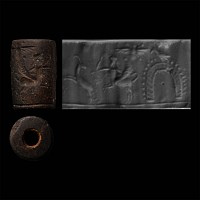
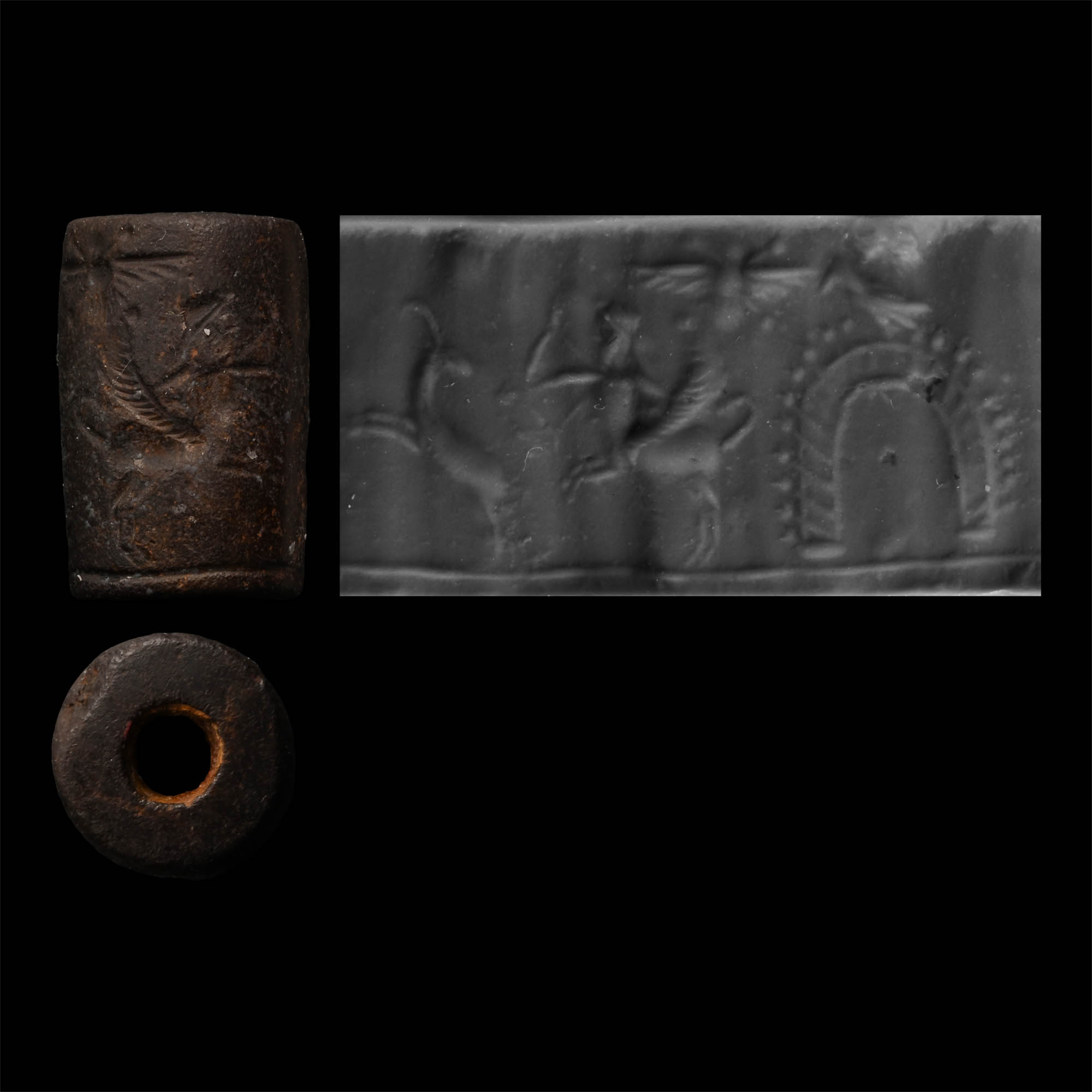
Assyrian Haematite Cylinder Seal with Hunting Scene
1ST MILLENNIUM B.C.
5/8 in. (3.65 grams, 15 mm).
Frieze including ribbed arch, gryphon drawing a bow, winged sun-disc, rampant ibex; supplied with a museum-quality impression.
ProvenanceFrom the 'S' collection, 1970-1990s.
This lot has been cleared against the Art Loss Register database, and is accompanied by an illustrated lot declaration signed by the Head of the Antiquities Department, Dr Raffaele D'Amato.
TimeLine Auctions follows a vetting process to ensure the authenticity and legality of all items, reinforcing our commitment to integrity and responsible trading. Each antiquity, antique, and coin lot undergoes thorough examination by a vetting committee of at least ten external specialists, professional trade association members, scientists, and archaeologists: Our Vetting Process
AUCTIONS:
TimeLine is a leading auction house specialising in antiquities, ancient art, collectables, natural history, coins, medals, and books. Our auctions offer museums, collectors, historians, and enthusiasts the opportunity to acquire unique and historically significant pieces.
-
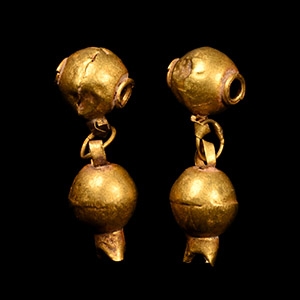
Cypriot Type Gold Pomegranate Bead Pair
1st millennium B.C.Sold for (Inc. bp): £234
Each formed as a pomegranate suspended from a spherical bead with loops; not found in Cyprus. 0.86 grams total, 17-18 mm
Ex property of a late Japanese collector, 1970-2000s. This lot has been cleared against the Art Loss Register database, and is accompanied by an illustrated lot declaration signed by the Head of the Antiquities Department, Dr Raffaele D'Amato. -
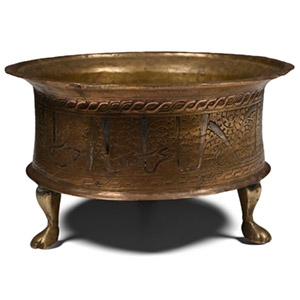
Western Asiatic Calligraphic Footed Bowl
20th century A.D.Sold for (Inc. bp): £26
A squat bronze bowl in 12th-13th century style with three lion's paw feet, flared base and rolled rim; bands of guilloche ornament to the body with silver-inlaid calligraphic text. 580 grams, 17.3 cm diameter
Acquired in the early 1990s. Ex property of a London, UK, collector. This lot has been cleared against the Art Loss Register database, and is accompanied by an illustrated lot declaration signed by the Head of the Antiquities Department, Dr Raffaele D'Amato. -
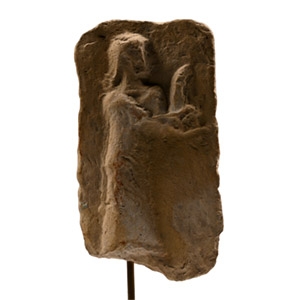
Old Babylonian Terracotta Plaque from Nippur
Levant, circa 1900-1600 B.C.Sold for (Inc. bp): £260
Plano-convex in section with moulded offering scene depicting a man advancing to his left whilst holding out an animal, probably a goat, with four protruding legs; mounted on a custom-made stand. 116 grams total, 10.7 cm high (13.5 cm high including stand)
Acquired 1970s-1980s. Ex Paul S. Forbes collection, Maryland, USA. This lot has been cleared against the Art Loss Register database, and is accompanied by an illustrated lot declaration signed by the Head of the Antiquities Department, Dr Raffaele D'Amato.
Terracotta plaques of this sort were mass- produced from moulds and represented a form of art available to a wide audience. They have been excavated in temples as well as in household shrines and private homes, and give us a mysterious glimpse into religious practices and the ideas that people valued. Their subject matter varies widely, including religious images, mythological and erotic scenes, and representations of rulers and gods.
