
Loading, please wait...
LOT 1109
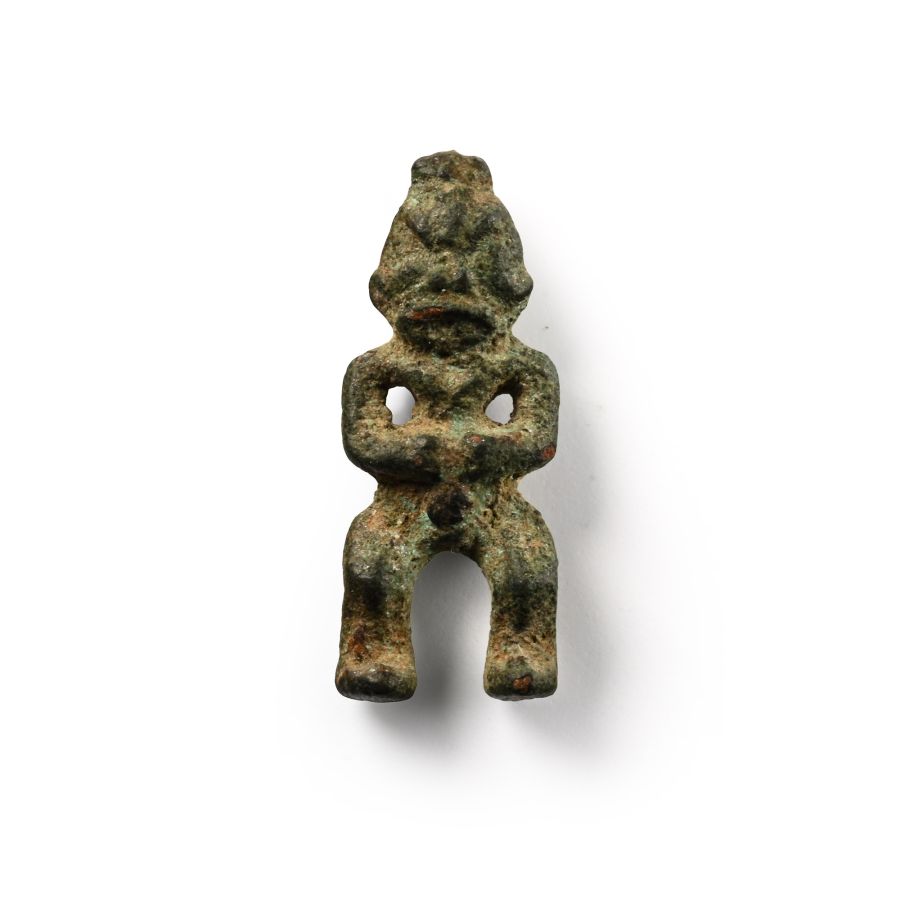
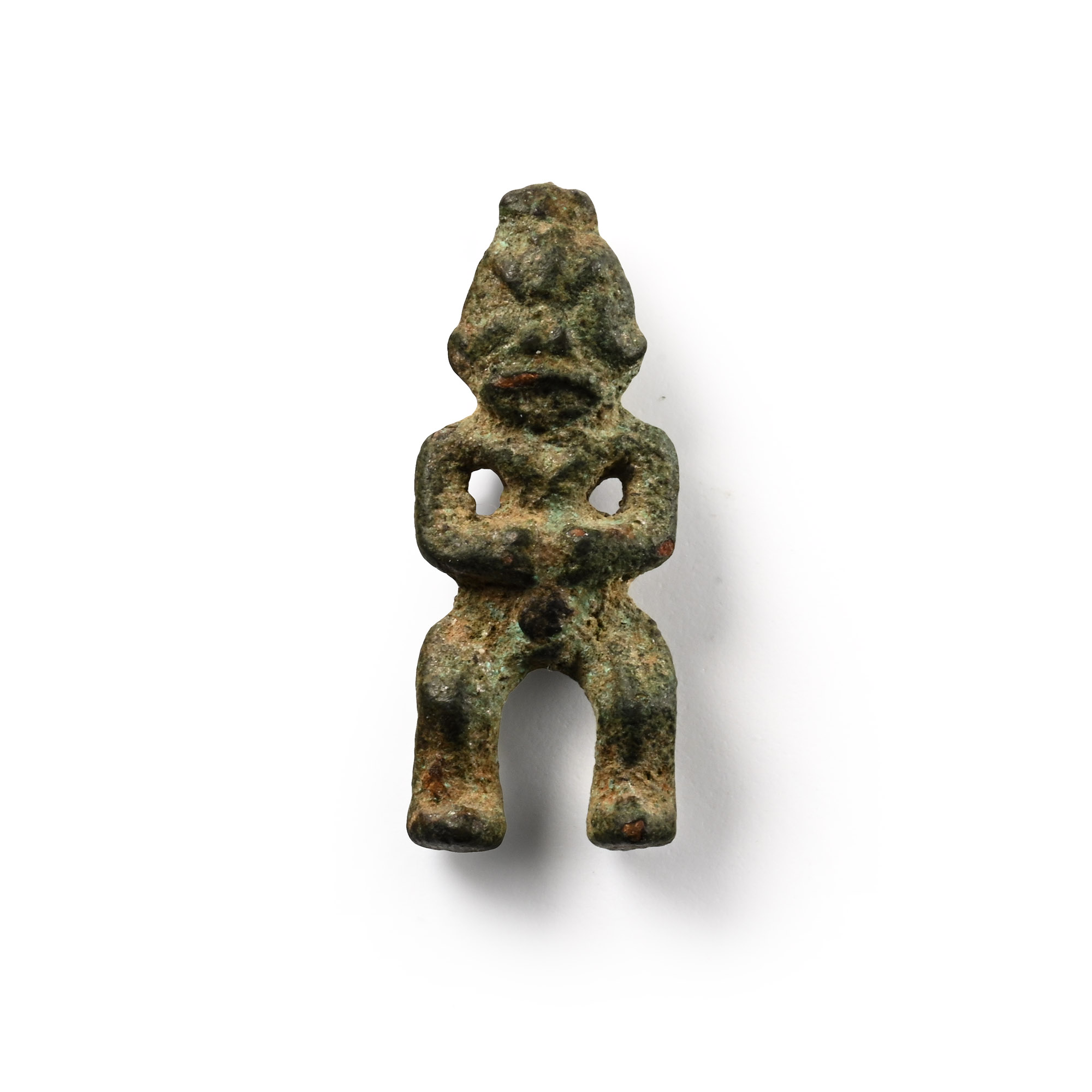
Assyrian Bronze Amulet in the Shape of Humbaba
CIRCA 800 B.C.
7/8 in. (2.2 grams, 22 mm).
Modelled in the round with hands clasped across the midriff and legs astride, arms forming loops.
ProvenanceAcquired in the mid 1980s-1990s.
Private collection, Switzerland, thence by descent.
Private collection, since the late 1990s.
This lot has been cleared against the Art Loss Register database, and is accompanied by an illustrated lot declaration signed by the Head of the Antiquities Department, Dr Raffaele D'Amato.
Cf. similar pendant (head only) in the Metropolitan Museum of Art under accession no.1993.181.
CONDITIONTimeLine Auctions follows a vetting process to ensure the authenticity and legality of all items, reinforcing our commitment to integrity and responsible trading. Each antiquity, antique, and coin lot undergoes thorough examination by a vetting committee of at least ten external specialists, professional trade association members, scientists, and archaeologists: Our Vetting Process
AUCTIONS:
TimeLine is a leading auction house specialising in antiquities, ancient art, collectables, natural history, coins, medals, and books. Our auctions offer museums, collectors, historians, and enthusiasts the opportunity to acquire unique and historically significant pieces.
-
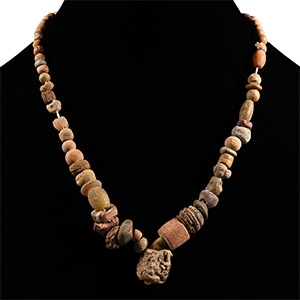
Western Asiatic Mixed Bead Necklace String
1st millennium B.C. and laterSold for (Inc. bp): £7
Restrung group of tubular, drum-shaped, annular and other beads in ceramic, stone and bauxite(?). 46.8 grams, 38.5 cm
Ex London, UK, collection, 1990s. This lot has been cleared against the Art Loss Register database, and is accompanied by an illustrated lot declaration signed by the Head of the Antiquities Department, Dr Raffaele D'Amato. -
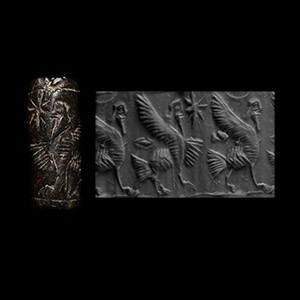
Neo-Assyrian Steatite Cylinder Seal
Circa 800 B.C.Sold for (Inc. bp): £286
With frieze of profile winged gryphons, starburst above; supplied with a museum-quality impression. 8.67 grams, 30.4 mm
Acquired in the mid 1980s-1990s. Private collection, Switzerland, thence by descent. Private collection, since the late 1990s. This lot has been cleared against the Art Loss Register database, and is accompanied by an illustrated lot declaration signed by the Head of the Antiquities Department, Dr Raffaele D'Amato. -
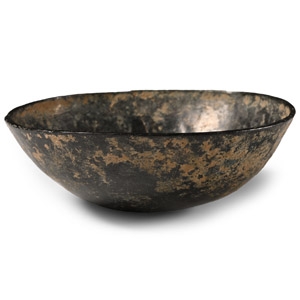
Western Asiatic Small Bronze Dish
1st millennium B.C.Estimate: £80 - 100 (+bp*)
Opening Bid: £40
Hemispherical in section with rolled rim. 58 grams, 80 mm
Acquired 1980-2015. Ex Abelita family collection. This lot has been cleared against the Art Loss Register database, and is accompanied by an illustrated lot declaration signed by the Head of the Antiquities Department, Dr Raffaele D'Amato.
