
Loading, please wait...
_900x900.jpg "Archaic Marble Oil Lamp")
_200x200.jpg "Archaic Marble Oil Lamp")
.jpg "Archaic Marble Oil Lamp")
LOT 0099
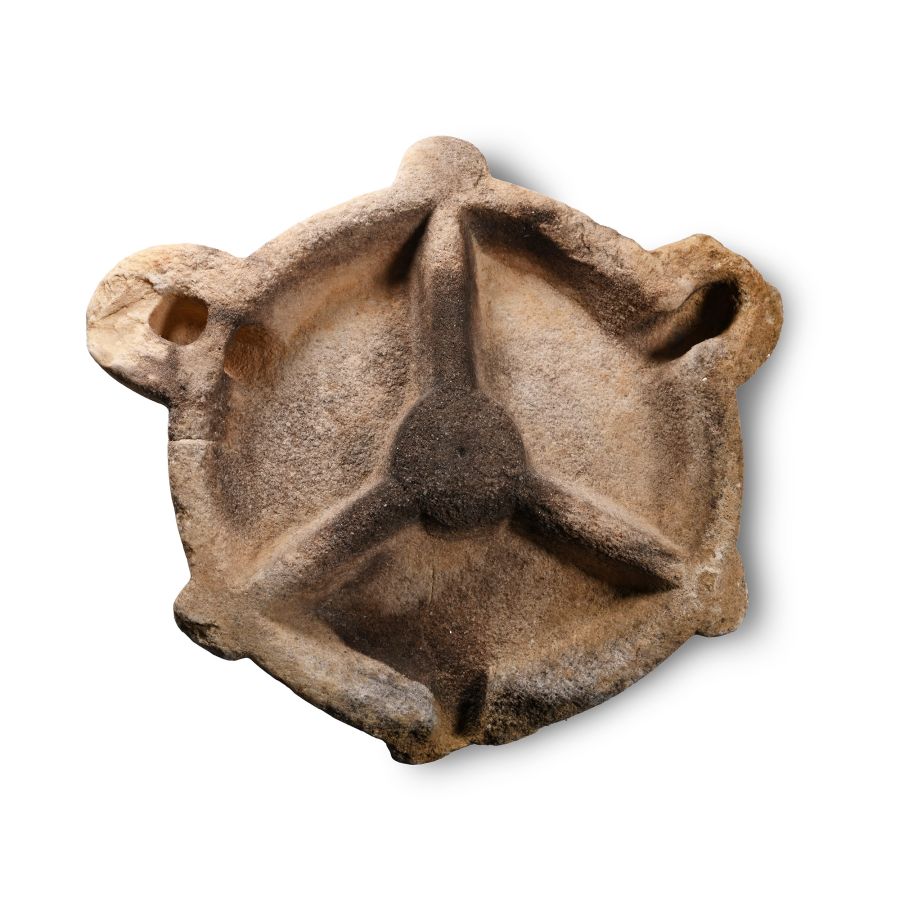
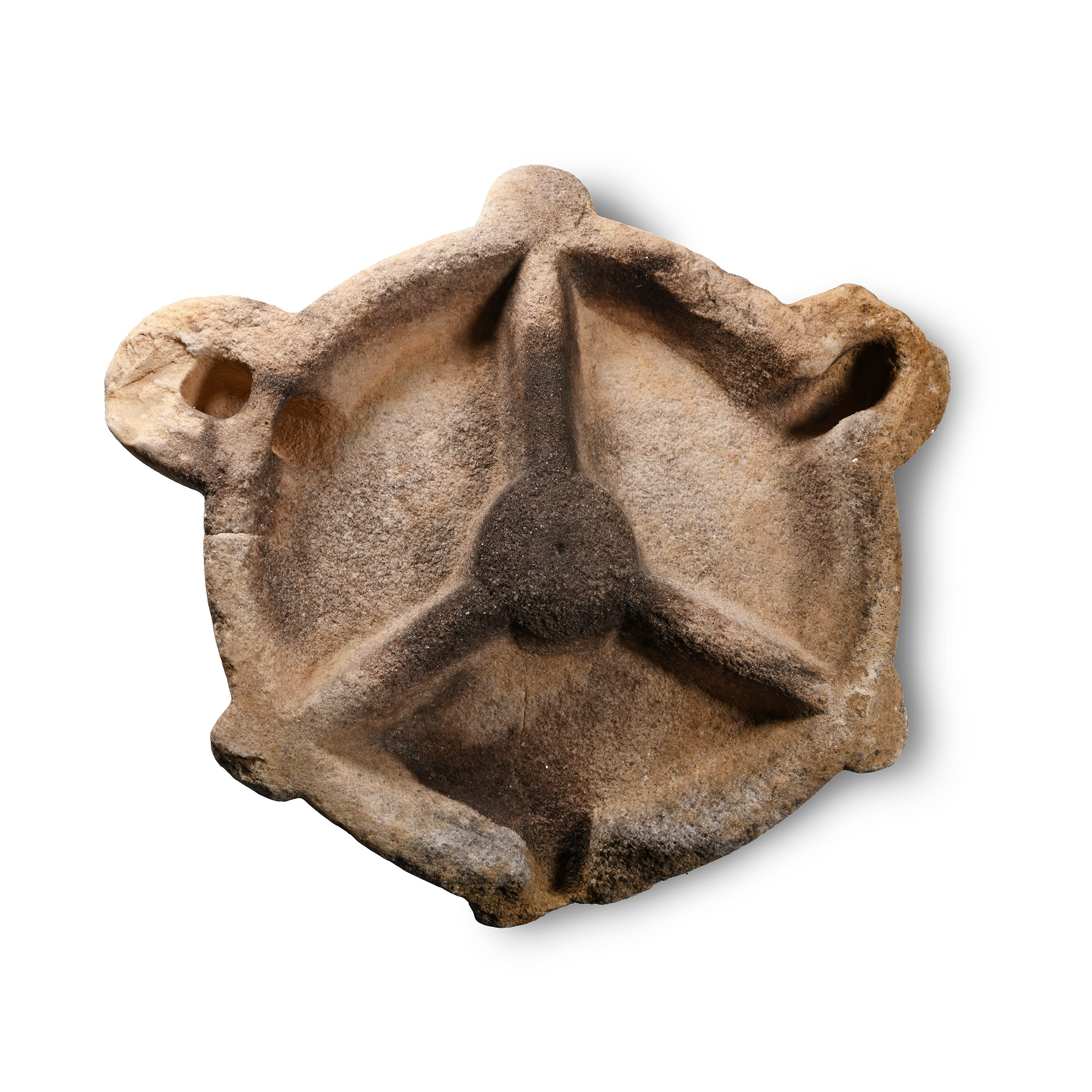
Archaic Marble Oil Lamp
EASTERN GREEK, 6TH CENTURY B.C.
8 5/8 in. (2.61 kg, 22 cm).
Circular with an open oil-chamber divided into three compartments with a central omphalos, three semi-circular nozzles projecting from each compartment bridging over the wick rests; flat base with a central hole for support.
ProvenanceEx HAC, Basel, Switzerland, 1990s.
with Galerie Rhéa, Zurich, Switzerland.
This lot is accompanied by an illustrated lot declaration signed by the Head of the Antiquities Department, Dr Raffaele D'Amato.
Cf. the British Museum, London, museum no.1907.1201.812.
CONDITIONTimeLine Auctions follows a vetting process to ensure the authenticity and legality of all items, reinforcing our commitment to integrity and responsible trading. Each antiquity, antique, and coin lot undergoes thorough examination by a vetting committee of at least ten external specialists, professional trade association members, scientists, and archaeologists: Our Vetting Process
AUCTIONS:
TimeLine is a leading auction house specialising in antiquities, ancient art, collectables, natural history, coins, medals, and books. Our auctions offer museums, collectors, historians, and enthusiasts the opportunity to acquire unique and historically significant pieces.
-
.jpg)
Greek Terracotta Arm Pair
5th-3rd century B.C.Sold for (Inc. bp): £13
Comprising two arms modelled in the round with finger detailing. 17 grams total, 56-64 mm
Ex German art market, 2000s. Acquired from an EU collector living in London. From the collection of a Surrey, UK, gentleman. This lot is accompanied by an illustrated lot declaration signed by the Head of the Antiquities Department, Dr Raffaele D'Amato. -
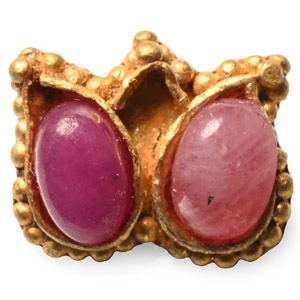
Hellenistic Gold Pendant with Cabochons
Circa 2nd-1st century B.C.Estimate: £180 - 240 (+bp*)
Opening Bid: £90
Plaque with granulated border, two carnelian cabochons and loop to reverse. 1.48 grams, 12 mm
Ex property of a late Japanese collector, 1970-2000s. This lot is accompanied by an illustrated lot declaration signed by the Head of the Antiquities Department, Dr Raffaele D'Amato. -
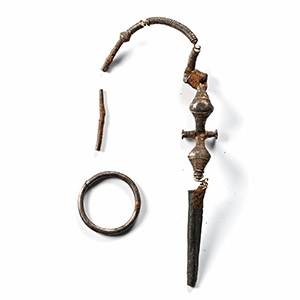
Greek Silver Wire Fibula
6th-4th century B.C.Estimate: £300 - 400 (‡+bp*)
Opening Bid: £135
With coiled spring and lateral lugs; tapering shank and separate ring. 9.11 grams total, 1.8-12.4 cm
Private collection, Switzerland, 1992. Thence by descent. Private collection, since the late 1990s. This lot is accompanied by an illustrated lot declaration signed by the Head of the Antiquities Department, Dr Raffaele D'Amato.
