
Loading, please wait...
LOT 0583
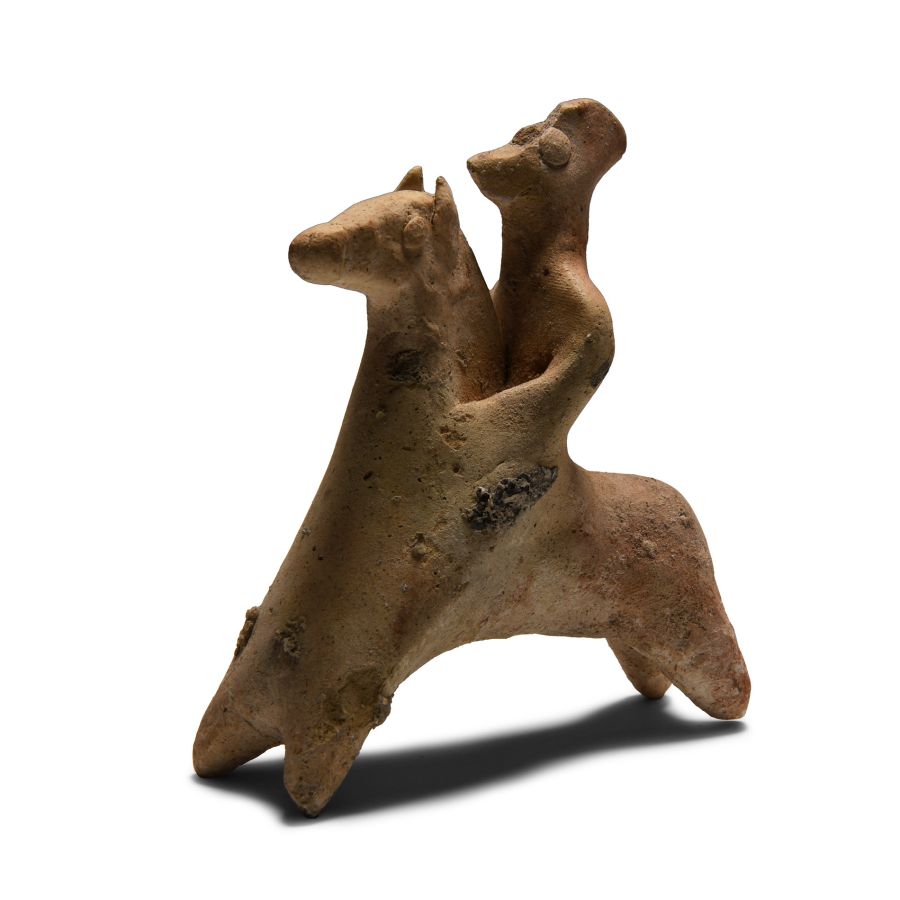
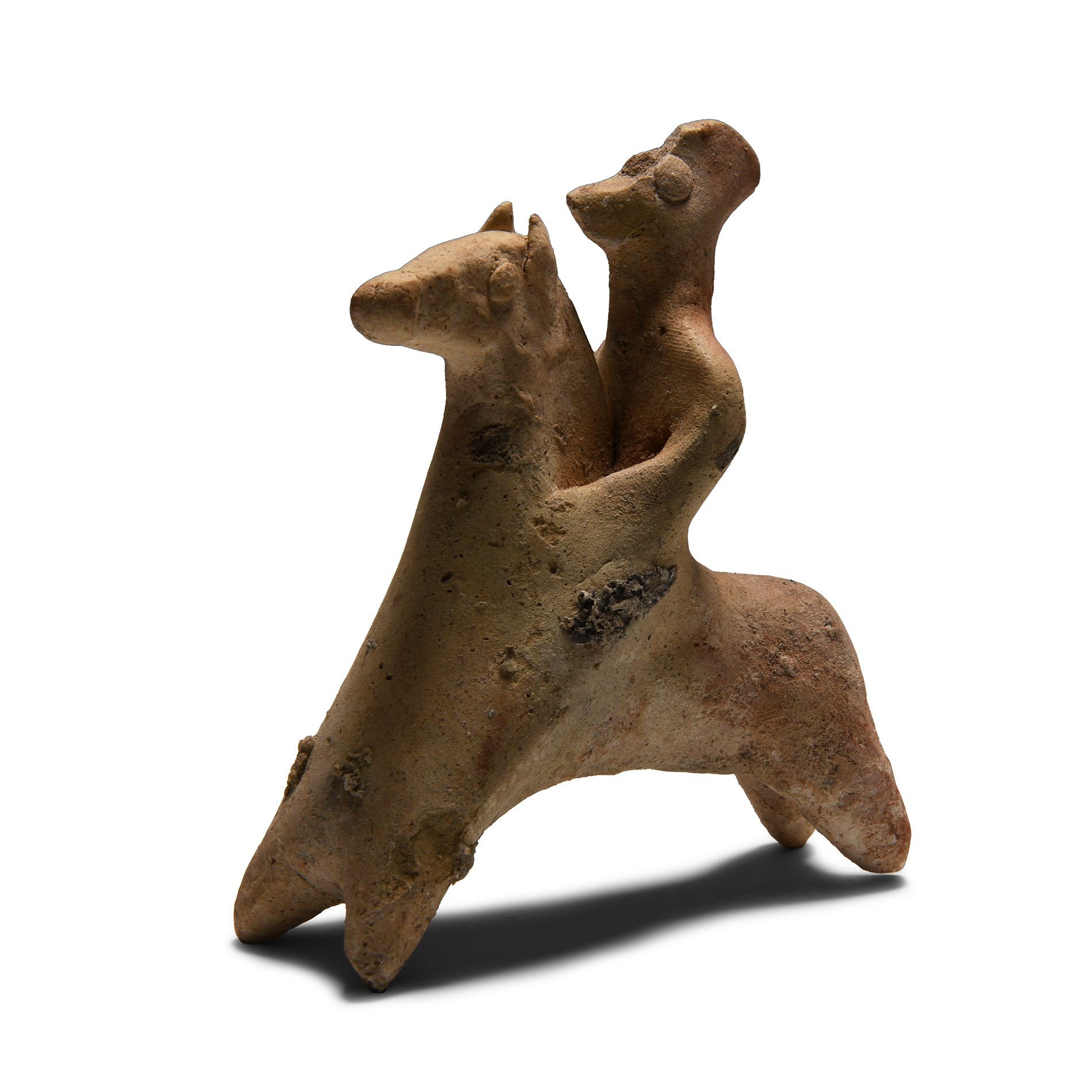
Archaic Greek Terracotta Horse and Rider Statuette
7TH-5TH CENTURY B.C.
3 3/4 in. (112 grams, 96 mm high).
Integrally modelled horse and rider with applied pellet eyes, traces of red pigment. [No Reserve]
ProvenanceFrom a collection acquired on the UK art market from various auction houses and collections mostly before 2000.
From an important Cambridgeshire estate; thence by descent.
Cf. Marantidou, P., Terracotta statues and figurines of Cypriot type found in the Aegean. Provenance studies, Limassol, 2009, pls.XIII, no.SAH69, XXXII, no.CYP50, for the type.
FootnotesTerracotta figurines of horse and rider were common grave offerings in Boeotia, northwest of Attica, particularly during the 6th century B.C. Representations of warriors on horseback were already widespread in the Geometric Period, and widely used in Cyprus during this period. The rider, although influenced by Cypriot designs, does not show typical Cypriot characteristics.
CONDITIONTimeLine Auctions follows a vetting process to ensure the authenticity and legality of all items, reinforcing our commitment to integrity and responsible trading. Each antiquity, antique, and coin lot undergoes thorough examination by a vetting committee of at least ten external specialists, professional trade association members, scientists, and archaeologists: Our Vetting Process
AUCTIONS:
TimeLine is a leading auction house specialising in antiquities, ancient art, collectables, natural history, coins, medals, and books. Our auctions offer museums, collectors, historians, and enthusiasts the opportunity to acquire unique and historically significant pieces.
-
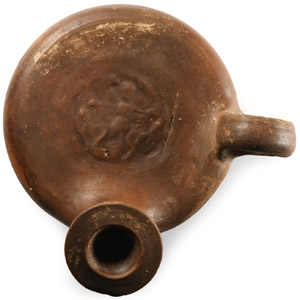
Greek Apulian Terracotta Guttos
Circa 4th century B.C.Sold for (Inc. bp): £91
With pedestal base, loop handle, slender spout with chamfered rim; central discus with figure of the infant Hercules grappling serpents; repaired. 214 grams, 12.5 cm wide
Ex Cummings collection, UK, 1990s. -
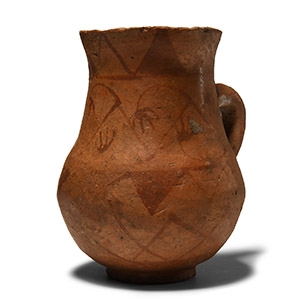
Phoenician Painted Terracotta Cup
Circa 6th century B.C.Sold for (Inc. bp): £312
Redware cup with rounded underside to the body, conical shoulder, short neck and gently flared rim; strap handle to the shoulder; decoration of red linear triangular blocks. median band with stylised hand motifs. 467 grams, 12.5 cm
From a collection acquired on the UK art market from various auction houses and collections mostly before 2000. From an important Cambridgeshire estate; thence by descent. -
.jpg)
Etruscan Bronze Statuette of Hercle
Circa 4th-3rd century B.C.Sold for (Inc. bp): £845
Modelled in the round figure of Hercle (Roman Hercules, Greek Herakles) standing nude with the lionskin mantle draped over his extended left forearm, the right arm bent and fist raised (originally holding a club); the hair cut short and radiating from the crown of the head, lentoid eyes flanking a snub nose; mounted on a custom-made stand. 87 grams total, 77 mm (10.2 cm high including stand)
From the estate of Eldert Bontekoe (1954-2020). Ex Ann Arbor, Michigan, USA, acquired before 2000. with Artemis Gallery, Colorado, USA, 26 December 2020, no.8. Property of a South Australian private collector, with collection reference 20.38. Accompanied by an original Artemis Gallery certificate of authenticity dated 27 January 2021. Accompanied by detailed collector's catalogue pages including description and photograph.
