Loading, please wait...

Use mousewheel to zoom in and out, click to enlarge

Details

LOT 0623

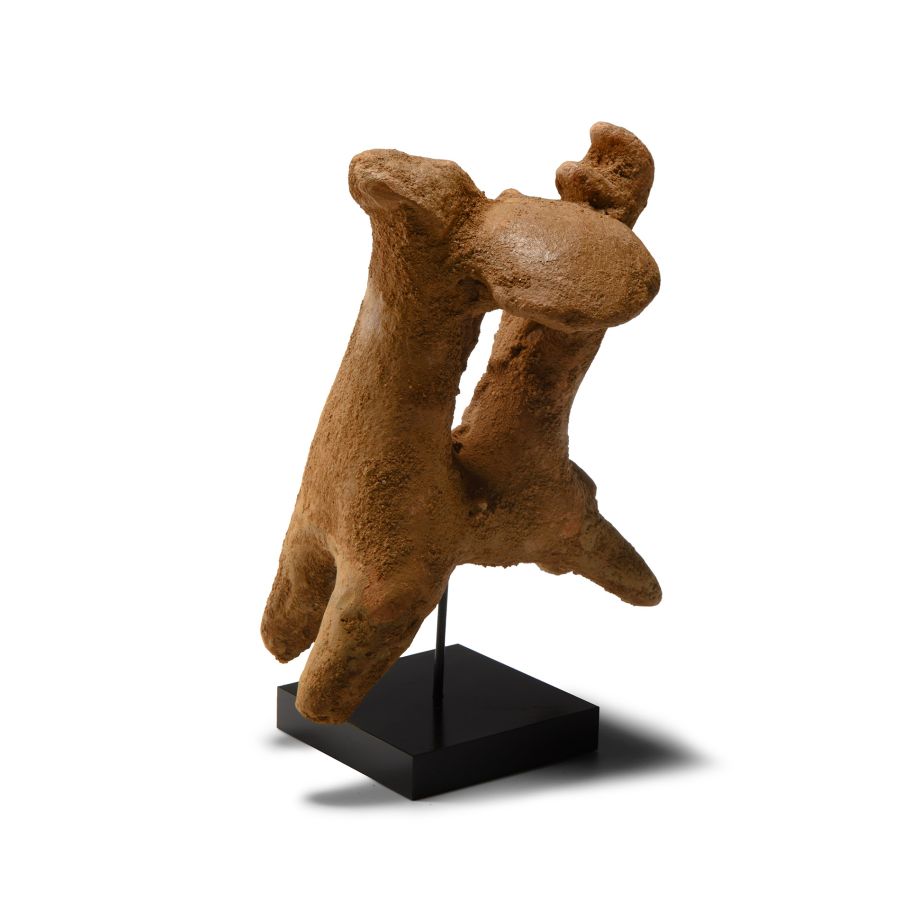
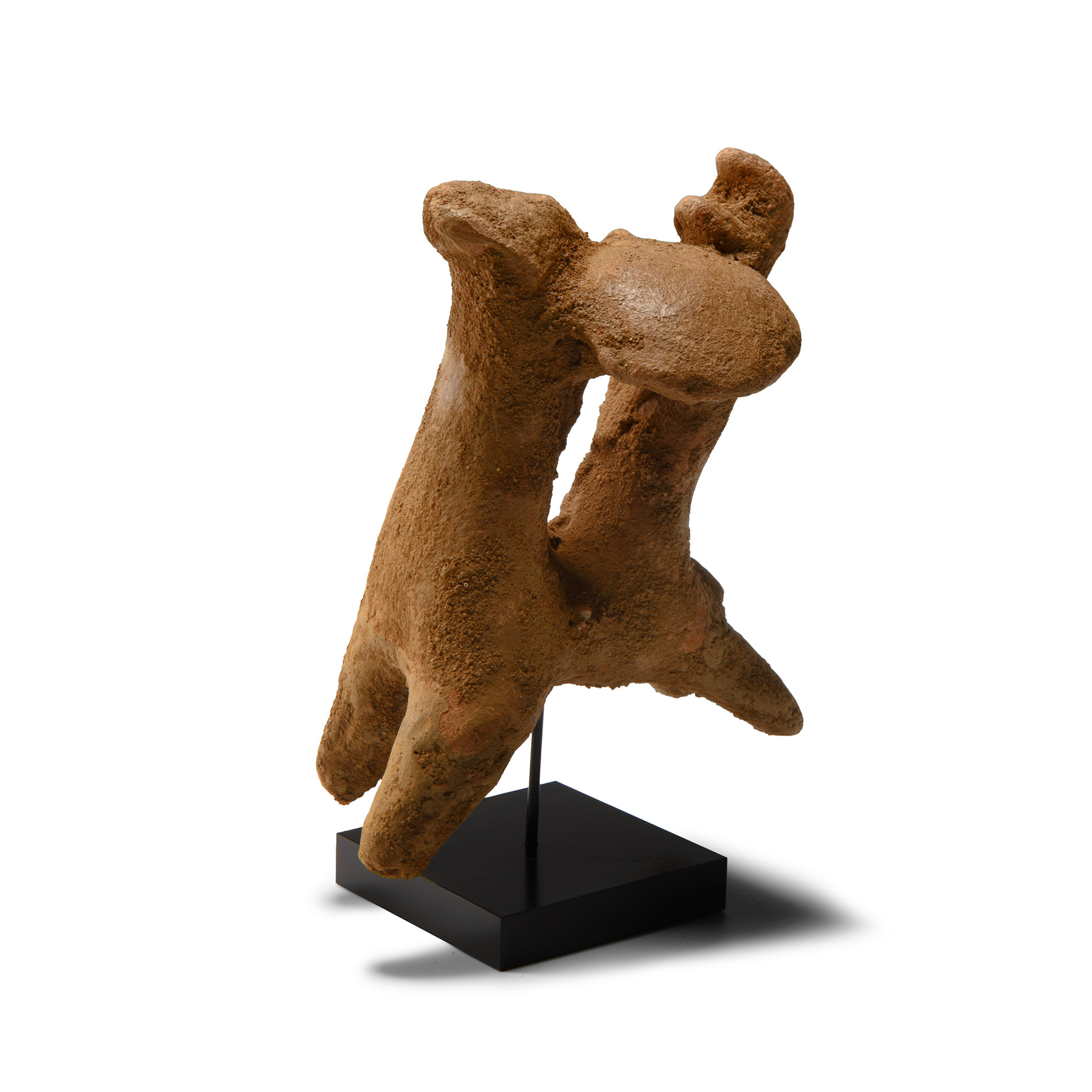
Archaic Greek Terracotta Figure of Mounted Warrior with Shield

7TH-5TH CENTURY B.C.

5 1/8 in. (277 grams total, 13 cm including stand).

The figure comprising a stylised horse with elongated neck, mounted by a bearded rider figure holding a shield, restored; mounted on a custom-made display stand. [No Reserve]

Provenance

Acquired before 1990.
From an old German collection.

CONDITION

VETTING:

TimeLine Auctions follows a vetting process to ensure the authenticity and legality of all items, reinforcing our commitment to integrity and responsible trading. Each antiquity, antique, and coin lot undergoes thorough examination by a vetting committee of at least ten external specialists, professional trade association members, scientists, and archaeologists: Our Vetting Process


AUCTIONS:

TimeLine is a leading auction house specialising in antiquities, ancient art, collectables, natural history, coins, medals, and books. Our auctions offer museums, collectors, historians, and enthusiasts the opportunity to acquire unique and historically significant pieces.

LOT 0623

Archaic Greek Terracotta Figure of Mounted Warrior with Shield

Sold for (Inc. bp): £208

Print page

RELATED LOTS

  • Greek Red-Figure Fragment with Draped Figures
    Greek Red-Figure Fragment with Draped Figures
    5th century B.C.

    Sold for (Inc. bp): £1,755

    Depicting a young man dressed in a long cloak, the right hand resting on a staff, facing a young woman wrapped in a long himation, covering her head and leaving the face uncovered; the scene enclosed within a medallion decorated with meanders and chequered squares; remains of the stem to the reverse with painted figures on the edge; repaired. 91 grams, 13 cm


    Acquired before 2005. Private collection, Europe. This lot has been checked against the Interpol Database of stolen works of art and is accompanied by search certificate number no.11796-206819.

    This red-figure scene once possibly formed part of a kylix, a cup made for drinking. The decoration of the tondo surrounding the figures allows a comparison with some works of the painter Onesimos and the potter Euphronios. In particular the meanders on the medallion, and the working of the figures, seems to recall the work of Onesimos, who preferred to decorate cups, many of them thrown by the famous Euphronios.

    Lot Details

  • Attic Red-Figure Bell Krater with Drunken Male Revellers Attributed to the Kadmos Painter
    Attic Red-Figure Bell Krater with Drunken Male Revellers Attributed to the Kadmos Painter
    5th-4th century B.C.

    Sold for (Inc. bp): £32,500

    With a high foot, laurel wreath encircling the neck, checkerboard and meander patterns alternating around the lower body, roundels of tongue motif to the handles with palmettes and tendrils below; two red-figure scenes to the body: Side a: a high-quality depiction of a kōmos composed of five figures, including a young man holding a torch, a double flute player next to three dancers, all possibly followers of Dionysus; Side b: three draped figures conversing comprising a central female figure between two opposed male figures, one holding a staff; two old labels: one with 3061-133 on the inner rim, and 113/2 (believed to be an old Christie's lot label from the 1960s by Richard Falkiner) on the sidewall, further old accession numbers 321 and 35 under the base. 3.8 kg, 37 cm wide


    Thomas Hope (1769-1831), London and the Deepdene, Surrey, Thence by descent to Lord Henry Francis Hope Pelham-Clinton-Hope (1866-1941), the Deepdene. The Celebrated Collection of Greek, Roman and Egyptian Sculpture and Ancient Vases being a portion of The Hope Heirlooms; Christie's, London, 23-24 July 1917, no.113. Private collection, acquired in Paris, 2004. Accompanied by a copy of a thermoluminescence analysis report no.N111j79 from Oxford Authentication. Accompanied by an academic report by Dr Raffaele D’Amato. This lot has been checked against the Interpol Database of stolen works of art and is accompanied by search certificate number no.11786-206517.

    The Kadmos Painter was an Athenian red-figure vase painter, whose real name is unknown. His nickname was bestowed by Beazley, naming him after the subject of a famous hydria in Berlin (Antikensammlungen Berlin/Altes Museum, found in Vulci). He illustrated many mythological scenes, sometimes with figures arranged up and down the field, usually on bell craters, vessels used in symposia for mixing wine and water. A komos was a ritualistic drunken procession performed by revellers in ancient Greece. It preceded and/or followed the banquet, whether unbridled in nature with music and games, or serious and philosophical.

    Lot Details

  • Minoan Bronze Double Axehead
    Minoan Bronze Double Axehead
    Circa 2000 B.C.

    Sold for (Inc. bp): £975

    Substantial labrys with flared and curved edges, elliptoid socket to the centre. 973 grams, 17.5 cm


    Gifted to the previous owner's husband by his grandfather prior to 1919 while in Crete. Taken to Paris and brought to the UK before 1985. Acquired from Bonhams, London, 20 October 2005, no.124. From an important Cambridgeshire estate; thence by descent. Accompanied by copies of the relevant Bonhams catalogue pages.

    The double axe was both a tool, weapon and one of the main religious symbol in Minoan Crete. It was as significant and as important in Minoan religious practice as the ritual horn and the pillar.

    Lot Details

Stay up-to-date with the latest from TimeLine Auctions by joining our mailing list