
Loading, please wait...
_900x900.jpg "Archaic Greek Gold Intaglio with Mythical Creature")
_200x200.jpg "Archaic Greek Gold Intaglio with Mythical Creature")
.jpg "Archaic Greek Gold Intaglio with Mythical Creature")
LOT 0534
Archaic Greek Gold Intaglio with Mythical Creature
CIRCA 8TH CENTURY B.C.
1/4 in. (0.50 grams, 7 mm).
The gold roundel displaying an incuse winged creature with the head of a human and body of an animal.
ProvenanceAcquired 1969-1999.
From the private collection of the late Mr S.M., London, UK, thence by descent.
TimeLine Auctions follows a vetting process to ensure the authenticity and legality of all items, reinforcing our commitment to integrity and responsible trading. Each antiquity, antique, and coin lot undergoes thorough examination by a vetting committee of at least ten external specialists, professional trade association members, scientists, and archaeologists: Our Vetting Process
AUCTIONS:
TimeLine is a leading auction house specialising in antiquities, ancient art, collectables, natural history, coins, medals, and books. Our auctions offer museums, collectors, historians, and enthusiasts the opportunity to acquire unique and historically significant pieces.
-
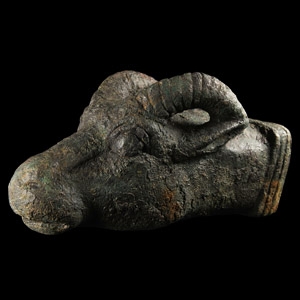
Parthian Bronze Attachment in the Form of a Gazelle's Head
Circa 3rd century B.C.Estimate: £4,000 - 6,000 (+bp*)
Opening Bid: £2,000
Modelled with naturalistic detailing; square-section collared socket with one square hole for attachment. 1.07 kg, 16.3 cm
Ex French collection, 1990s. French gallery 2000s. This lot has been checked against the Interpol Database of stolen works of art and is accompanied by search certificate number no.203557. -
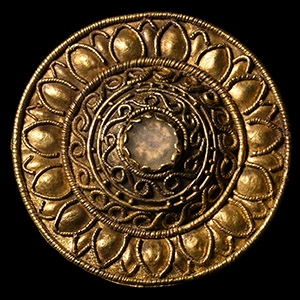
Eastern Greek Gold Turretted Brooch
5th-3rd century B.C.Sold for (Inc. bp): £845
Adorned with repoussé detailing and filigree borders and petals, domed centre with granules and applied scrolls, central corrugated claw set with glass(?); pin lug and catchplate to reverse. 8.74 grams, 40 mm
From the collection of a North American gentleman, formed in the 1990s. -
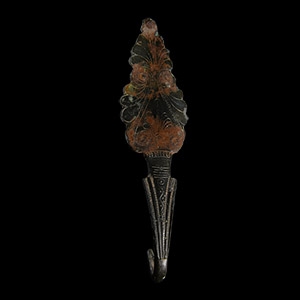
Etruscan Tinned Bronze Armoured Belt Hook
6th-5th century B.C.Sold for (Inc. bp): £46
Composed of a scalloped foliate plate and tapering neck, displaying geometric and foliate detailing. 26 grams, 11.7 cm
Acquired in the 1970s. Private collection of a London antiquarian.
