
Loading, please wait...
LOT 0052
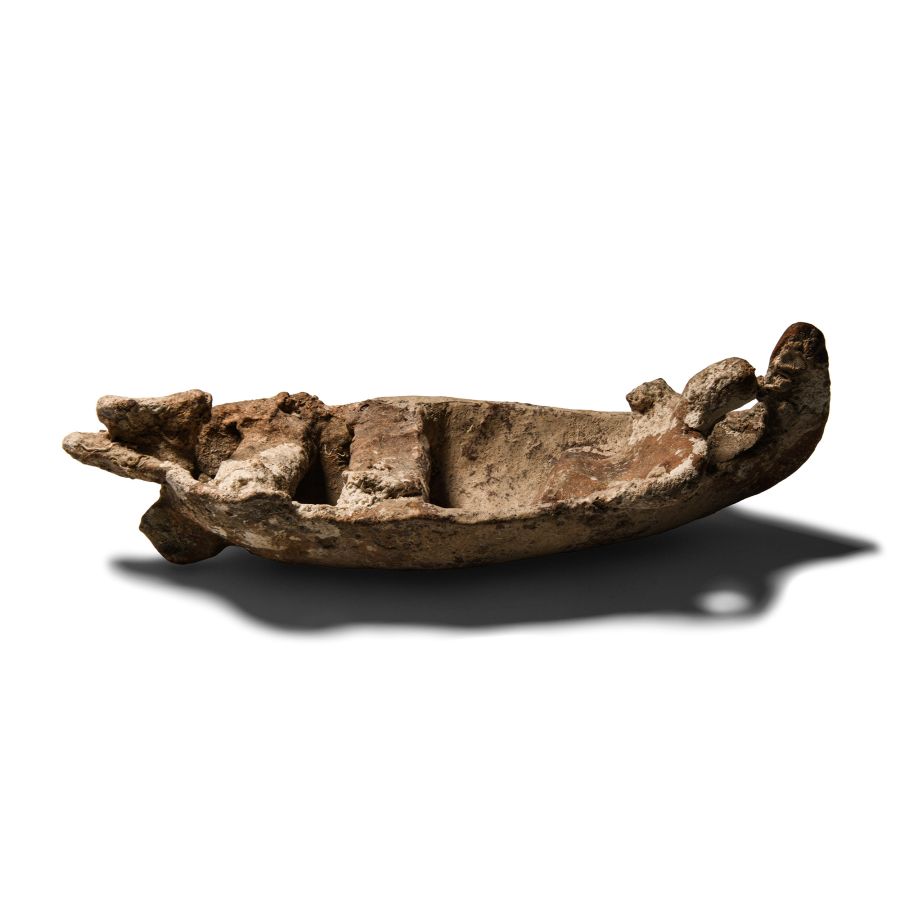
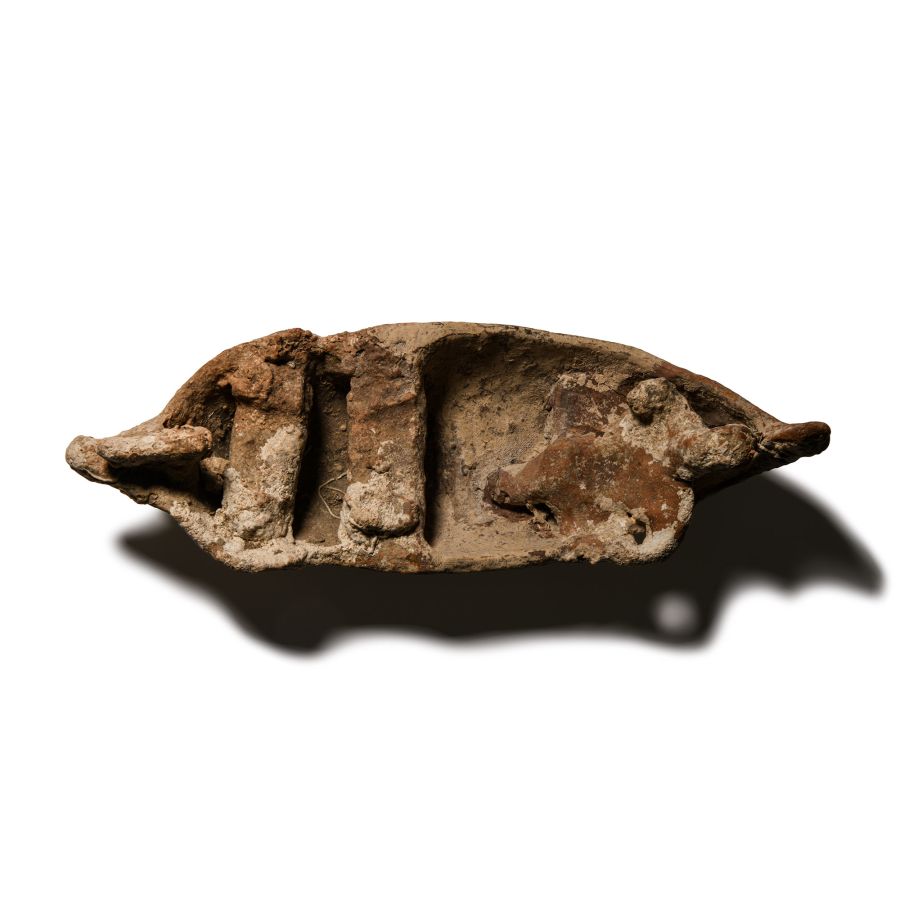
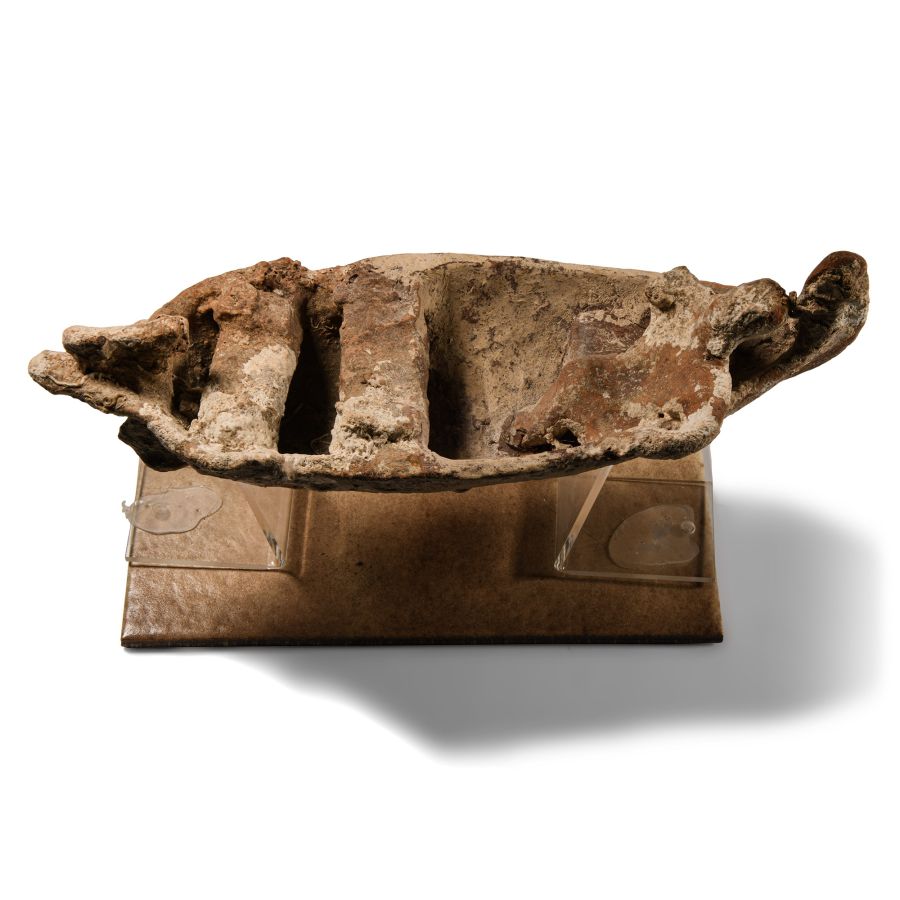
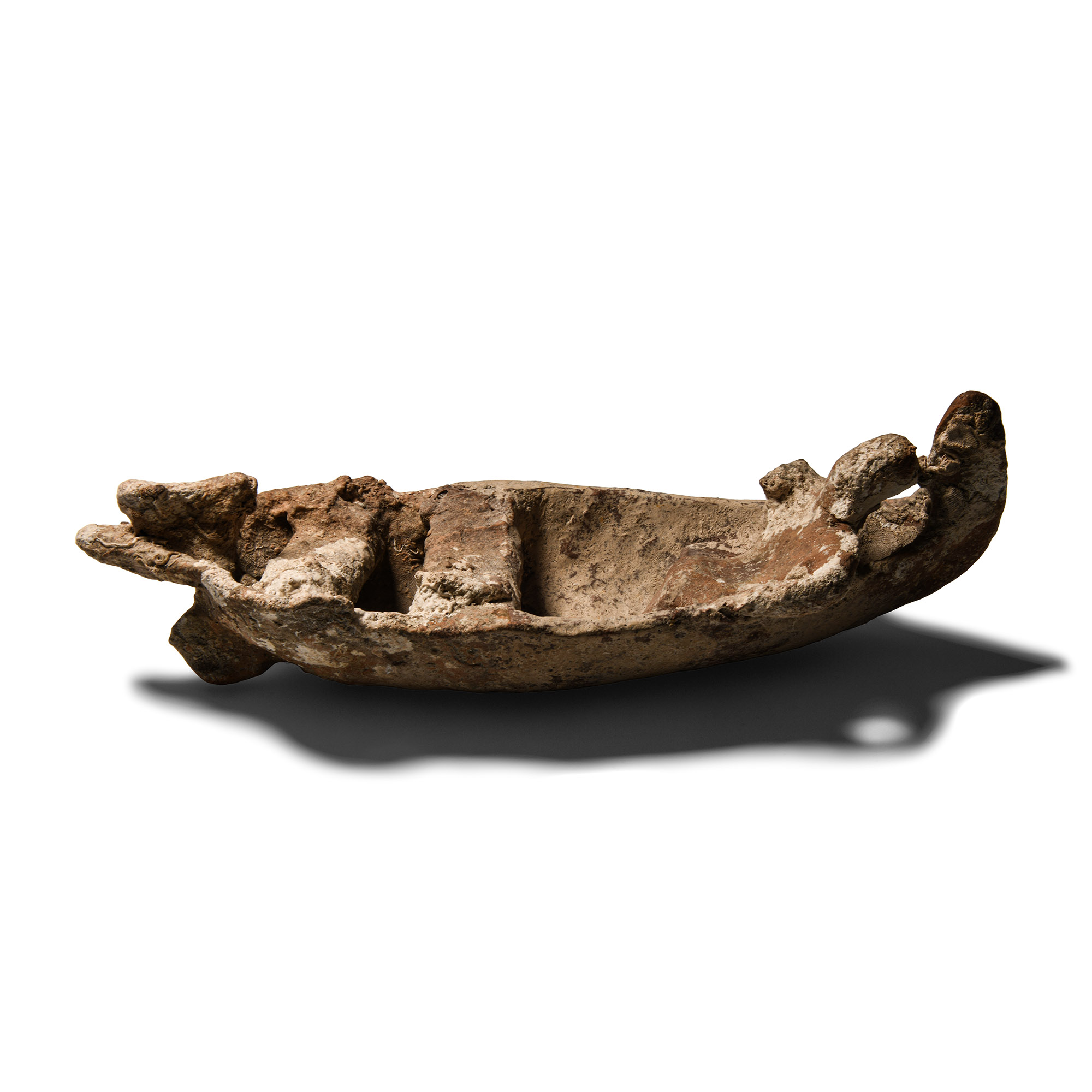
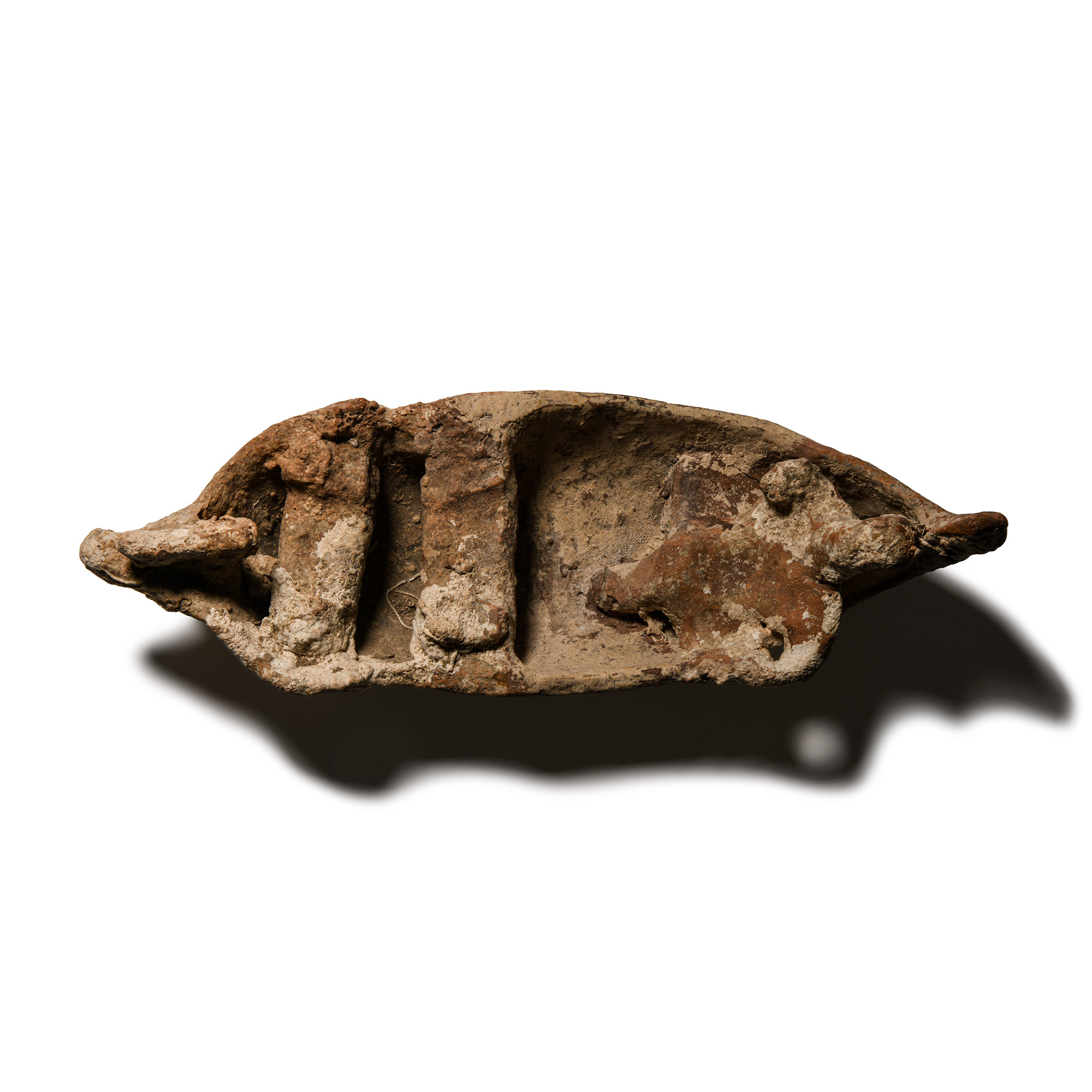
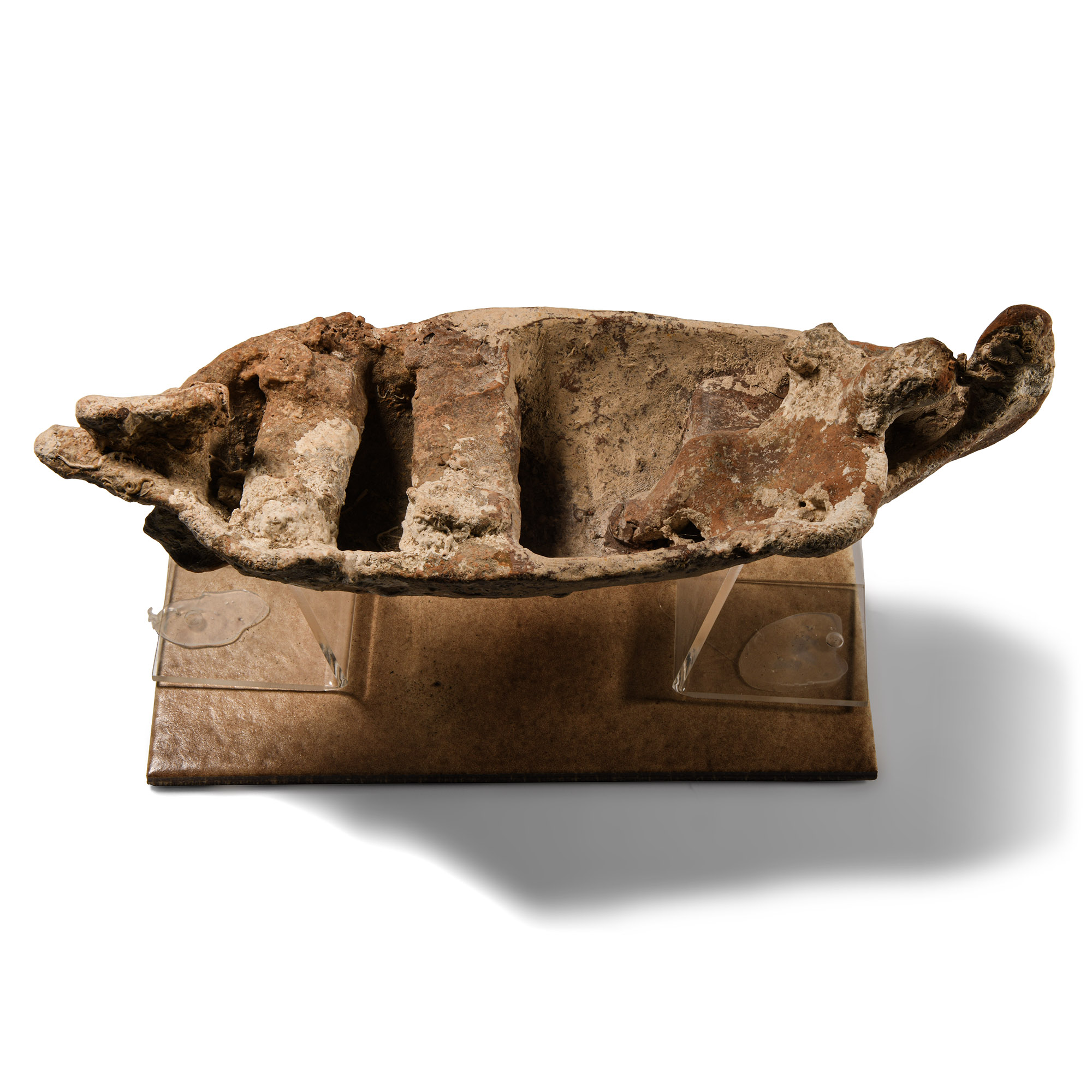
Archaic Greek Ceramic Model Boat
CIRCA 600-480 B.C.
9 5/8 in. (728 grams total, 24.5 cm wide including stand).
Modelled in the round as a miniature flat-bottomed boat with sternpost and three thwarts, one supporting the reclining figure of the boatman; supplied with a custom-made display stand. [No Reserve]
ProvenanceFrom a collection acquired on the UK art market from various auction houses and collections mostly before 2000.
From an important Cambridgeshire estate; thence by descent.
Accompanied by an old identification tag.
Accompanied by an original thermoluminescence analysis report from Oxford Authentication.
Cf. similar item in the Metropolitan Museum of Art, New York, under accession no.74.51.1752, for type, from Amathus.
FootnotesA series of ship models, today preserved in the Metropolitan Museum and in the British Museum, depict in considerable detail the features of contemporary vessels, including the helmsman sitting in the bow, the spurs of the ships and the raised stern. All of the preserved ship models come from Amathus, indicating the importance of the site as a maritime centre. Our model could come from the same area. This clay model shows a man who comfortably sits on the back of the ship: we do not know his role and his activity, but – as observed by professor M.A. Mcintosh, he is part of a theōriā, a state pilgrim (theōros). Certainly, he represents the helmsman, the kubernētēs, i.e. the governor who directs the ship.
CONDITIONTimeLine Auctions follows a vetting process to ensure the authenticity and legality of all items, reinforcing our commitment to integrity and responsible trading. Each antiquity, antique, and coin lot undergoes thorough examination by a vetting committee of at least ten external specialists, professional trade association members, scientists, and archaeologists: Our Vetting Process
AUCTIONS:
TimeLine is a leading auction house specialising in antiquities, ancient art, collectables, natural history, coins, medals, and books. Our auctions offer museums, collectors, historians, and enthusiasts the opportunity to acquire unique and historically significant pieces.
-
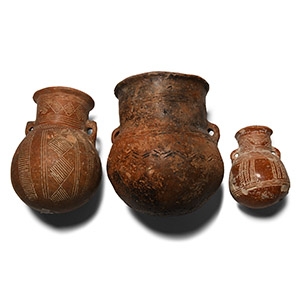
Cypriot Red Polished Ware Jar Group
Middle Bronze Age, circa 2000-1600 B.C.Sold for (Inc. bp): £1,040
Comprising: two with globular body, broad neck and flared rim, pierced lugs to the shoulders, bands of incised hatching; one with rounded underside, broad neck and everted rim, pierced lugs to the shoulder, horizontal broken lines and zigzags. 1.27 kg total, 9.7-15 cm
From a collection acquired on the UK art market from various auction houses and collections mostly before 2000. From an important Cambridgeshire estate; thence by descent.
In the Early Bronze Age, the most common form of Cypriot jars was the round-based, two-handled variety, with the handles attached on the vertical plane. -
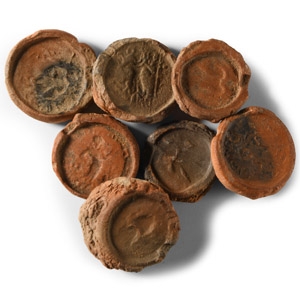
Indo-Greek Terracotta Forger's Mould Group
Circa 2nd-1st century B.C.Sold for (Inc. bp): £442
Group of discoid clay moulds for casting contemporary counterfeit coins. 43 grams total, 25-32 mm
Private collection formed in the 1990s. Acquired from a central London gallery. Property of an Essex gentleman. -
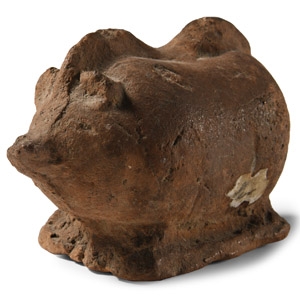
Greek Terracotta Figure of a Boar
Circa 3rd-2nd century B.C.Sold for (Inc. bp): £98
Rounded in form with pinched and impressed facial detailing, ridge to the shoulders and rump, hollow to the underside; remains of a very old label to one side. 236 grams, 10.4 cm
From the property of Mr O.S., a late Suffolk, UK, gentleman, who acquired at auction from the 1960s.
