
Loading, please wait...
LOT 0542
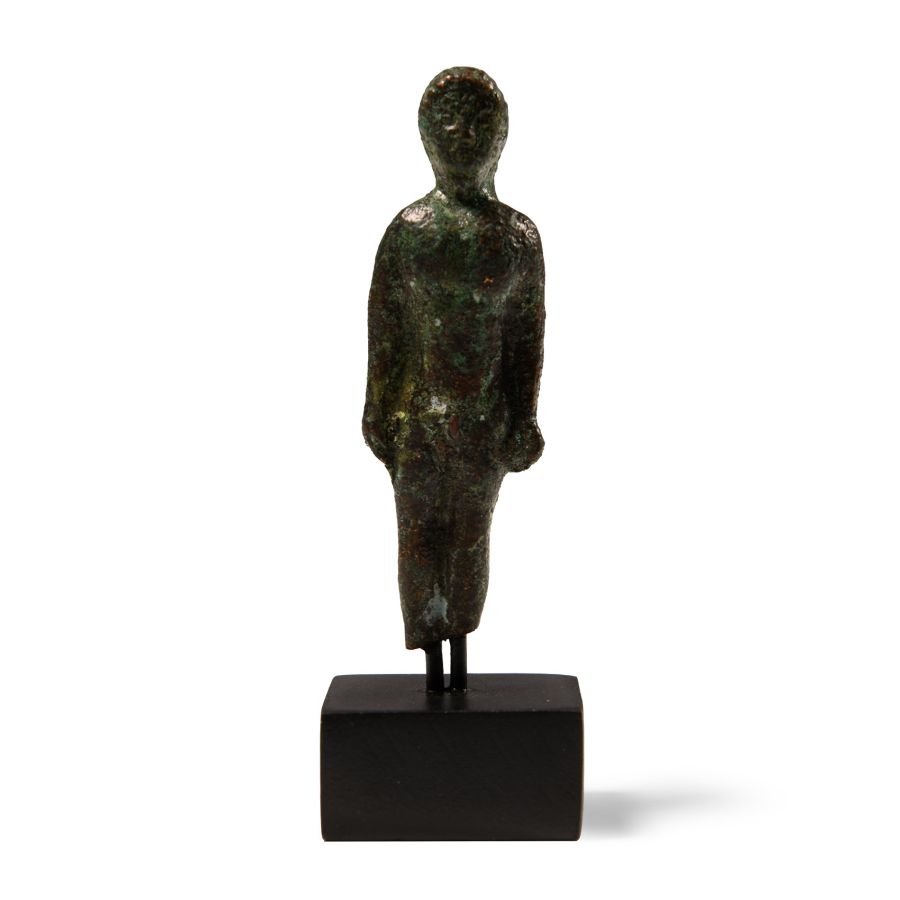
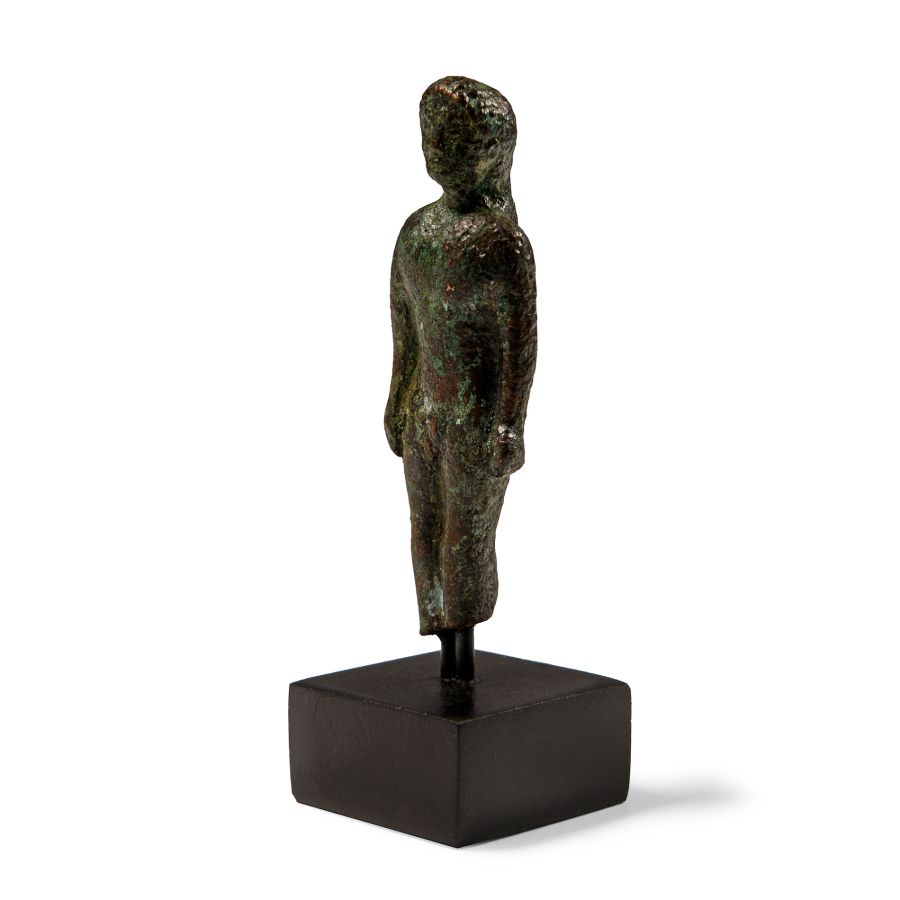
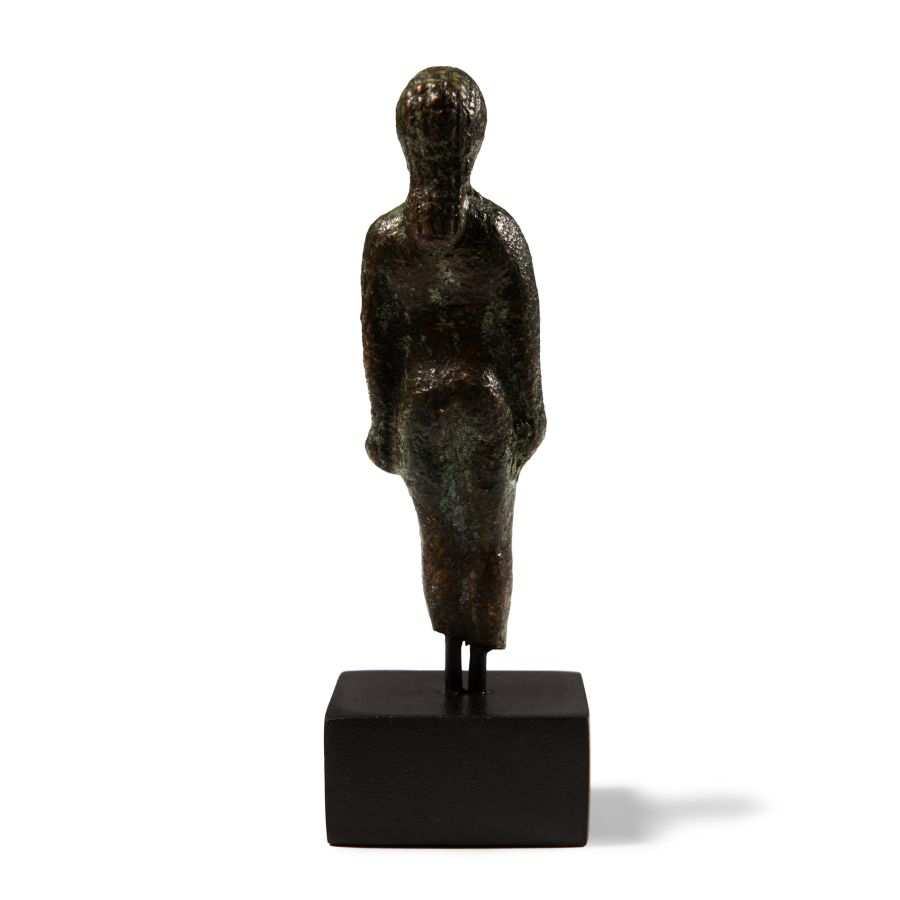
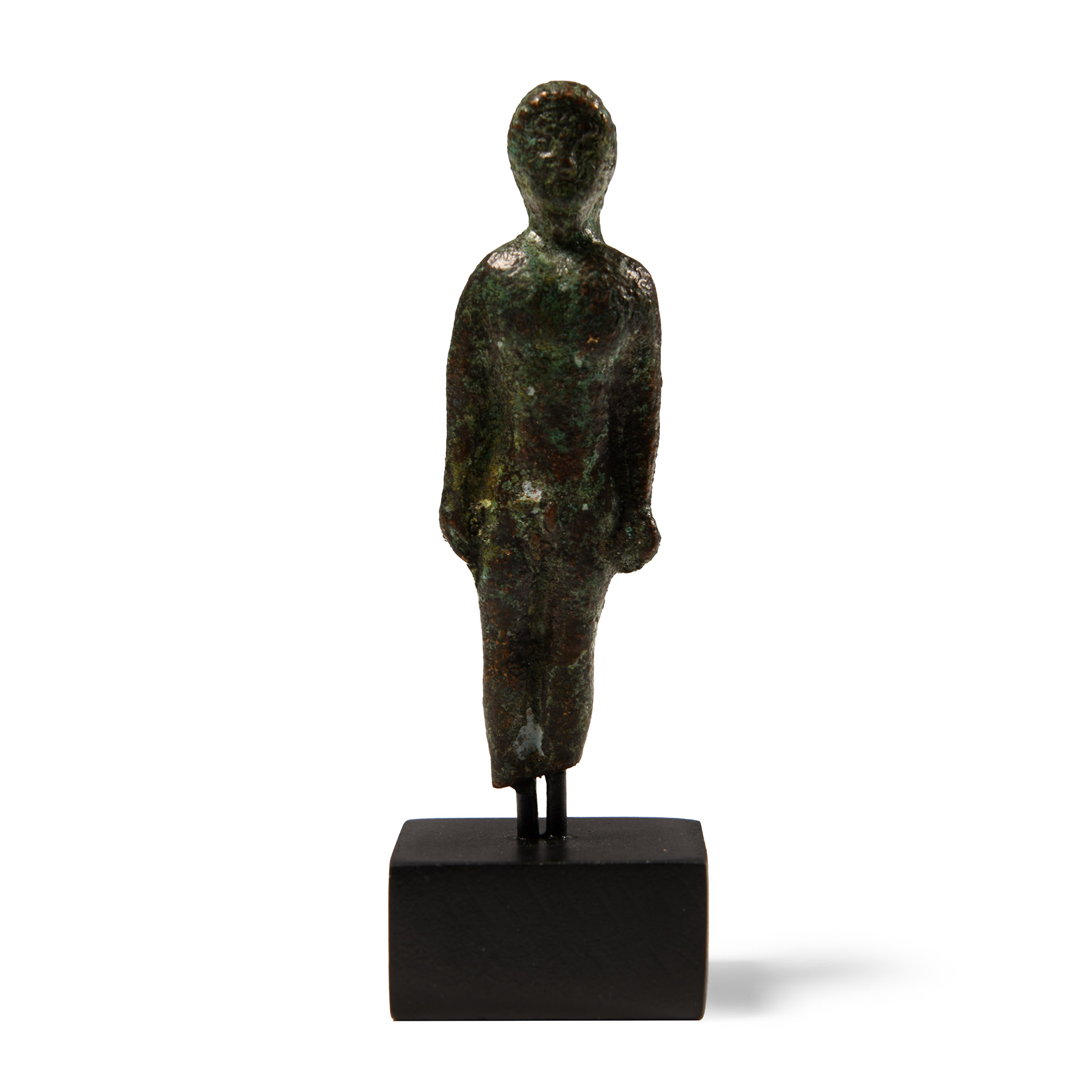
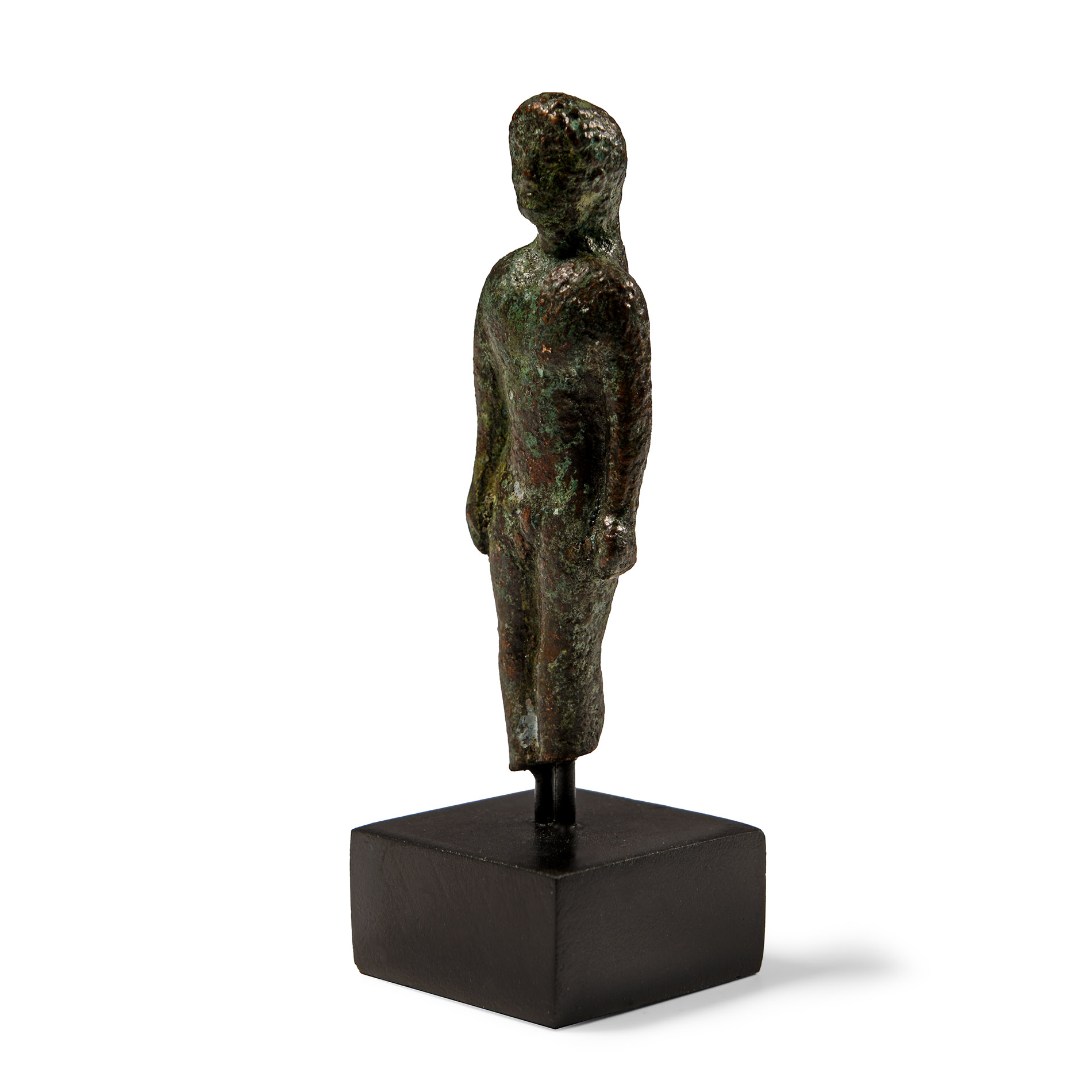
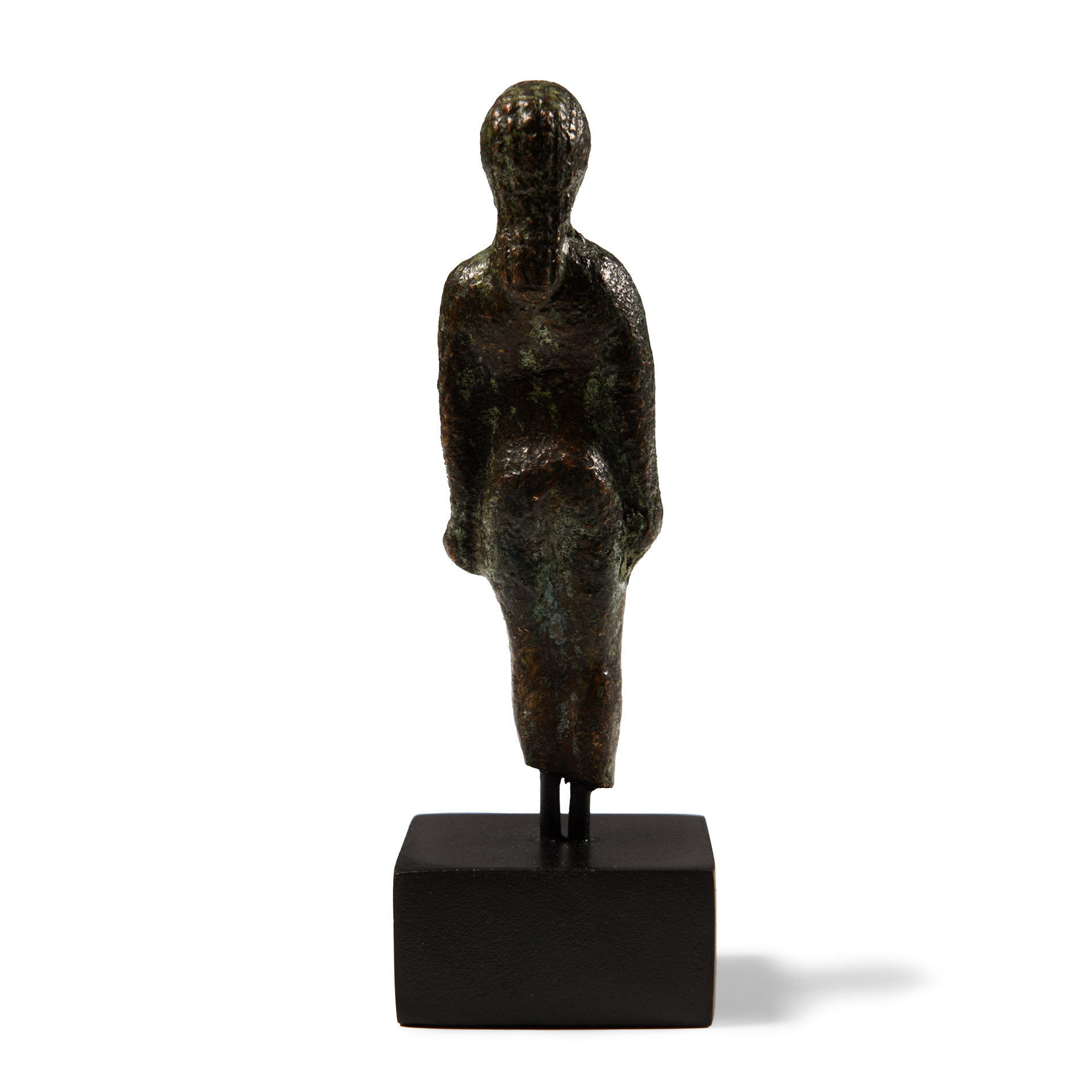
Archaic Greek Bronze Figure
CIRCA 8TH-6TH CENTURY B.C.
3 1/2 in. (68 grams, 78 mm including stand).
Standing nude with arms held straight at the sides, hair braided; probably a kouros monumental fitting; mounted on a custom-made display stand. [No Reserve]
ProvenanceFrom a collection acquired on the UK art market from various auction houses and collections mostly before 2000.
From an important Cambridgeshire estate; thence by descent.
TimeLine Auctions follows a vetting process to ensure the authenticity and legality of all items, reinforcing our commitment to integrity and responsible trading. Each antiquity, antique, and coin lot undergoes thorough examination by a vetting committee of at least ten external specialists, professional trade association members, scientists, and archaeologists: Our Vetting Process
AUCTIONS:
TimeLine is a leading auction house specialising in antiquities, ancient art, collectables, natural history, coins, medals, and books. Our auctions offer museums, collectors, historians, and enthusiasts the opportunity to acquire unique and historically significant pieces.
-
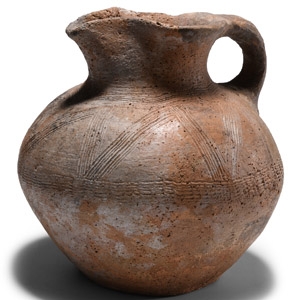
Cypriot Trefoil Mouthed Terracotta Jug
Early Bronze Age, 2500-1900 B.C.Sold for (Inc. bp): £195
Biconvex in profile with broad shoulder and pinched trefoil mouth, strap handle to the rear; band of incised multilinear zigzag ornament to the shoulder. 903 grams, 14.8 cm
From a collection acquired on the UK art market from various auction houses and collections mostly before 2000. From an important Cambridgeshire estate; thence by descent.
The vessel belongs to the group of Philia red polished ware, a ware imported in Cyprus from Anatolian refugees, or locally made by copying external imports. It was characterised by multiple zigzag and open herringbone bands. -
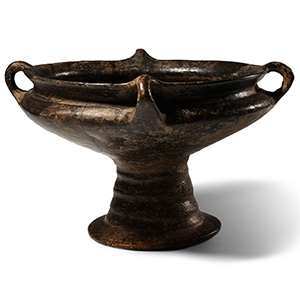
Etruscan Impasto Chalice
Circa 6th century B.C.Sold for (Inc. bp): £468
With ribbed stem tapering to a low wide bowl; four loop handles on outside of bowl connecting outer lip of inverted rim to bowl; inside with nine wide equidistant grooves to centre of grooved circle at base of bowl; some restoration. 755 grams, 22.5 cm
From the George R. Francoeur Trust, Bloomfield Hills, Michigan, with collection inventory no.319; acquired in 1982. Ex Hindman Auctions, Chicago, USA, sale, lot 72. Property of a South Australian private collector, with collection reference 20.09. Accompanied by detailed collector's catalogue pages including description and photograph. Accompanied by a Francoeur Trust inventory card with inventory number 82.319), along with collection label 319 to its base. George R. Francoeur (1934-2019) received his Master’s Degree of Fine Arts from the University of Michigan and was a dedicated arts teacher for many years at Cranbrook Academy of Arts. His collection of ancient art was offered at auction by Hindman Auctions, with the proceeds benefiting the George R. Francoeur Scholarship Fund at Cranbrook Academy of Art.
Impasto and bucchero also share techniques that were used to form and decorate the vessels. Bucchero chalices with distinctive fluted walls were popular products during the first half of the 6th century B.C. at a number of Etruscan sites. It is likely that the inspiration for fluted chalices came from metalwork. Undecorated examples have been found at Poggio Buco. -
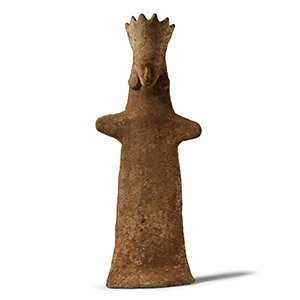
Boeotian Plank Idol of a Goddess
Circa 6th century B.C.Sold for (Inc. bp): £910
Tapering flat-section body with ledge base, stub arms, applied facial detailing, tall polos headdress. 157 grams, 23 cm
From a collection acquired on the UK art market from various auction houses and collections mostly before 2000. From an important Cambridgeshire estate; thence by descent. Accompanied by a thermoluminescence analysis report from Oxford Authentication no.N124d7. This lot has been checked against the Interpol Database of stolen works of art and is accompanied by a search certificate number no.12087-214721.
