
Loading, please wait...
LOT 1229
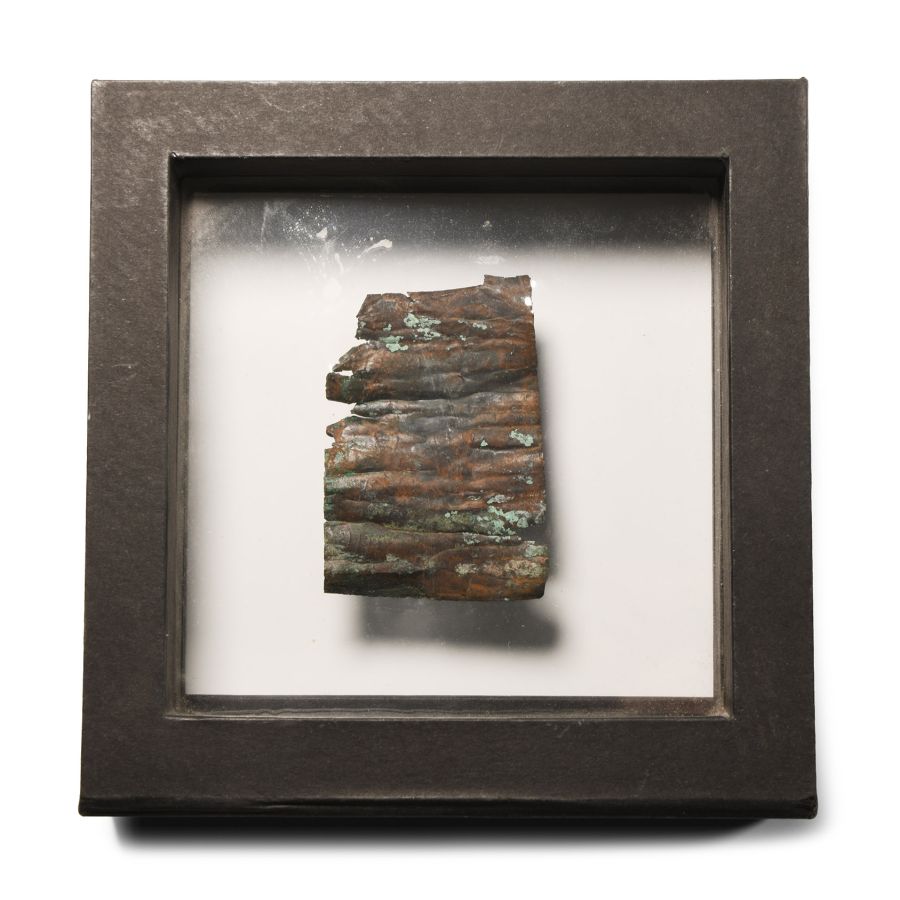
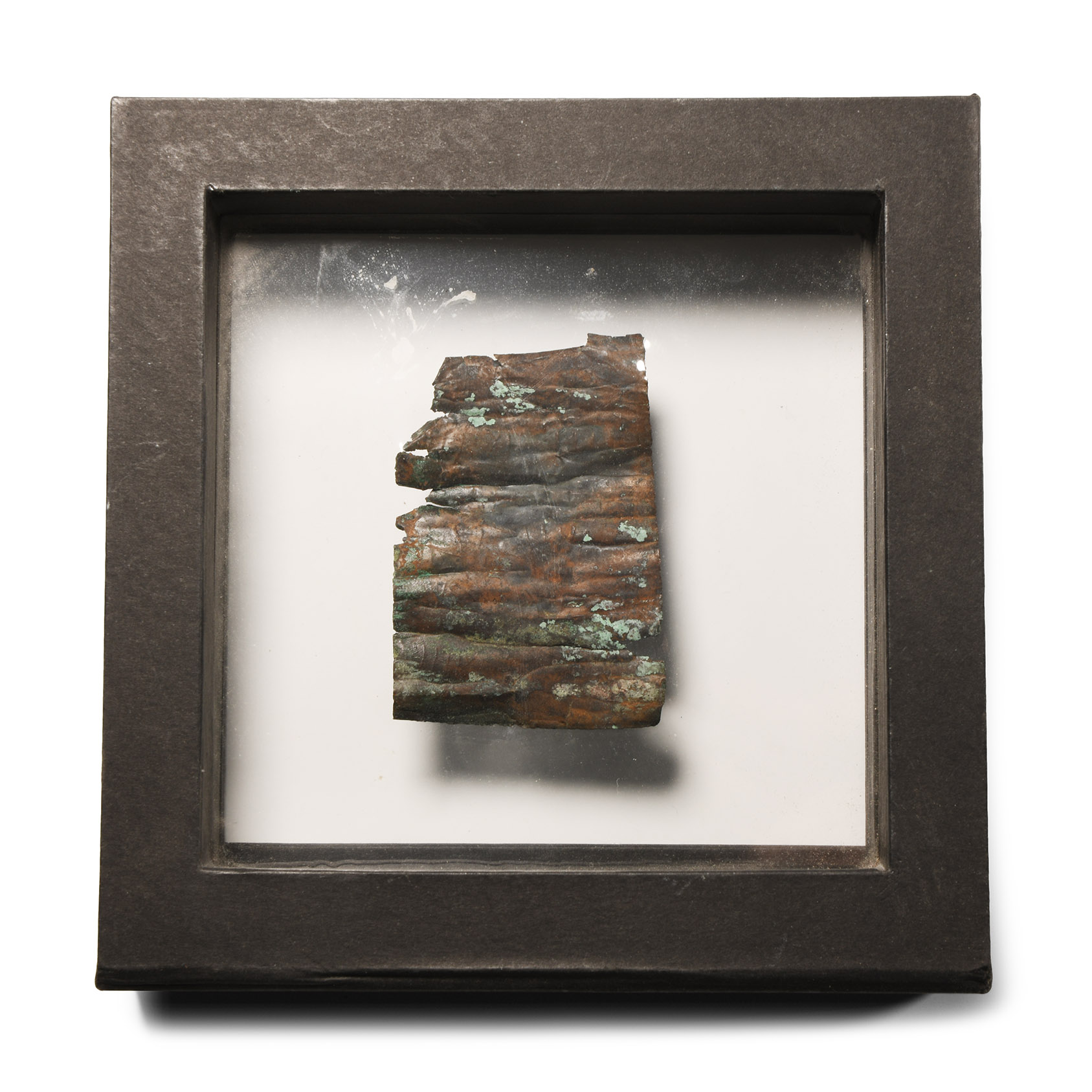
Aramaic Fragmentary Bronze Text Scroll
2ND-8TH CENTURY A.D.
5 3/8 - 5 1/8 in. (209 grams total, 13.5 x 13 cm including case).
An unrolled sheet with impressed text in Aramaic script, mounted in a display frame.
ProvenanceCollected from 1969-1999.
From the collection of the late Mr S.M., London, UK.
TimeLine Auctions follows a vetting process to ensure the authenticity and legality of all items, reinforcing our commitment to integrity and responsible trading. Each antiquity, antique, and coin lot undergoes thorough examination by a vetting committee of at least ten external specialists, professional trade association members, scientists, and archaeologists: Our Vetting Process
AUCTIONS:
TimeLine is a leading auction house specialising in antiquities, ancient art, collectables, natural history, coins, medals, and books. Our auctions offer museums, collectors, historians, and enthusiasts the opportunity to acquire unique and historically significant pieces.
-
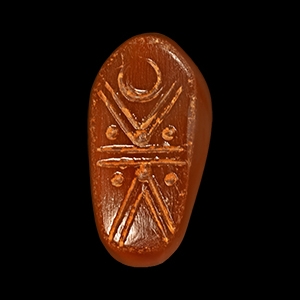
Neo Babylonian Agate Duck Weight with Engraving
Mid 1st millennium B.C.Sold for (Inc. bp): £585
Modelled as a duck with its head resting along its voluminous back, base engraved with a crescent, dots, lines and triangles. 11.8 grams, 28 mm
Collected from 1969-1999. From the collection of the late Mr S.M., London, UK.
There are references to keeping ducks in ancient Egypt and Mesopotamia from the third millennium B.C. onwards. One of the most common shapes for Near Eastern weights was 'the sleeping duck'. Representation demonstrates that the duck served chiefly as a meat source, even though a certain cultic significance must also be presumed: the crescent here engraved could be connected with the cult of Ishtar. -
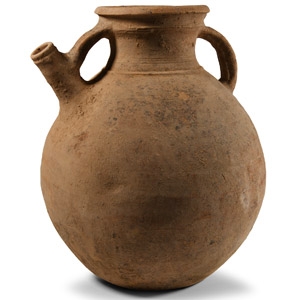
Large North West Iranian Spouted Vessel
Circa 1st millennium B.C.Sold for (Inc. bp): £176
Globular in profile with incised horizontal rings to shoulder and neck, carinated rim, strap handle and short spout with curved reinforcing strap; traces of pigment to shoulder. 3.2 kg, 31.5 cm high
Acquired 1980-2015. Ex Abelita family collection. -
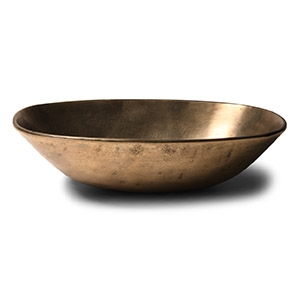
Sassanian Bronze Boat-Shaped Wine Bowl
4th-6th century A.D.Sold for (Inc. bp): £33
Featuring a rounded base; heavily cleaned. 292 grams, 16.5 cm
Acquired prior to 2000. British private collection of Mr D.M., London, UK.
