
Loading, please wait...
LOT 1281
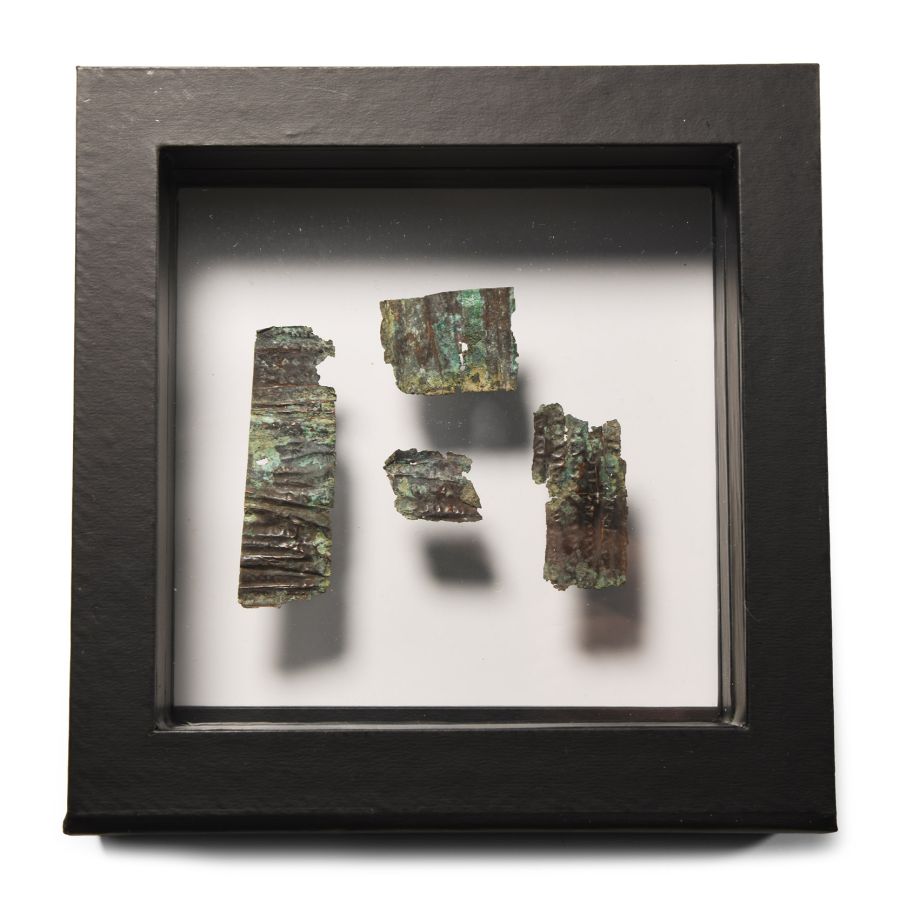
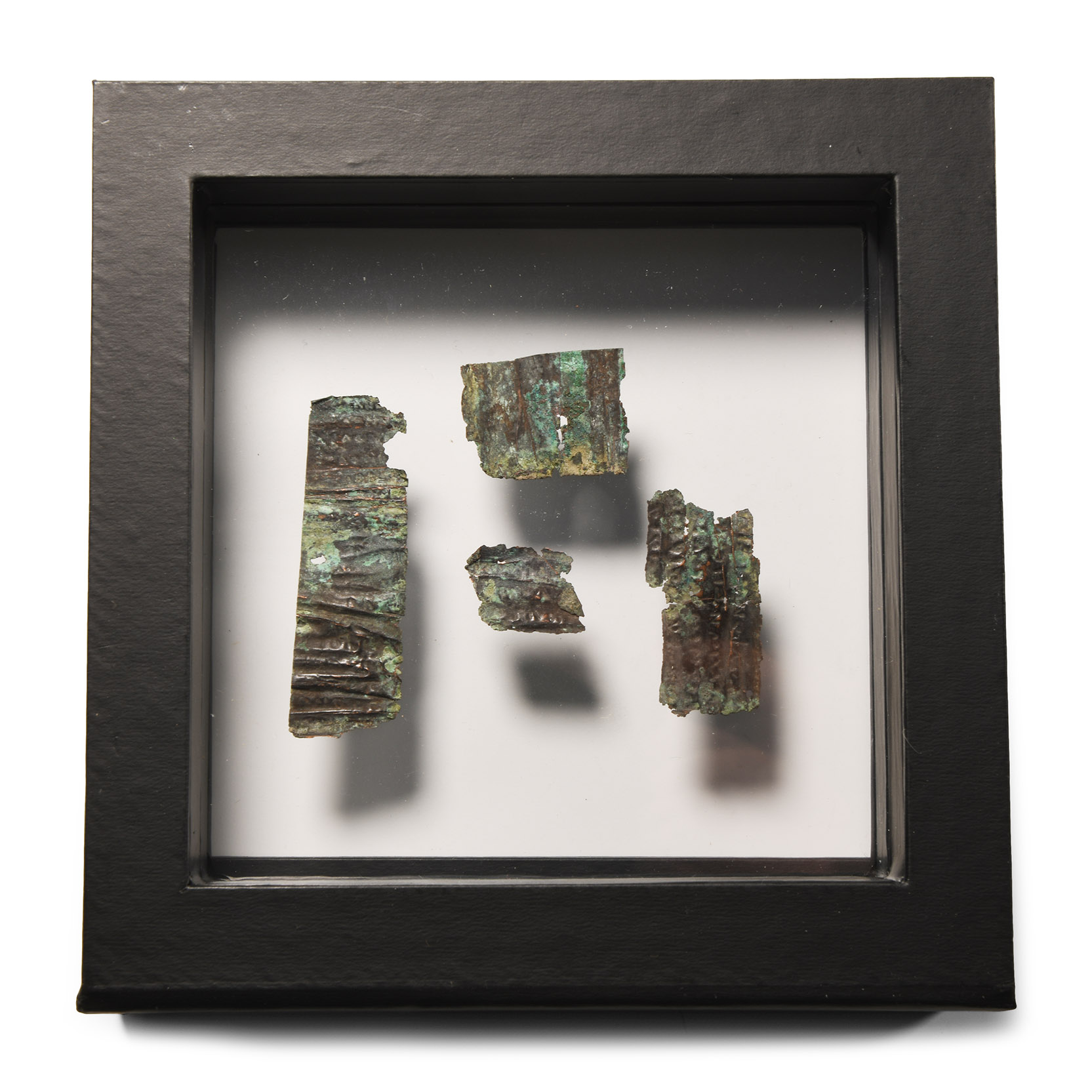
Aramaic Fragmentary Bronze Scroll Text
2ND-8TH CENTURY A.D.
5/8 - 2 in. (5 1/8 x 5 1/4 in.) (207 grams total, 15-51 mm (13 x 13.5 cm including case)).
Group of sheet-bronze fragments each with impressed Aramaic calligraphic text; mounted in a display frame. [4]
ProvenanceCollected from 1969-1999.
From the collection of the late Mr S.M., London, UK.
TimeLine Auctions follows a vetting process to ensure the authenticity and legality of all items, reinforcing our commitment to integrity and responsible trading. Each antiquity, antique, and coin lot undergoes thorough examination by a vetting committee of at least ten external specialists, professional trade association members, scientists, and archaeologists: Our Vetting Process
AUCTIONS:
TimeLine is a leading auction house specialising in antiquities, ancient art, collectables, natural history, coins, medals, and books. Our auctions offer museums, collectors, historians, and enthusiasts the opportunity to acquire unique and historically significant pieces.
-
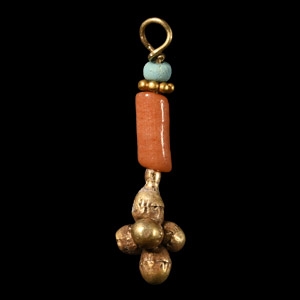
Western Asiatic Gold Pendant with Beads
1st millennium B.C.Sold for (Inc. bp): £156
Comprising a three-dimensional flower composed of gold spheres, supported by a slender stem with a turquoise and coral bead. 0.85 grams, 28 mm
From a late Japanese specialist collector, 1970-2000s. -
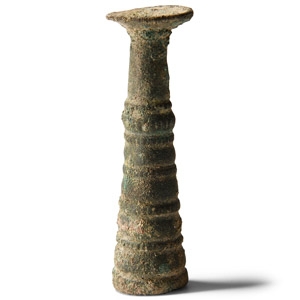
Luristan Bronze Kohl Pot
1st millennium B.C.Estimate: £200 - 300 (‡+bp*)
Opening Bid: £100
Of tapering cylindrical form with everted rim, decoratively notched ribs of alternating breadth to to body. 60 grams, 78 mm
Acquired in Europe before 1993. -
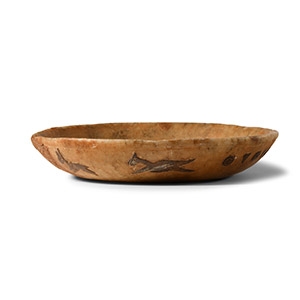
Mesopotamian Alabaster Bowl with Inlaid Animals
2nd-1st millennium B.C.Sold for (Inc. bp): £572
Low dish or bowl with flared sidewall, inlaid appliqués to outer face formed as leaping animals, discs, birds and other types. 347 grams, 16 cm wide
From a collection acquired on the UK art market from various auction houses and collections mostly before 2000. From an important Cambridgeshire estate; thence by descent.
