
Loading, please wait...
LOT 0362
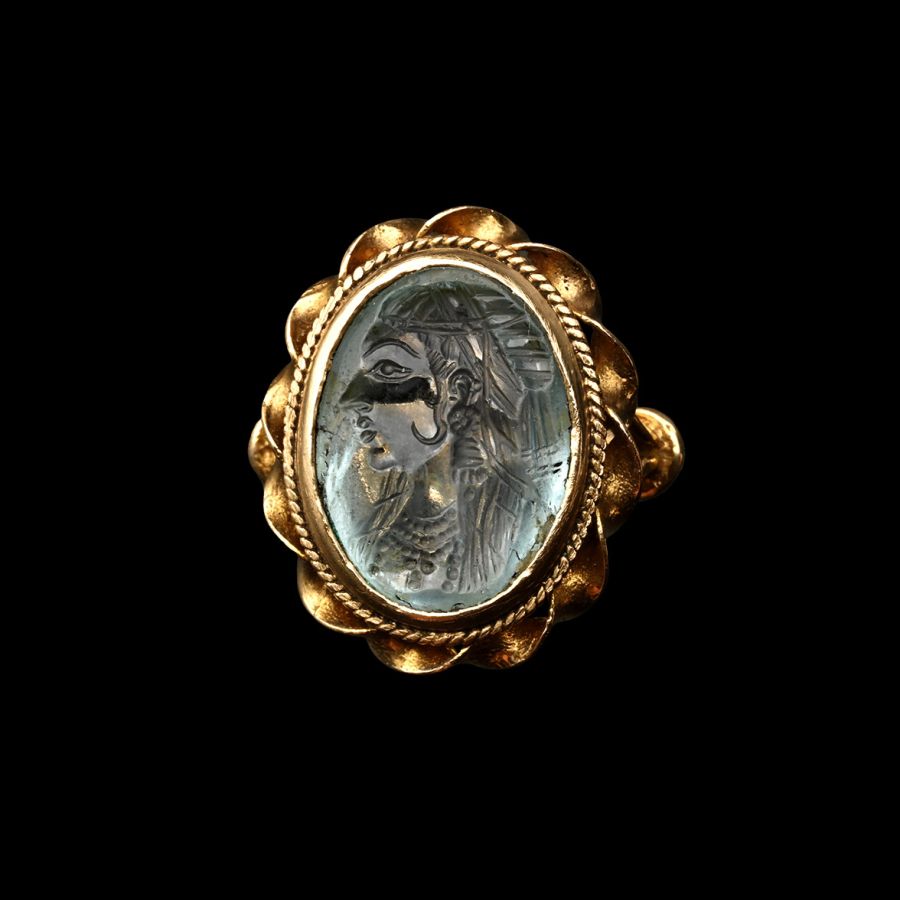
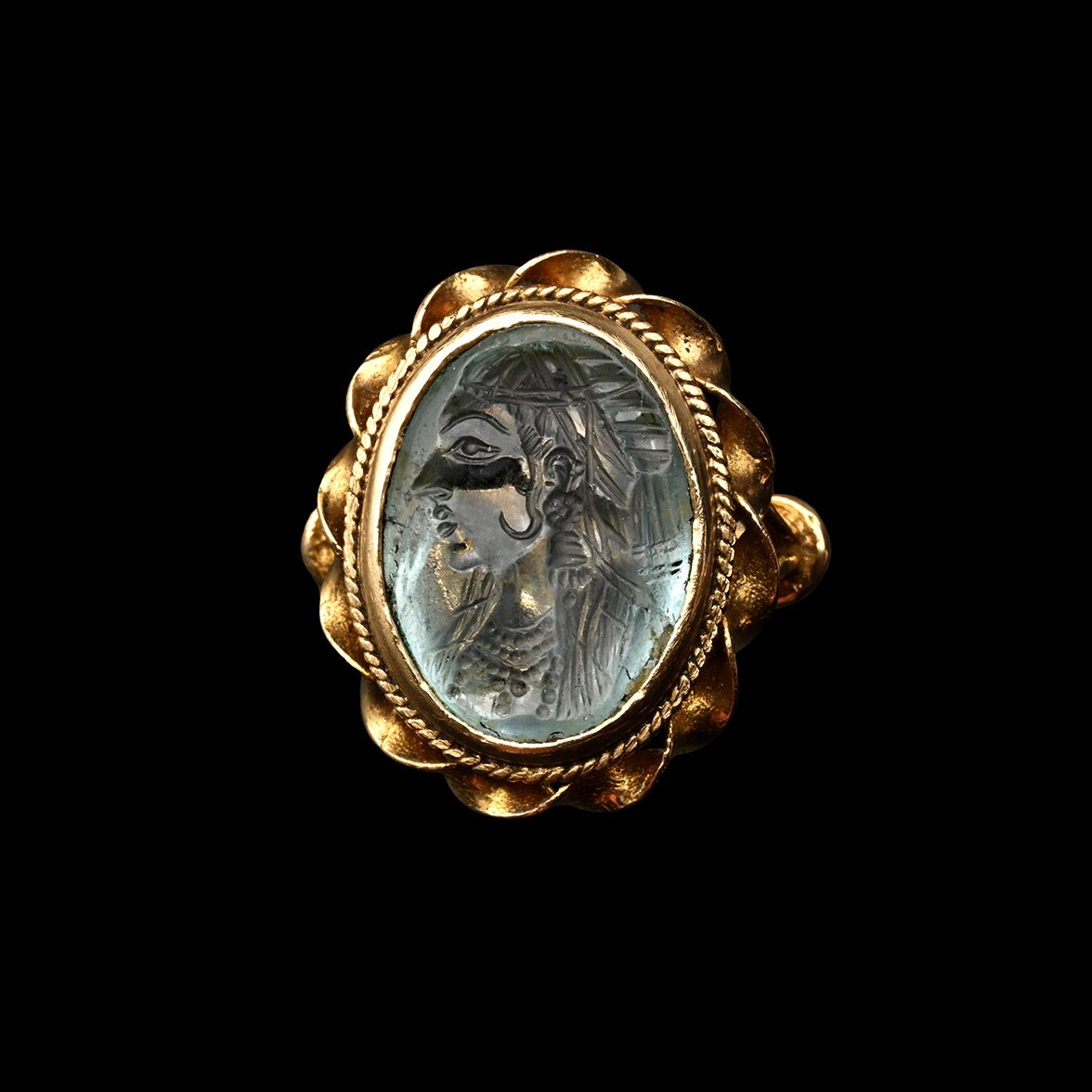
Aquamarine Gemstone with Mughal Princess in Gold Ring
CIRCA 17TH CENTURY A.D. AND LATER
1 in. (8.26 grams, 25.37 mm overall, 17.74 mm internal diameter (approximate size British O 1/2, USA 7 1/4, Europe 15.61, Japan 15)).
Ellipsoid in plan intaglio showing a profile female bust with elaborate tiered headdress and collars; set in a later gold ring. [No Reserve]
ProvenanceFrom the private collection of Rev. Nathaniel Evans, Worthing, Sussex, UK, thence by descent.
This lot has been checked against the Interpol Database of stolen works of art and is accompanied by search certificate number no.12934-245934.
See for a similar portrait (not on a gemstone), the portrait of a Mughal princess in the Art Institute of Chicago, made between 1601 and 1799, accession no.1929.890.
FootnotesThese portraits, realised on objects of minor art like glyptics, give a glimpse of the type of jewels and gems realised during the Mughal era. They illustrated the gem connoisseurship of the Mughal Era at its pinnacle.
CONDITIONTimeLine Auctions follows a vetting process to ensure the authenticity and legality of all items, reinforcing our commitment to integrity and responsible trading. Each antiquity, antique, and coin lot undergoes thorough examination by a vetting committee of at least ten external specialists, professional trade association members, scientists, and archaeologists: Our Vetting Process
AUCTIONS:
TimeLine is a leading auction house specialising in antiquities, ancient art, collectables, natural history, coins, medals, and books. Our auctions offer museums, collectors, historians, and enthusiasts the opportunity to acquire unique and historically significant pieces.
LOT 0362
Aquamarine Gemstone with Mughal Princess in Gold Ring
Sold for (Inc. bp): £2,860
-
Painted Wooden Icon with the Virgin of Vladimir
Russia, 18th century A.D.Estimate: £1,200 - 1,700 (+bp*)
Opening Bid: £600
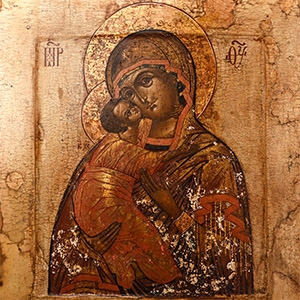
With veiled head and wearing a fringed golden maphorion mantle over a dark blue robe with gold cuffs, inclined towards the infant Jesus supported by her right hand; monograms and titling, on each side of her head 'ΜΡ ΘΥ' (Μήτηρ (τοῦ) Θεοῦ = Mother of God), over the child inscription in Greek letters 'ΙϹ ΧϹ' (ΙΗϹΟΥϹ ΧΡΙϹΤΟϹ = Jesus Christ), three letters (only two visible) inside the nimbus of Christ representing the continuous divine self-existence of Christ as God ('O ѾN' = The Only One who always exists); rectangular wooden board with mounting bar to reverse; Moscow School; old label on the back with inscription in Dutch 'A209 Moeder Gods van Wladimir'. 1.3 kg, 35.7 x 31 cm
Acquired on the UK art market. Private collection, London, UK.
The original icon prototype of these smaller icons was the icon of the Virgin Mother of Vladimir with the infant Jesus (the original preserved in the Tretyakov Gallery, Moscow), probably the most famous icon of Russia, which was thought to have been created in Constantinople in the early part of 1100s. This image is sometimes referred to as the ‘tenderness icon’, with artists attempting to show the close relationship of mother and son with their cheeks touching as they embrace. -
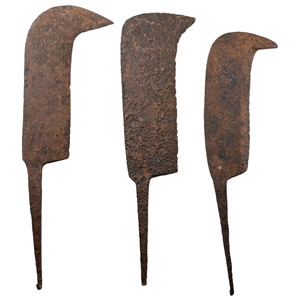
Very Large Medieval and Later Iron Billhook Collection
14th-18th century A.D.Sold for (Inc. bp): £26
Each with broad hooked blade and square-section tang hooked at the end. 1.79 kg total, 36-39 cm
From the property of a late Lincolnshire, UK, gentleman. -
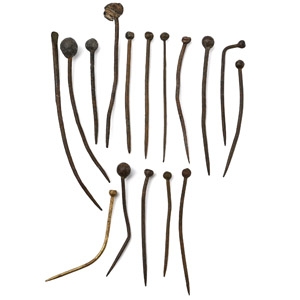
'Thames' Tudor Bronze Dress Pin Collection
16th century A.D.Sold for (Inc. bp): £20
Mostly with hatching to the globular head. 10.2 grams total, 35-63 mm
Found on the Thames foreshore, UK. From the property of a late Lincolnshire, UK, gentleman.
