
Loading, please wait...
LOT 1529
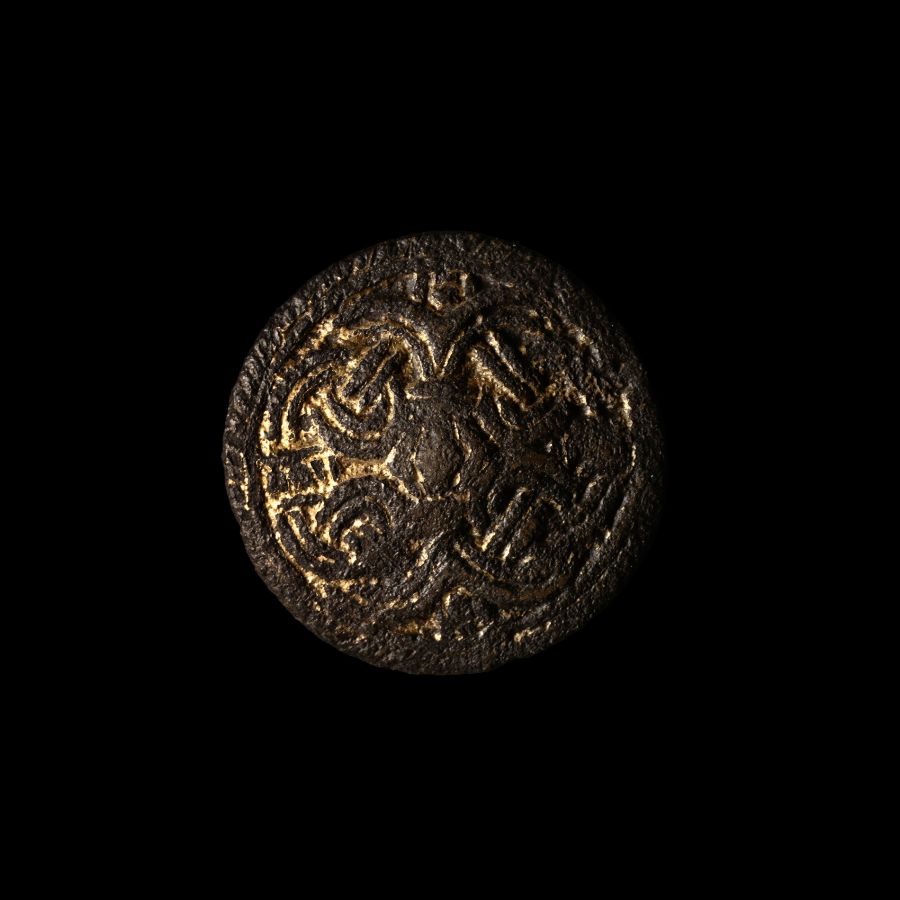
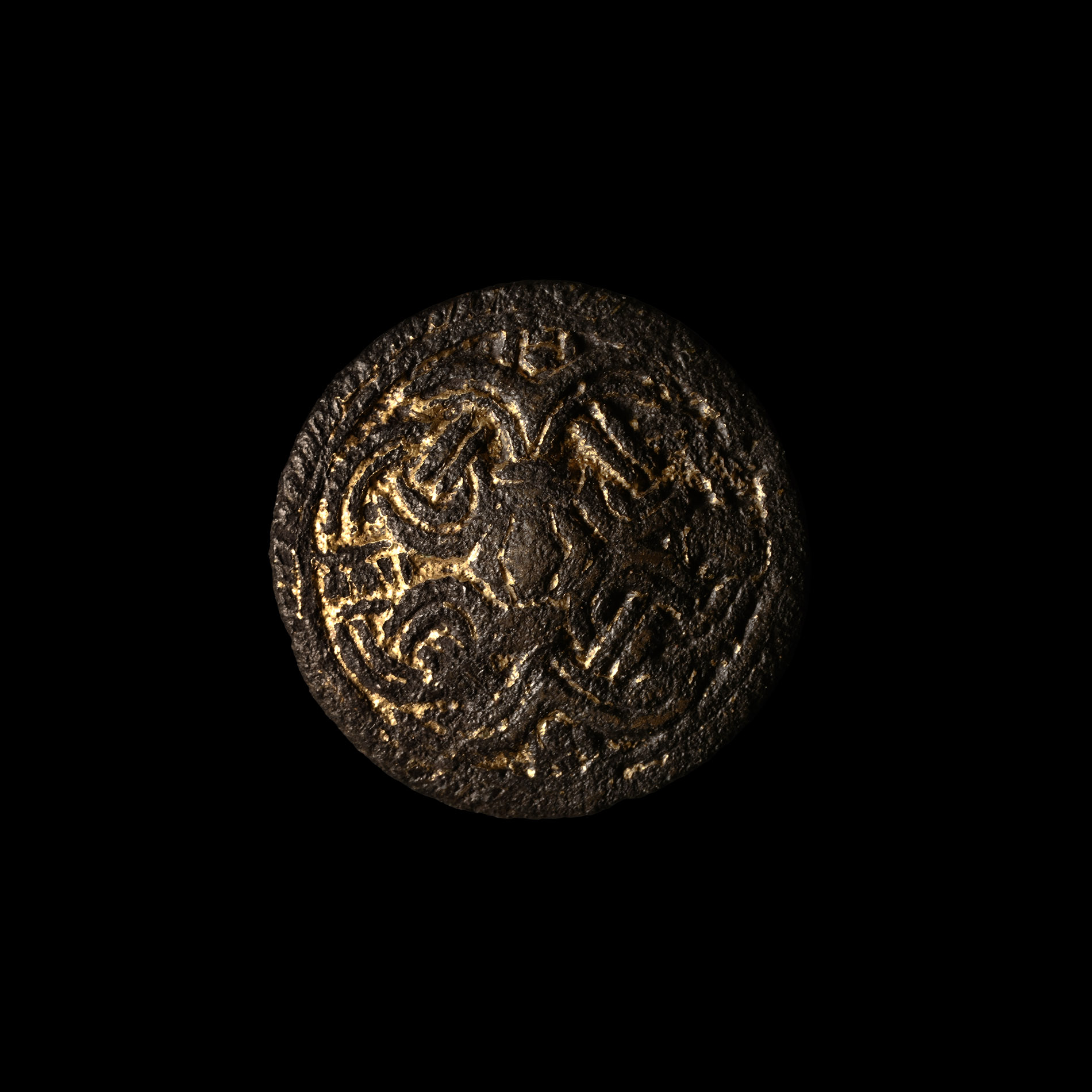
Anglo-Scandinavian Viking Gilt Bronze Borre Interlaced Brooch
10TH-11TH CENTURY A.D.
1 in. (7.75 grams, 26 mm).
Featuring a slightly domed face, Borre style interlace design; pin-lugs, catchplate and attachment loop to the reverse. [No Reserve]
ProvenanceFound Dragonby, Lincolnshire, UK.
Acquired late 1980s-early 1990s.
Ex private collection, Nottinghamshire, UK.
TimeLine Auctions follows a vetting process to ensure the authenticity and legality of all items, reinforcing our commitment to integrity and responsible trading. Each antiquity, antique, and coin lot undergoes thorough examination by a vetting committee of at least ten external specialists, professional trade association members, scientists, and archaeologists: Our Vetting Process
AUCTIONS:
TimeLine is a leading auction house specialising in antiquities, ancient art, collectables, natural history, coins, medals, and books. Our auctions offer museums, collectors, historians, and enthusiasts the opportunity to acquire unique and historically significant pieces.
LOT 1529
Anglo-Scandinavian Viking Gilt Bronze Borre Interlaced Brooch
Sold for (Inc. bp): £117
-
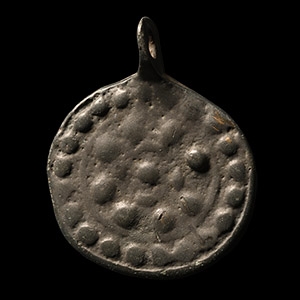
Viking Age Bronze Pendant
9th-11th century A.D.Sold for (Inc. bp): £39
Retaining its integral suspension loop, and decorated with concentric roundels composed of shallow domes. 9.29 grams, 33 mm
From the collection of a North American gentleman, formed in the 1990s. -
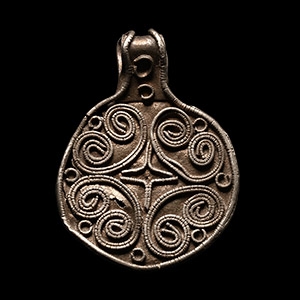
Viking Silver Filigree Pendant with Scrolled Cross
10th century A.D.Sold for (Inc. bp): £468
Within a filigree border; suspension loop above. 2.6 grams, 32 mm
From the collection of a North American gentleman, formed in the 1990s.
In the Gnezdovo Hoard, 46 beads of sheet silver, most with granulation of Slav character, others with filigree, were part of one of the greatest Viking treasure found in the East. The jewellery, most of Scandinavian or Slav character, show the great mix of style and decoration which ornamented the dress and the garments of the Vikings in the East. -
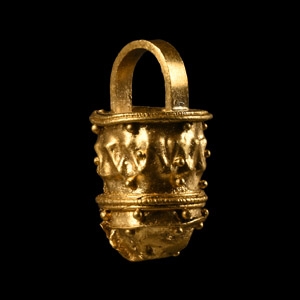
Pre-Viking Gold Filigree Aroma Bucket Pendant
4th-7th century A.D.Sold for (Inc. bp): £410
Adorned with repoussé chevrons and applied granules; replaced loop. 1.17 grams, 15 mm
From the collection of a North American gentleman, formed in the 1990s.
Pendants in the form of miniature buckets have been found in a number of pagan Anglo-Saxon and Viking contexts and are generally made of bronze or iron, with gold examples being rare; three gold examples were found with the hoard from Hoen, Norway. Bronze bucket amulets have been found at Driffield in Yorkshire, and Vimose bog in Denmark, among other places. In form they represent wooden buckets bound with bronze or iron bands which have been found in Anglo-Saxon and Viking graves and are believed to have held mead or ale and were used to replenish the cups from which warriors drank. As amulets they probably represent the ecstatic power of alcoholic drink and the role of women as the dispensers of these precious beverages.
