
Loading, please wait...
_900x900.jpg "Anglo-Scandinavian Viking Bronze Urnes Openwork Mount")
_200x200.jpg "Anglo-Scandinavian Viking Bronze Urnes Openwork Mount")
.jpg "Anglo-Scandinavian Viking Bronze Urnes Openwork Mount")
LOT 1715
Anglo-Scandinavian Viking Bronze Urnes Openwork Mount
11TH CENTURY A.D.
1 5/8 in. (17.75 grams, 41 mm).
Comprising a heater-shaped frame with integral openwork Urnes-style enmeshed beast. [No Reserve]
ProvenanceFound Gloucestershire, UK.
FootnotesThe design is clearly based on Anglo-Scandinavian stirrup mount but the item is not substantial enough for this purpose and lacks both the attachment point at the apex and the rear ledge which characterise these pieces. Possibly a casket-mount or fitting, or a decorative item from riding harness.
CONDITIONTimeLine Auctions follows a vetting process to ensure the authenticity and legality of all items, reinforcing our commitment to integrity and responsible trading. Each antiquity, antique, and coin lot undergoes thorough examination by a vetting committee of at least ten external specialists, professional trade association members, scientists, and archaeologists: Our Vetting Process
AUCTIONS:
TimeLine is a leading auction house specialising in antiquities, ancient art, collectables, natural history, coins, medals, and books. Our auctions offer museums, collectors, historians, and enthusiasts the opportunity to acquire unique and historically significant pieces.
-
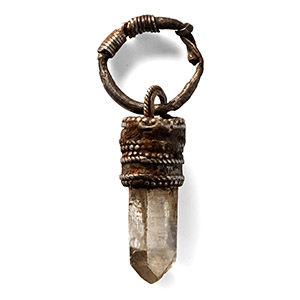
Viking Silver Pendant with Rock Crystal
8th-10th century A.D.Sold for (Inc. bp): £624
With hexagonal-section crystal bead modified for use as a pendant with the addition of a silver collar bearing filigree ropework; thick wire suspension loop with ends twisted around the shank. 7.55 grams, 51 mm
From the private collection of a London gentleman, from his grandfather's collection formed before the early 1970s. -
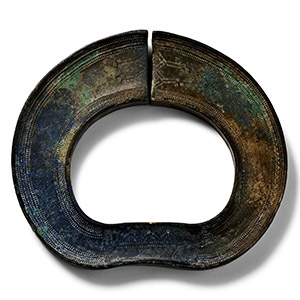
Viking Bronze Protective Armlet
9th-10th century A.D.Estimate: £800 - 1,000 (+bp*)
Opening Bid: £400
Omega-shaped in plan with raised flange rim to both edges; bands of punched ornament to each face. 216 grams, 11.2 cm
Acquired on the UK art market, 1995-2000s. Private collection, London, UK. -
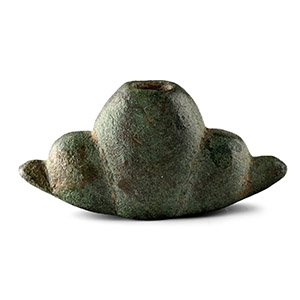
Anglo-Scandinavian Viking Bronze Five-Lobed Pommel
10th-11th century A.D.Sold for (Inc. bp): £338
Of Petersen's Type S (Wheeler Type III) with five graduated lobes; hollow, the lower face a swept arc; pierced through the tallest lobe to accept the tang of the sword's blade. 48.7 grams, 50 mm
Found Norfolk, UK.
