
Loading, please wait...


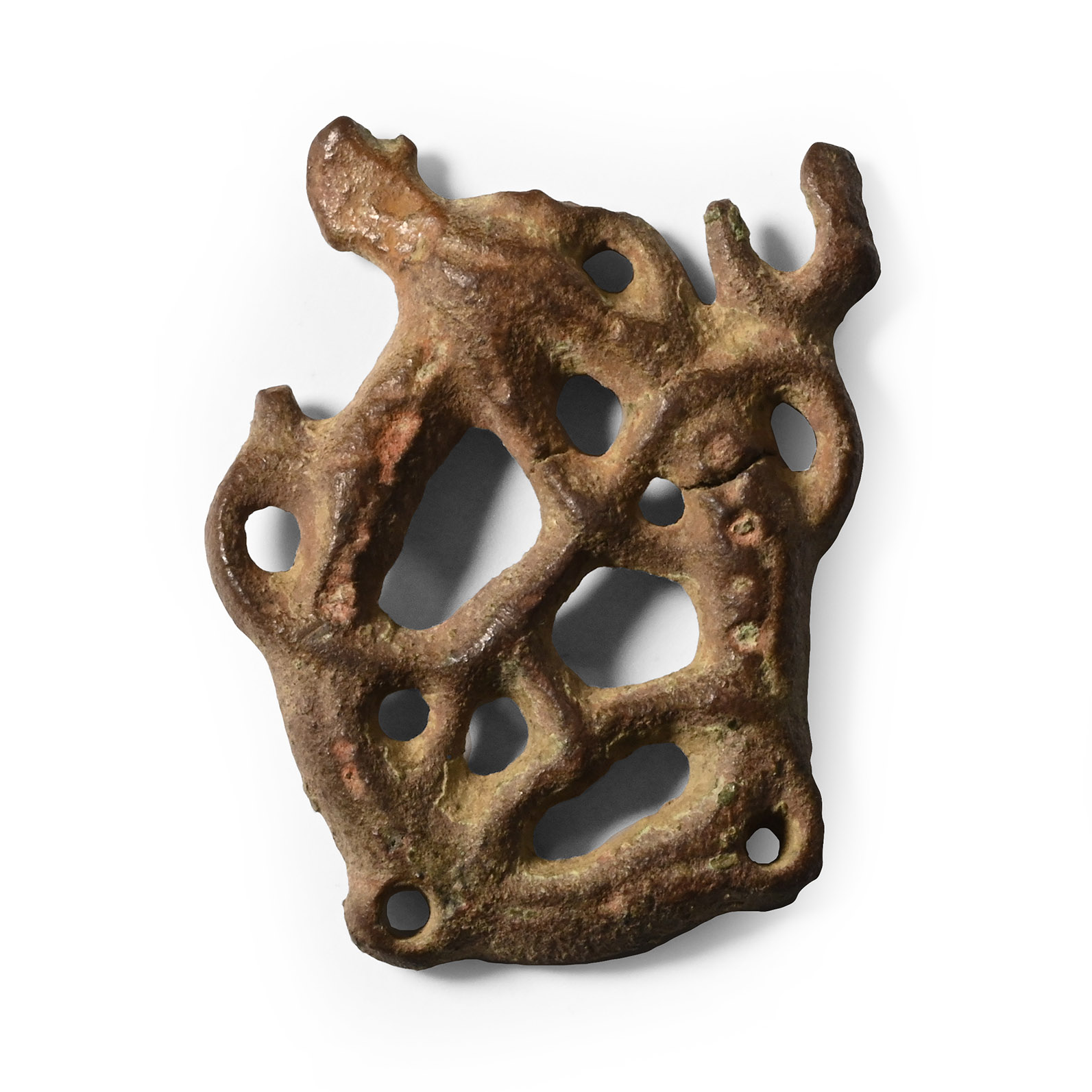
LOT 1686
Anglo-Scandinavian Viking Bronze Urnes Mount
LATE 11TH CENTURY A.D.
1 1/4 in. (10.9 grams, 33 mm).
The openwork body formed as sinuous zoomorphic interlace in the Urnes style. [No Reserve]
ProvenanceFound Pulham Market, Norfolk, UK.
From an old private collection of Norfolk, UK, gentleman, formed since 1998.
Accompanied by a copy of the British Museum's Portable Antiquities Scheme (PAS) report no.NMS-0139C1.
TimeLine Auctions follows a vetting process to ensure the authenticity and legality of all items, reinforcing our commitment to integrity and responsible trading. Each antiquity, antique, and coin lot undergoes thorough examination by a vetting committee of at least ten external specialists, professional trade association members, scientists, and archaeologists: Our Vetting Process
AUCTIONS:
TimeLine is a leading auction house specialising in antiquities, ancient art, collectables, natural history, coins, medals, and books. Our auctions offer museums, collectors, historians, and enthusiasts the opportunity to acquire unique and historically significant pieces.
-
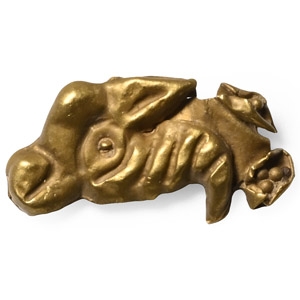
Viking Age Gold Animal-Headed Applique
Circa 9th-11th century A.D.Sold for (Inc. bp): £78
Sheet gold appliqué with repoussé detailing, two attachment rings to the reverse. 0.29 grams, 13 mm
Ex property of a late Japanese collector, 1970-2000s. -
.jpg)
Viking Age Silver Double Axehead Pendant
Circa 8th-11th century A.D.Sold for (Inc. bp): £169
Twibil pendant with flared blades and central elliptical shaft-hole. 6.68 grams, 43 mm
Acquired on the London art market in the late 1980s-1990s. From the family collection of an East London, UK, gentleman. -
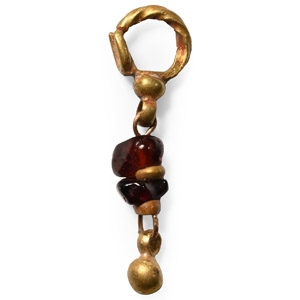
Viking Age Gold Pendant with Natural Garnets
Circa 9th-11th century A.D.Sold for (Inc. bp): £286
Hoop with cell and dangle with irregular garnet beads, spherical dangle finial. 1.54 grams, 27 mm
Ex property of a late Japanese collector, 1970-2000s.
