
Loading, please wait...
LOT 1648
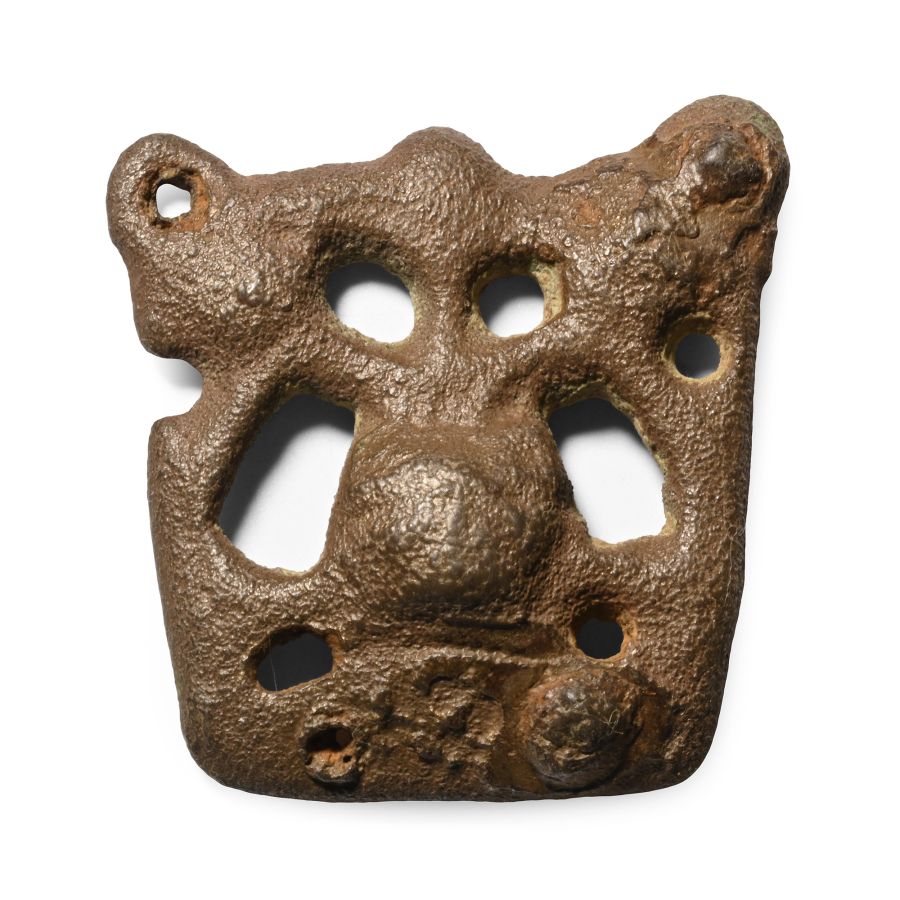
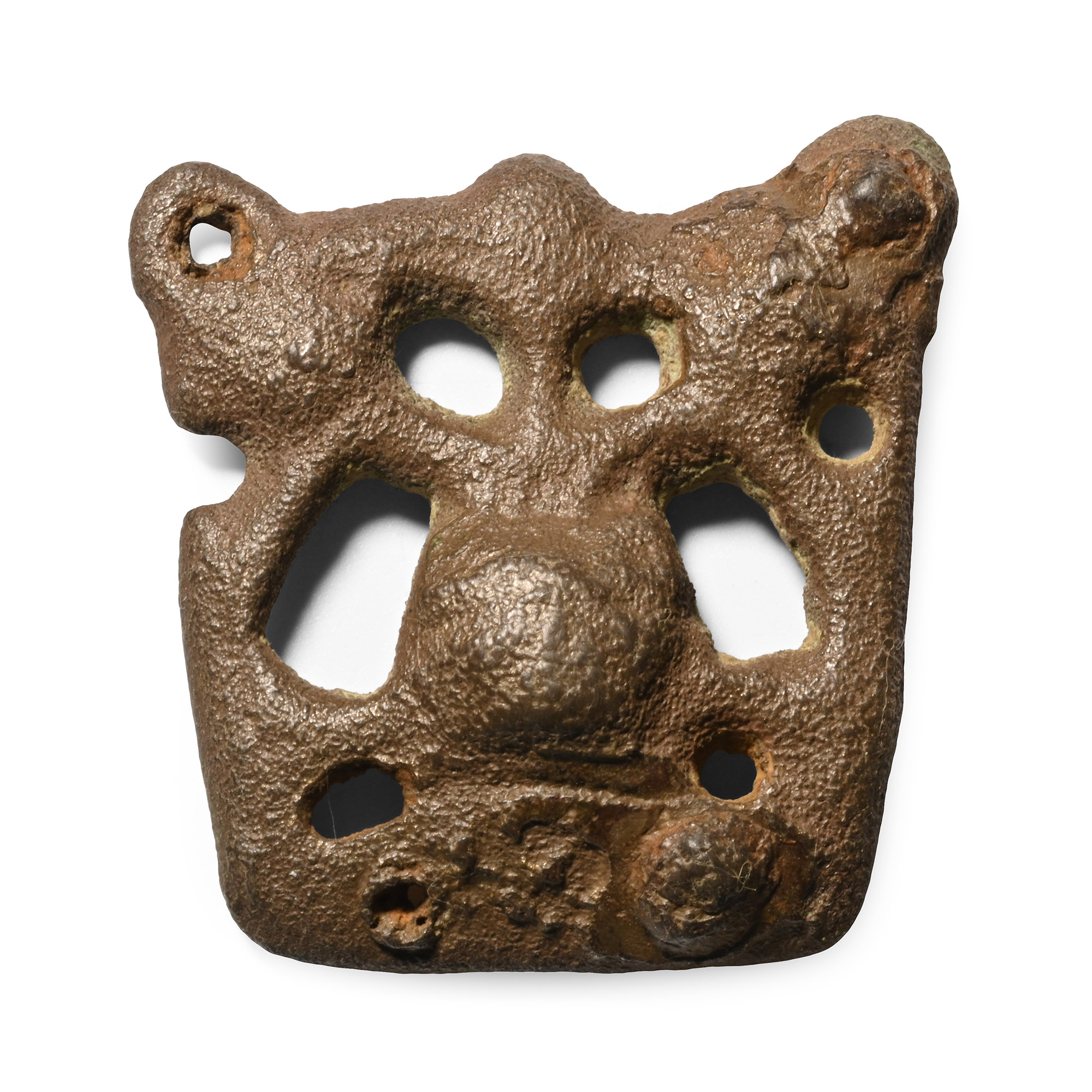
Anglo-Scandinavian Viking Bronze Stirrup Apex Mount
11TH CENTURY A.D.
1 1/2 in. (27.36 grams, 39 mm).
Of Williams's Class B Type 3 Group 1 with openwork plaque, bear-head beneath two opposed wolf-heads, angled ledge with ferrous fixing studs. [No Reserve]
ProvenanceFound Suffolk, UK.
LiteratureCf. Williams, D., Late Saxon Stirrup-Strap Mounts, York, 1997, item 420.
CONDITIONTimeLine Auctions follows a vetting process to ensure the authenticity and legality of all items, reinforcing our commitment to integrity and responsible trading. Each antiquity, antique, and coin lot undergoes thorough examination by a vetting committee of at least ten external specialists, professional trade association members, scientists, and archaeologists: Our Vetting Process
AUCTIONS:
TimeLine is a leading auction house specialising in antiquities, ancient art, collectables, natural history, coins, medals, and books. Our auctions offer museums, collectors, historians, and enthusiasts the opportunity to acquire unique and historically significant pieces.
-
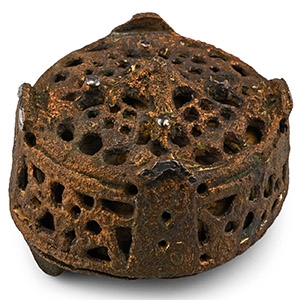
Viking Bronze Openwork Box Brooch with Silver Detailing
11th century A.D.Estimate: £600 - 800 (‡+bp*)
Opening Bid: £300
Formed as an openwork outer shell, inner container and bottom plate; the upper face with central conical boss and four small satellite bosses each with a silver surface disc; to the outer face four pierced tongue-shaped panels with D-shaped finials proud of the upper face, each with a silvered element to the upper end; the bottom plate with integral catchplate and central void, four attachment pins to the underside; the upper face and sidewall executed in Urnes style zoomorphic openwork; the inner element a plain sheet-bronze container. 95 grams, 55 mm
Acquired in the 1950s. Ex private collection, South West England.
On the Baltic island of Gotland, high-ranking females wore 'box' (or 'drum') brooches to secure their outer garments at the shoulders. The inner container may have been used to hold small valuables. -
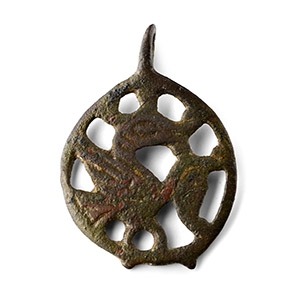
Anglo-Scandinavian Viking Bronze Pendant
10th-11th century A.D.Sold for (Inc. bp): £91
Lentoid in plan with openwork image of a small bird being seized by a larger predator; loop to apex. 5.42 grams, 39 mm
Found Norfolk, UK. -
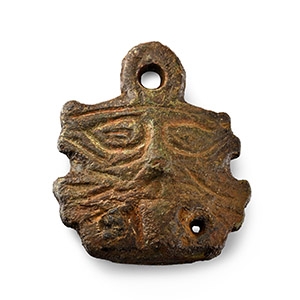
Anglo-Scandinavian Viking Bronze Cat-Faced Stirrup Apex Mount
10th-11th century A.D.Sold for (Inc. bp): £234
Substantial flat mount with loop above, mask formed with lentoid eyes and broad moustache, narrow chin; ledge to rear pierced to accept rivets. 36.1 grams, 38 mm
Found Norfolk, UK.
The face bears a strong likeness to that of the Rällinge statuette discovered in Sweden in the early 20th century and believed to represent the god Yngve-Freyr.
