
Loading, please wait...


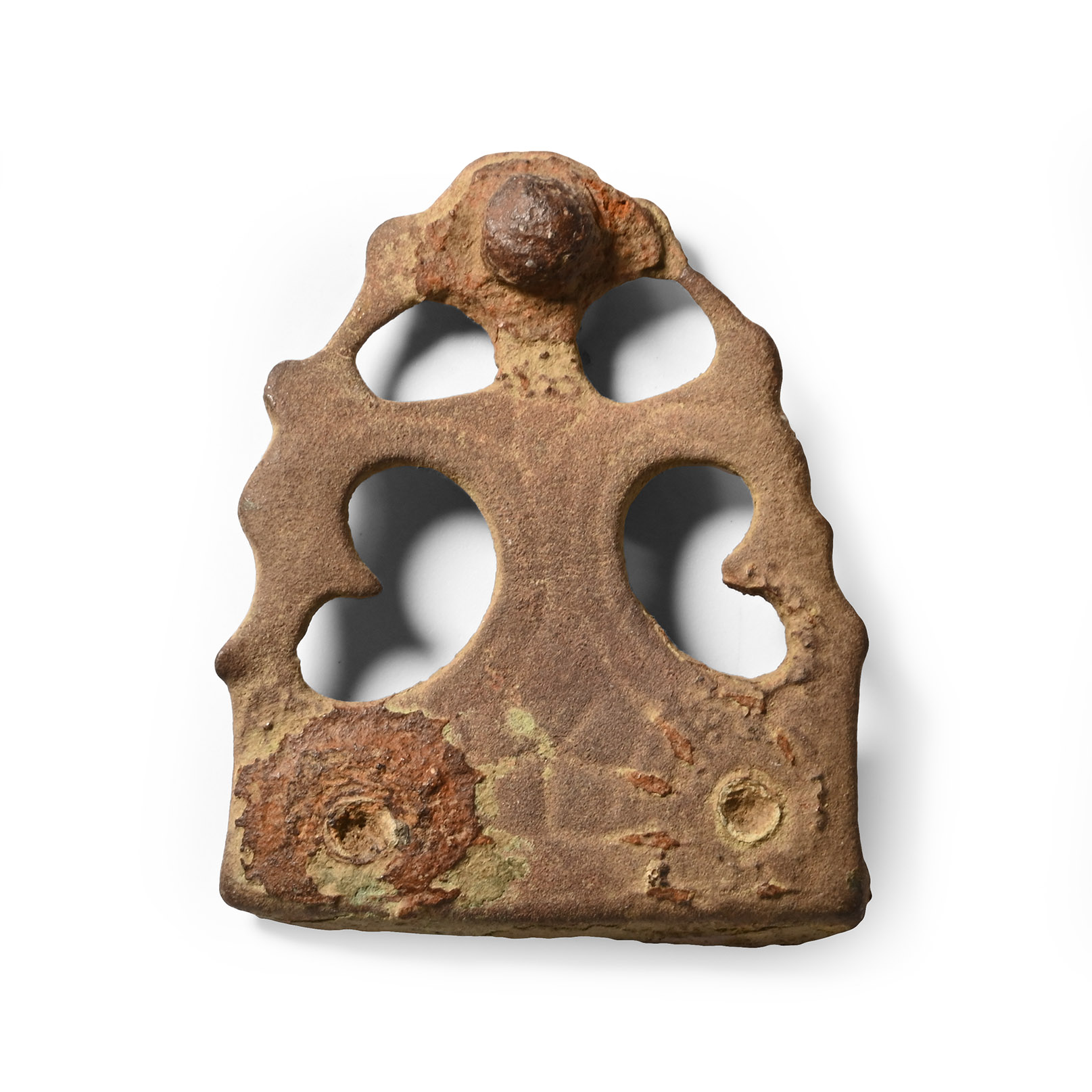
LOT 1694
Anglo-Scandinavian Viking Bronze Stirrup Apex Mount
11TH CENTURY A.D.
1 7/8 in. (23.6 grams, 48 mm).
With openwork beast decoration, single iron rivet to the top. [No Reserve]
ProvenanceFound in Rocklands, Norfolk, UK.
From an old private collection of Norfolk, UK, gentleman, formed since 1998.
Accompanied by a copy of the British Museum's Portable Antiquities Scheme (PAS) report no.NMS-7AD1D2.
TimeLine Auctions follows a vetting process to ensure the authenticity and legality of all items, reinforcing our commitment to integrity and responsible trading. Each antiquity, antique, and coin lot undergoes thorough examination by a vetting committee of at least ten external specialists, professional trade association members, scientists, and archaeologists: Our Vetting Process
AUCTIONS:
TimeLine is a leading auction house specialising in antiquities, ancient art, collectables, natural history, coins, medals, and books. Our auctions offer museums, collectors, historians, and enthusiasts the opportunity to acquire unique and historically significant pieces.
-
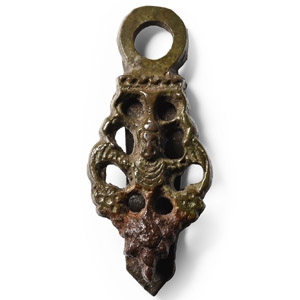
Anglo-Scandinavian Viking Bronze Bound Loki Suspension Mount
10th-11th century A.D.Sold for (Inc. bp): £520
Belt mount with loop above and strap to reverse; openwork frame with rosettes and central facing mask. 3..25 grams, 32 mm
Acquired in Germany after WWII. Ex property of a lady living in Kent, UK; formerly part of her grandfather's collection. From an old private collection of Norfolk, UK, gentleman, formed since 1998.
The image is often interpreted as the trickster-god Loki bound to a rock, as he was said to be in Norse myth (e.g. the poem Völuspá, verse 35). -
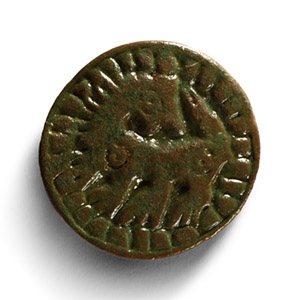
Anglo-Scandinavian Viking Bronze Beast Facing Back Brooch
9th-11th century A.D.Sold for (Inc. bp): £338
Disc brooch with low-relief regardant beast motif within a segmented border; loop to the reverse. 6.71 grams, 29 mm
Found Costessey, Norfolk, UK. Recorded with the British Museum's Portable Antiquities Scheme (PAS) with report no.NMS-AAD19D. -
.jpg)
Viking Age Silver Axehead Pendant
Circa 8th-11th century A.D.Sold for (Inc. bp): £312
Tapering axehead pendant on a ring with coiled ends, triangular punched detailing. 3.75 grams, 44 mm
Acquired on the London art market in the late 1980s-1990s. From the family collection of an East London, UK, gentleman.
