
Loading, please wait...

LOT 1671
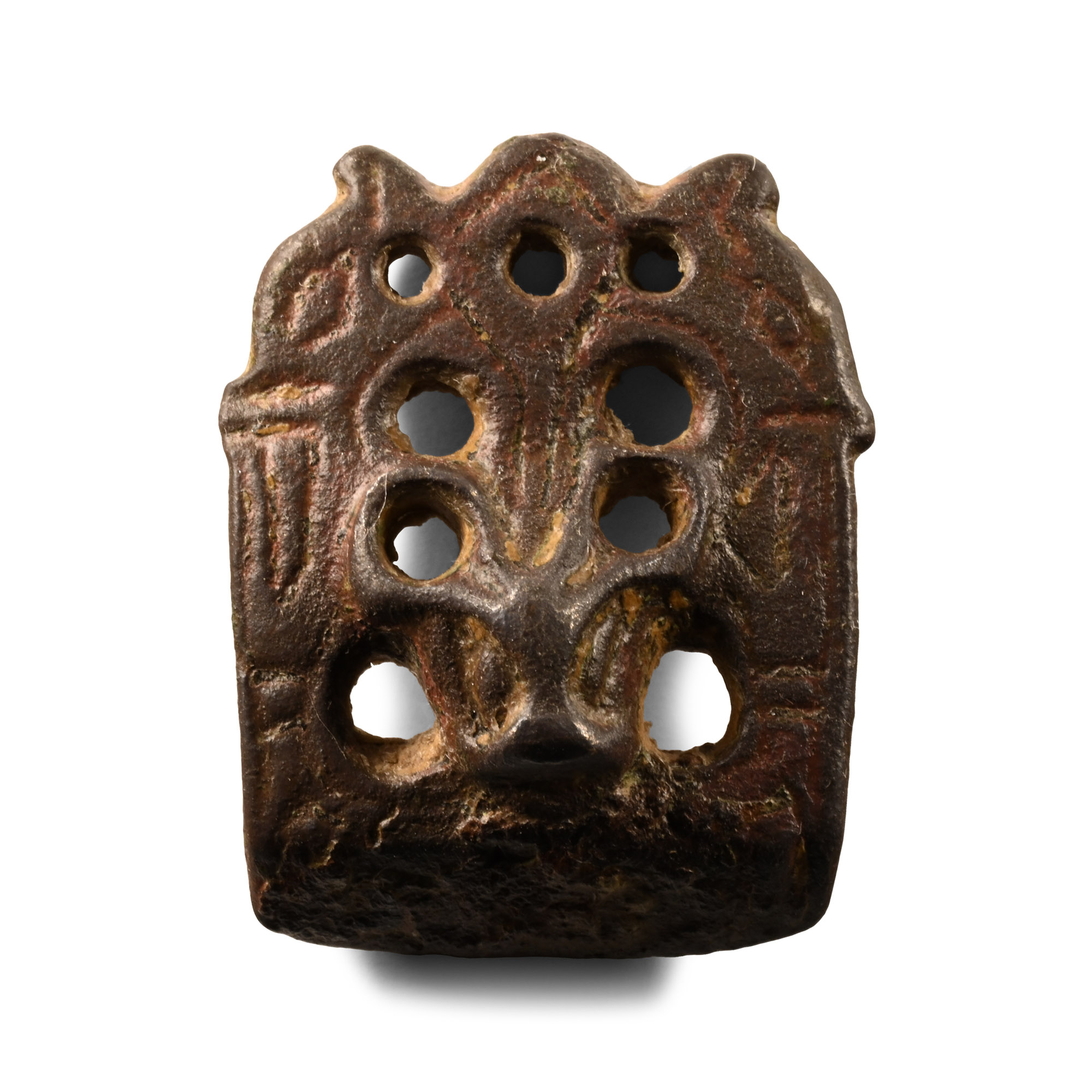
Anglo-Scandinavian Viking Bronze Stirrup Apex Mount
11TH CENTURY A.D.
1 1/2 in. (22.7 grams, 38 mm).
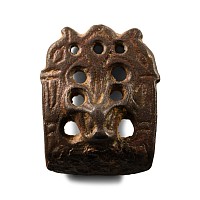
Of Williams's Class B Type 3 Group 1 with openwork plaque, bear-head beneath two opposed wolf-heads, angled ledge with ferrous fixing studs.
ProvenanceFound Westberry, Wiltshire, UK.
LiteratureCf. Williams, D., Late Saxon Stirrup-Strap Mounts, York, 1997, item 420.
CONDITIONTimeLine Auctions follows a vetting process to ensure the authenticity and legality of all items, reinforcing our commitment to integrity and responsible trading. Each antiquity, antique, and coin lot undergoes thorough examination by a vetting committee of at least ten external specialists, professional trade association members, scientists, and archaeologists: Our Vetting Process
AUCTIONS:
TimeLine is a leading auction house specialising in antiquities, ancient art, collectables, natural history, coins, medals, and books. Our auctions offer museums, collectors, historians, and enthusiasts the opportunity to acquire unique and historically significant pieces.
-
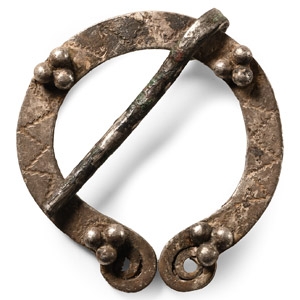
Viking Period Silver Penannular Brooch
10th-12th century A.D.Sold for (Inc. bp): £72
Flat-section with pointillé zigzag to the obverse, coiled finials, four granule cluster, sturdy round-section pin. 4.71 grams, 30 mm
UK private collection before 2000. Acquired on the UK art market. Property of a London gentleman. -
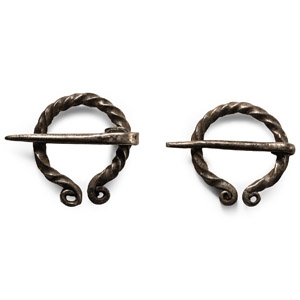
Viking Period Silver Penannular Brooch Pair
10th-12th century A.D.Sold for (Inc. bp): £260
Matched pair, each a twisted hoop with addorsed coil finials, round-section pin. 5.17 grams total, 24-25 mm
UK private collection before 2000. Acquired on the UK art market. Property of a London gentleman. -
.jpg)
Viking Age Bronze Trefoil Strap Junction
9th-11th century A.D.Sold for (Inc. bp): £26
Composed of a slightly domed openwork body, the central arms with simple incised geometric detailing and central boss, free-running attachment bars above. 15.5 grams, 89 mm
From the collection of a North American gentleman, formed in the 1990s.
