
Loading, please wait...
_900x900.jpg "Anglo-Scandinavian Viking Bronze Key with Openwork Handle")
_200x200.jpg "Anglo-Scandinavian Viking Bronze Key with Openwork Handle")
.jpg "Anglo-Scandinavian Viking Bronze Key with Openwork Handle")
LOT 1770
Anglo-Scandinavian Viking Bronze Key with Openwork Handle
9TH-11TH CENTURY A.D.
2 1/4 in. (39 grams total, 58 mm).
With large discoid bow, barrel shank and hooked bit, trefoil slot to the rear edge; the large circular bow with openwork tree motif, pointillé detailing. [No Reserve]
ProvenanceFrom the collection of the famous author, writer and speaker, Gordon Bailey, Essex, UK; formed since 1968.
LiteratureCf. for three similar shaped keys found in Sweden, see the Swedish History Museum, Stockholm, display no.19, including one from Ramsättra, Köping parish, Öland, Sweden.
FootnotesIn the Viking Age, keys were a symbol of power worn prominently attached to the belt or chatelaine of the lady of the household. Handing over the set of keys may have formed part of the marriage ceremony, when the bride accepted her new role as the leading female of the community. In Anglo-Saxon England, the contents of the locked areas (cupboards and chests) were the specific responsibility of the lady, the key-holder.
CONDITIONTimeLine Auctions follows a vetting process to ensure the authenticity and legality of all items, reinforcing our commitment to integrity and responsible trading. Each antiquity, antique, and coin lot undergoes thorough examination by a vetting committee of at least ten external specialists, professional trade association members, scientists, and archaeologists: Our Vetting Process
AUCTIONS:
TimeLine is a leading auction house specialising in antiquities, ancient art, collectables, natural history, coins, medals, and books. Our auctions offer museums, collectors, historians, and enthusiasts the opportunity to acquire unique and historically significant pieces.
LOT 1770
Anglo-Scandinavian Viking Bronze Key with Openwork Handle
Sold for (Inc. bp): £2,860
-
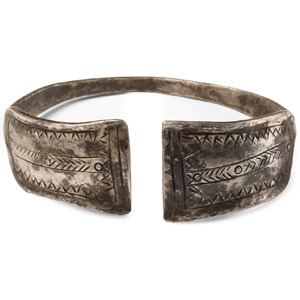
Viking Period Silver Decorated Bracelet
Circa 9th-11th century A.D.Sold for (Inc. bp): £247
Comprising a narrow shank expanding to broad rectangular plaques, each with hatched borders and incised detailing. 16.8 grams, 60 mm
UK private collection before 2000. Acquired on the UK art market. Property of a London gentleman. -
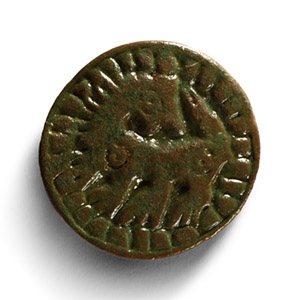
Anglo-Scandinavian Viking Bronze Beast Facing Back Brooch
9th-11th century A.D.Sold for (Inc. bp): £338
Disc brooch with low-relief regardant beast motif within a segmented border; loop to the reverse. 6.71 grams, 29 mm
Found Costessey, Norfolk, UK. Recorded with the British Museum's Portable Antiquities Scheme (PAS) with report no.NMS-AAD19D. -
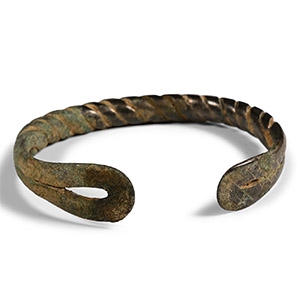
Viking Age Bronze Twisted Bracelet
9th-11th century A.D.Sold for (Inc. bp): £85
Composed of two twisted rods forming loop terminals. 42 grams, 70 mm
From an old English collection, 1990s. Property of an Essex, UK, gentleman.
