
Loading, please wait...
LOT 1654
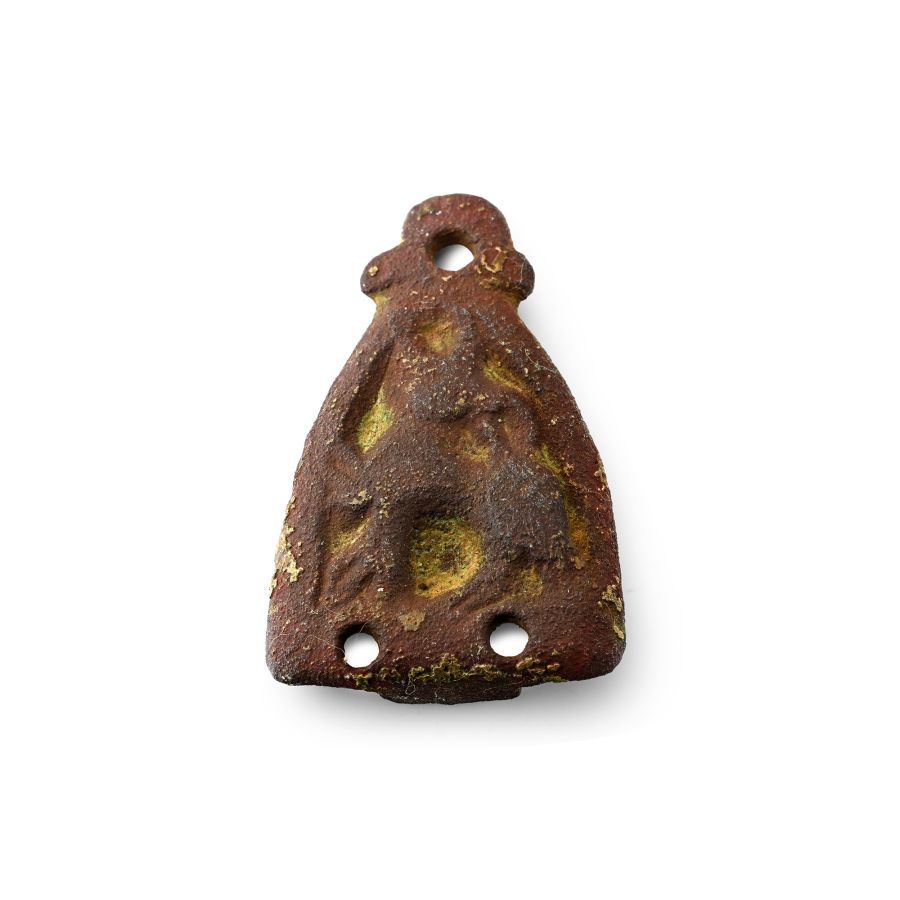
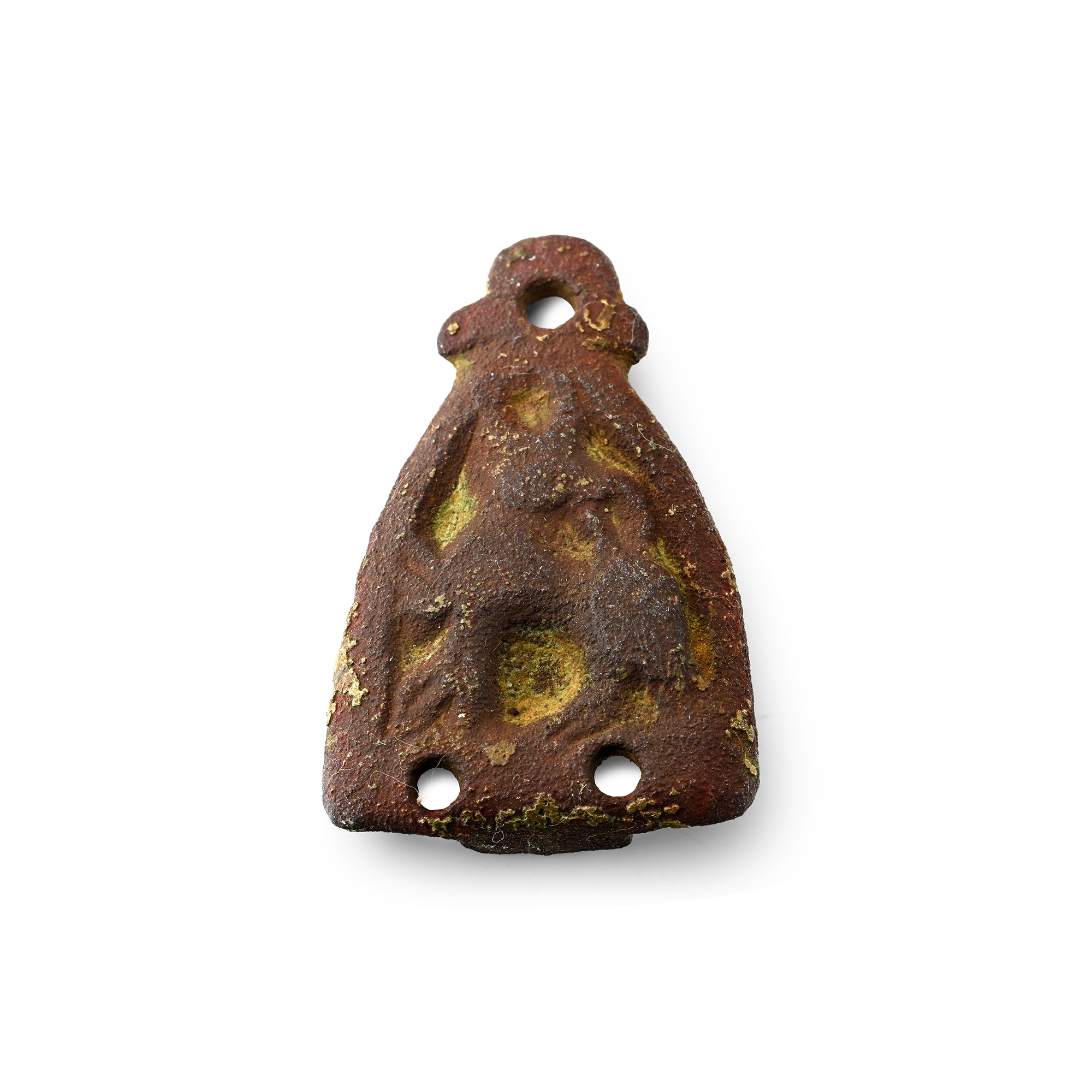
Anglo-Scandinavian Viking Bronze Howling Beast Stirrup Apex Mount
10TH-11TH CENTURY A.D.
1 5/8 in. (22.7 grams, 42 mm).
Heater-shaped in profile with trefoil knop above; high-relief profile wolf with head thrown back and one forepaw raised; ledge to reverse with holes for studs; Williams's Class A, type 11. [No Reserve]
ProvenanceFound Norfolk, UK.
LiteratureCf. Williams, D., Late Saxon Stirrup-Strap Mounts, York, 1997, item 217, 219, for type.
CONDITIONTimeLine Auctions follows a vetting process to ensure the authenticity and legality of all items, reinforcing our commitment to integrity and responsible trading. Each antiquity, antique, and coin lot undergoes thorough examination by a vetting committee of at least ten external specialists, professional trade association members, scientists, and archaeologists: Our Vetting Process
AUCTIONS:
TimeLine is a leading auction house specialising in antiquities, ancient art, collectables, natural history, coins, medals, and books. Our auctions offer museums, collectors, historians, and enthusiasts the opportunity to acquire unique and historically significant pieces.
LOT 1654
Anglo-Scandinavian Viking Bronze Howling Beast Stirrup Apex Mount
Sold for (Inc. bp): £39
-
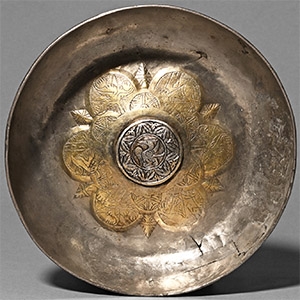
Scandinavian Silver Bowl with Embossed Centre
Circa 13th century A.D.Estimate: £4,000 - 6,000 (+bp*)
Opening Bid: £2,000
Dipping bowl, raised from a single sheet of silver, decorated with an incised rosette to the underside with central omphalos; rolled and everted rim; inner face with repoussé rosette, each petal with a stylised beast reserved on a pounced field; later applied central rosette with acanthus border, tondo with repoussé wyvern rampant. 134 grams, 15.5 cm
Acquired on the UK art market. Private collection, London. This lot has been checked against the Interpol Database of stolen works of art and is accompanied by search certificate number no.12978-244536. -
.jpg)
Very Large Anglo-Scandinavian Viking Bronze Horse Harness Link
11th century A.D.Sold for (Inc. bp): £3,380
Lozengiform in plan with pierced bulb to opposed angles, one with ring in situ; obverse with reserved rim, beast in profile with bent forelegs and gaping jaws, tail curled above the back, attacking a serpentine creature with segmented body and three-toed claws. 81 grams, 10.8 cm
Found Lincolshire, UK. This lot has been checked against the Interpol Database of stolen works of art and is accompanied by search certificate number no.12988-242245.
Openwork rhombic mounts were found in various Scandinavian places. One was found, for example, in a sunken hut at Sebbersund in Northern Jutland, and dated to the passage of 10th-11th century A.D. An openwork mount depicting a four-legged animal from Lund was excavated from a pit in a cultural deposit with dendro-chronological dates between 1060-1070. -
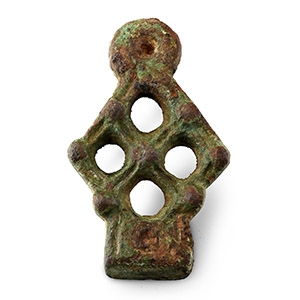
Anglo-Scandinavian Viking Bronze Lozenge-Shaped Stirrup Apex Mount
10th-11th century A.D.Sold for (Inc. bp): £85
Lozenge-shaped with openwork gusseted lattice and raised pellets to the body, pierced lobe above with ferrous rivet, ledge to reverse with ferrous accretion. 25.5 grams, 48 mm
Found Norfolk, UK.
