
Loading, please wait...
LOT 0310
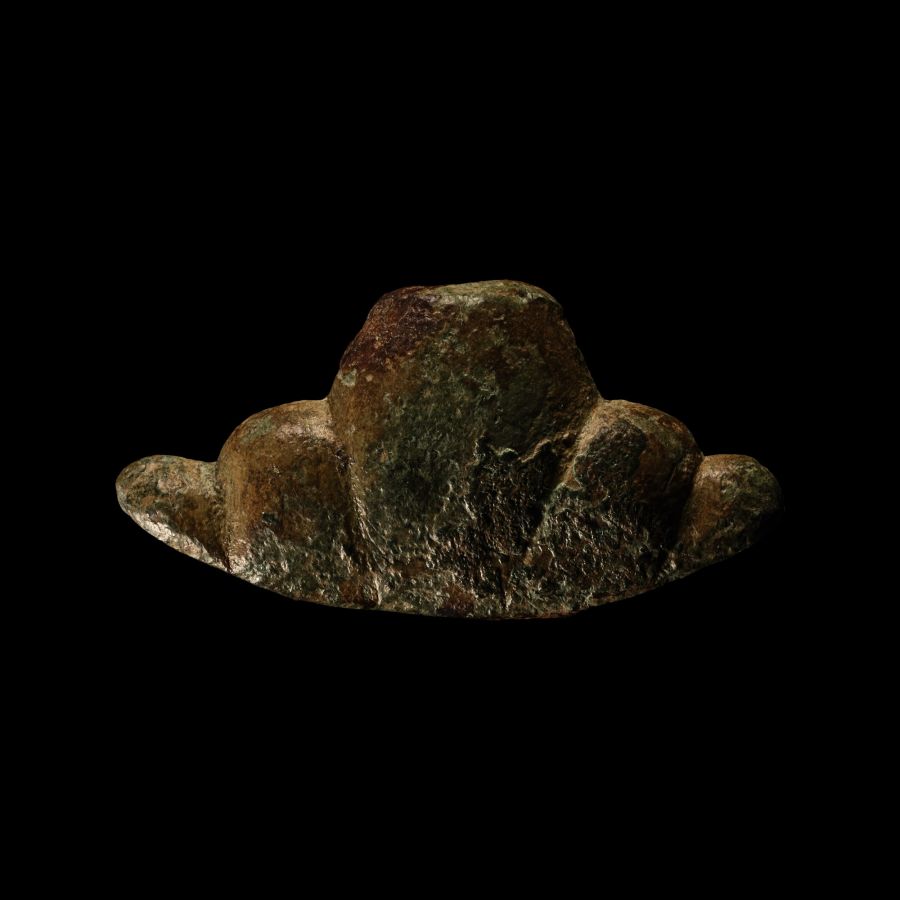
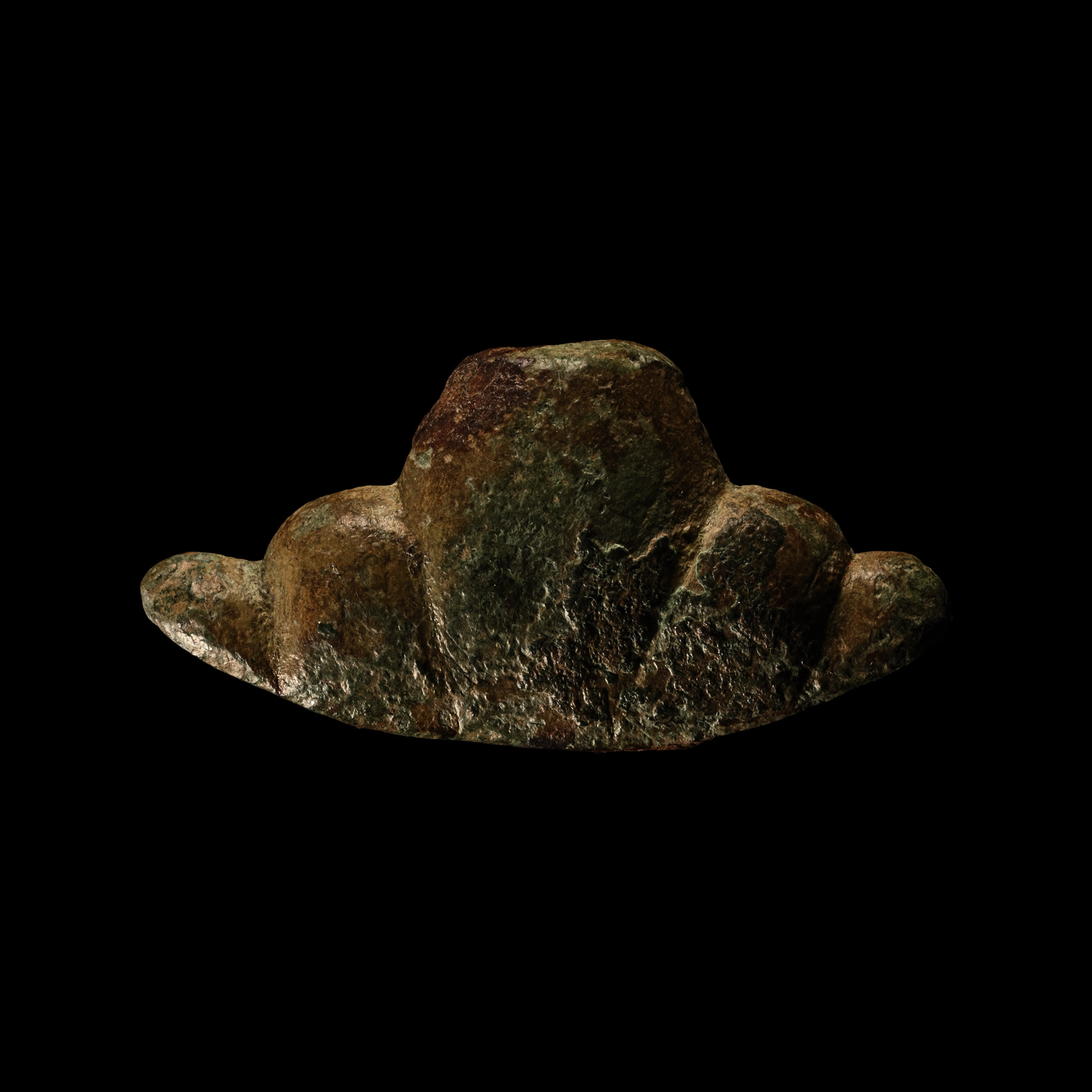
Anglo-Scandinavian Viking Bronze Five-Lobed Sword Pommel
LATE 10TH-EARLY 11TH CENTURY A.D.
2 1/8 in. (67 grams, 54 mm).
Of Petersen's Type S (Wheeler Type III) with five graduated lobes; the lower face a swept arc; pierced through the tallest lobe to accept the tang of the sword's blade. [No Reserve]
ProvenanceFound Market Rasen, Lincolnshire Wolds, UK, 1970s.
Property of Mr A.B., an American collector.
See Peirce, I., Swords of the Viking Age, Woodbridge, 2002, p.104-5.
CONDITIONTimeLine Auctions follows a vetting process to ensure the authenticity and legality of all items, reinforcing our commitment to integrity and responsible trading. Each antiquity, antique, and coin lot undergoes thorough examination by a vetting committee of at least ten external specialists, professional trade association members, scientists, and archaeologists: Our Vetting Process
AUCTIONS:
TimeLine is a leading auction house specialising in antiquities, ancient art, collectables, natural history, coins, medals, and books. Our auctions offer museums, collectors, historians, and enthusiasts the opportunity to acquire unique and historically significant pieces.
LOT 0310
Anglo-Scandinavian Viking Bronze Five-Lobed Sword Pommel
Sold for (Inc. bp): £442
-
Scythian Bronze Arrowhead Collection
Circa 7th-3rd century B.C.Sold for (Inc. bp): £182
Each with a slender, lozenge-shaped blade and a socket extending near the tip, base of the socket with a side lug. 130 grams total, 37-57 mm
UK private collection before 2000. Acquired on the UK art market. Property of a London gentleman.
In Greek warfare archery was mainly employed by Scythians and Cretans for the longer-ranks. Both used composite bows made of wood, horn, bone and sinew. This explains the great range of Scythian arrowheads found on the Greek sites. -
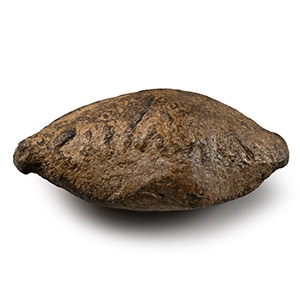
Roman 'Pompey the Great' Lead Slingshot
1st century B.C.Sold for (Inc. bp): £182
Biconical lead slingshot (glans) with inscription in Latin letters 'CN' (Cneius) 'MAG' (Magnus) on one side, and 'IMP' for 'IMPERATOR' (victorious general) to the other side, i.e Gnaeus Pompeius Magnus Imperator (Pompey the Great the victorious general). 59.6 grams, 40 mm
Ex German art market, 2000s. Acquired from an EU collector living in London. From the collection of Surrey, UK, gentleman. Accompanied by an academic paper by military specialist Dr Raffaele D'Amato, dated 4th May 2022 and titled 'Roman Res Publica - Lead Slingshots (glandes) of Caesarian Age - 45 B.C circa'.
The shot (Völling type 1C) is marked with the abbreviated name of Gnaeus Pompey; it was used in quantity at the Battle of Monda (or Munda) against Julius Caesar, 17th March 45 BC. The projectiles were made of different materials: lead (glandes) or in pottery or stone (lapides missiles). Sometimes they were signed with the name of the general, like our specimen. -
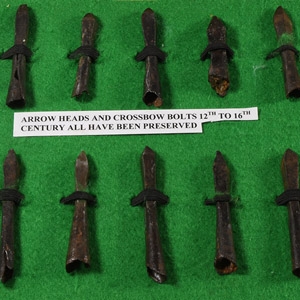
Cased Medieval to Tudor 'Published' Iron Crossbow Bolt Collection
12th-16h century A.D.Sold for (Inc. bp): £195
Comprising: 14 crossbow bolts with pyramidal point, square-section shaft, and a tubular socket. 1.24 kg total, 32.5 x 22.5 x 5 cm
From the collection of the famous author, writer and speaker, Gordon Bailey, Essex, UK; formed since 1968.
The crossbow, a bow fixed at its centre to a wooden stock, was a formidable weapon reintroduced in Western Europe in 11th century A.D.; it was used by the Genoese crossbowmen, mainly in French service, during the 100 Years War; its heavy bolt could easily penetrate a shield or armour breast plate at close range.
