
Loading, please wait...
LOT 0331
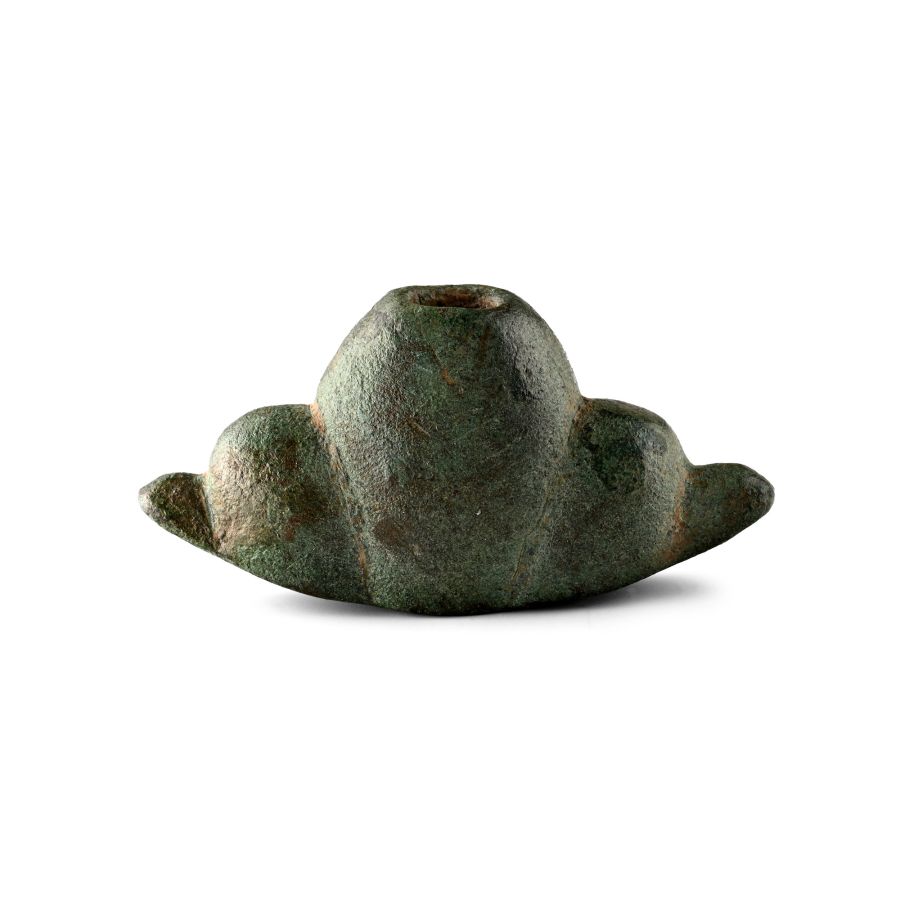
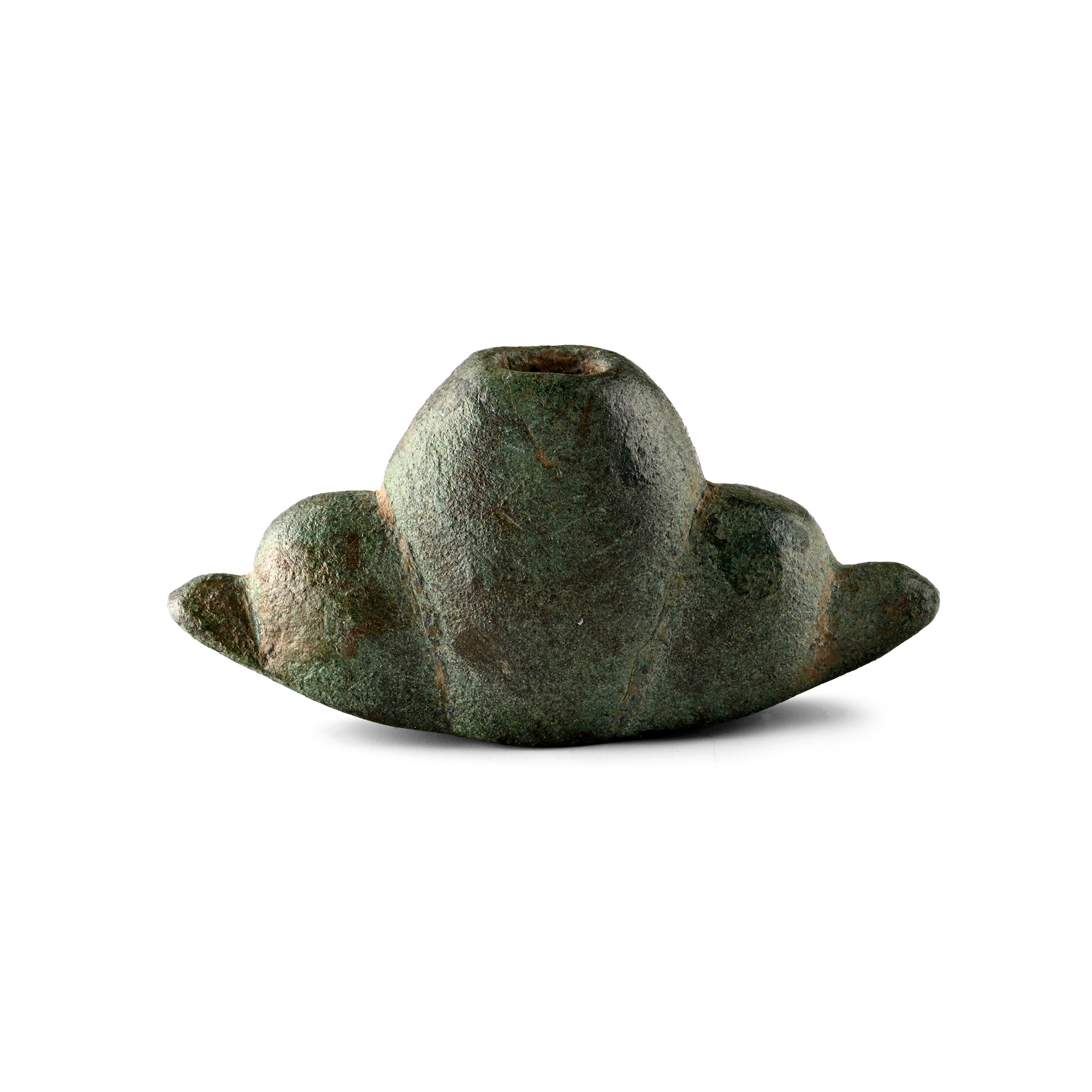
Anglo-Scandinavian Viking Bronze Five-Lobed Pommel
10TH-11TH CENTURY A.D.
2 in. (48.7 grams, 50 mm).
Of Petersen's Type S (Wheeler Type III) with five graduated lobes; hollow, the lower face a swept arc; pierced through the tallest lobe to accept the tang of the sword's blade. [No Reserve]
ProvenanceFound Norfolk, UK.
LiteratureSee Peirce, I., Swords of the Viking Age, Woodbridge, 2002, p.104-5.
CONDITIONTimeLine Auctions follows a vetting process to ensure the authenticity and legality of all items, reinforcing our commitment to integrity and responsible trading. Each antiquity, antique, and coin lot undergoes thorough examination by a vetting committee of at least ten external specialists, professional trade association members, scientists, and archaeologists: Our Vetting Process
AUCTIONS:
TimeLine is a leading auction house specialising in antiquities, ancient art, collectables, natural history, coins, medals, and books. Our auctions offer museums, collectors, historians, and enthusiasts the opportunity to acquire unique and historically significant pieces.
-
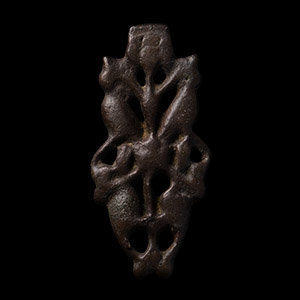
Viking Age Bronze Zoomorphic Mount
10th-11th century A.D.Estimate: £100 - 140 (‡+bp*)
Opening Bid: £50
Displaying a symmetrical openwork design of birds within a vinescroll; attachment pin to the reverse. 12.4 grams, 44 mm
Found Winteringham, Humberside, UK, in 1986. -
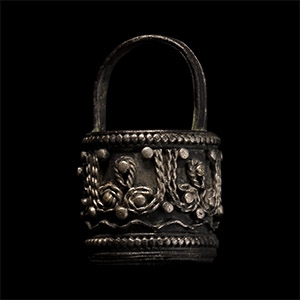
Pre-Viking Silver Filigree Aroma Bucket Pendant
Circa 4th-7th century A.D.Sold for (Inc. bp): £312
Miniature drum-shaped vessel with strap handle, extensive filigree decoration on the body. 2.77 grams, 21 mm
Private collection formed in Europe in the 1980s. Westminster collection, central London, UK.
Pendants in the form of miniature buckets have been found in a number of pagan Anglo-Saxon and Viking contexts and are generally made of bronze or iron, with gold examples being rare; three gold examples were found with the hoard from Hoen, Norway. Bronze bucket amulets have been found at Driffield in Yorkshire, and Vimose bog in Denmark, among other places. In form they represent wooden buckets bound with bronze or iron bands which have been found in Anglo-Saxon and Viking graves and are believed to have held mead or ale and were used to replenish the cups from which warriors drank. As amulets they probably represent the ecstatic power of alcoholic drink and the role of women as the dispensers of these precious beverages. -
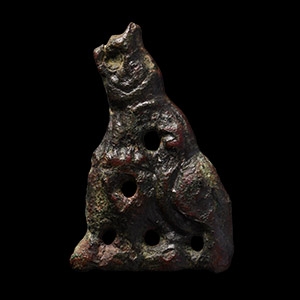
Viking Bronze Howling Beast Mount
11th century A.D.Sold for (Inc. bp): £117
Formed as an openwork seated wolf with long curled tail, head raised and mouth open; similar to Class A, Type 11A. 10.6 grams, 33 mm
Found near Norwich, Norfolk, UK.
