
Loading, please wait...
LOT 1769
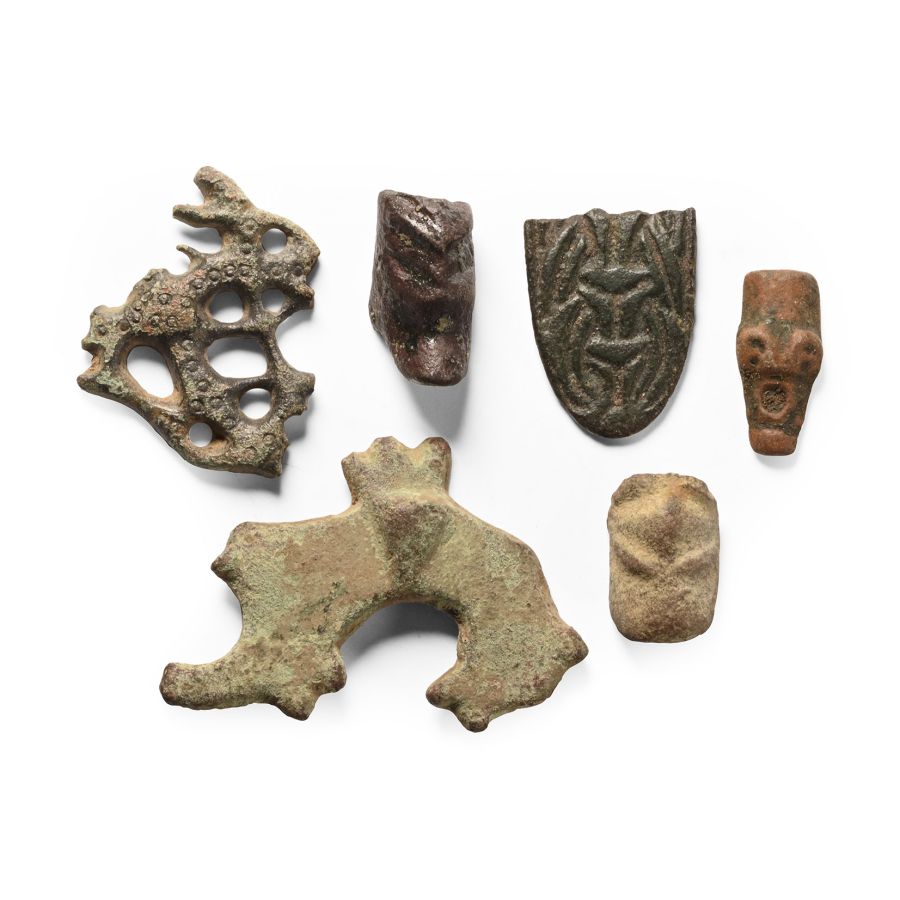
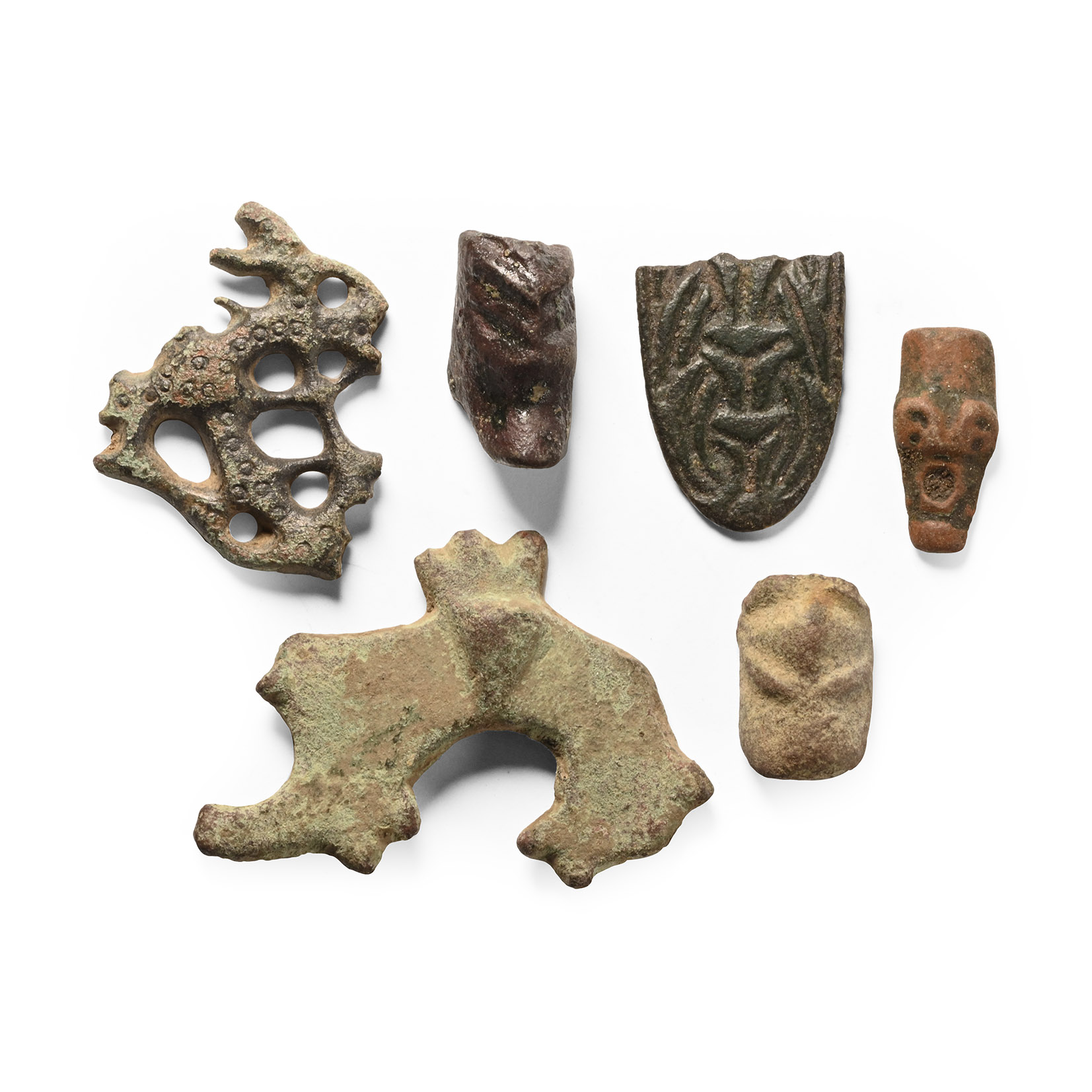
Anglo-Scandinavian Viking Bronze Artefact Group
9TH-11TH CENTURY A.D.
5/8 - 1 5/8 in. (33.6 grams total, 16-41 mm).
Including a regardant beast mount, Urnes Style brooch fragment, Ringerike Style strap-end and other items. [6, No Reserve]
ProvenanceFound East Anglia, UK.
From an old private collection of Norfolk, UK, gentleman, formed since 1998.
TimeLine Auctions follows a vetting process to ensure the authenticity and legality of all items, reinforcing our commitment to integrity and responsible trading. Each antiquity, antique, and coin lot undergoes thorough examination by a vetting committee of at least ten external specialists, professional trade association members, scientists, and archaeologists: Our Vetting Process
AUCTIONS:
TimeLine is a leading auction house specialising in antiquities, ancient art, collectables, natural history, coins, medals, and books. Our auctions offer museums, collectors, historians, and enthusiasts the opportunity to acquire unique and historically significant pieces.
-
.jpg)
Viking Age Silver Broad Axe Pendant with Radiant Sun
Circa 9th-11th century A.D. or earlierSold for (Inc. bp): £390
Axehead with sunburst motif to one face; suspension loop with coiled ends. 1.92 grams, 32 mm
Ex German art market, 2000s. Acquired from an EU collector living in London. From the collection of Surrey, UK, gentleman. -
.jpg)
Anglo-Scandinavian Viking Bronze Stirrup Mount with Bear's Heads
11th century A.D.Estimate: £500 - 700 (+bp*)
Opening Bid: £200
Teardrop-shaped and slightly domed with loop at the apex (absent) and two radiating lugs at the lower corners; low-relief design of a dense interlaced panel with beast-head at the apex; ledge to reverse with ferrous remains of stud. 31.8 grams, 53 mm
Found Suffolk, UK. From an old private collection of Norfolk, UK, gentleman, formed since 1998. -
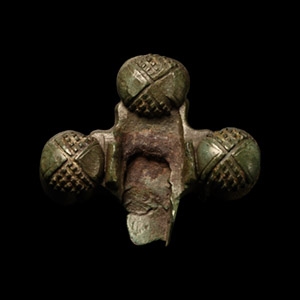
Viking Age Bronze Studded Cross Fitting
9th-11th century A.D.Sold for (Inc. bp): £46
Cruciform mount with three radiating lobes and a fourth slotted section; each lobe with separately cast boss; each boss with upper face divided into four segments, two plain and two with deep hatching; ferrous stains to underside showing attachment points, ferrous stain to the slotted centre; possibly from a portable shrine or reliquary. 56 grams, 49 mm
From a North Yorkshire, UK, private collection. Acquired from Adam Partridge Auctioneers, Macclesfield, UK. Property of Mr A.B., an American collector.
