
Loading, please wait...
LOT 1352
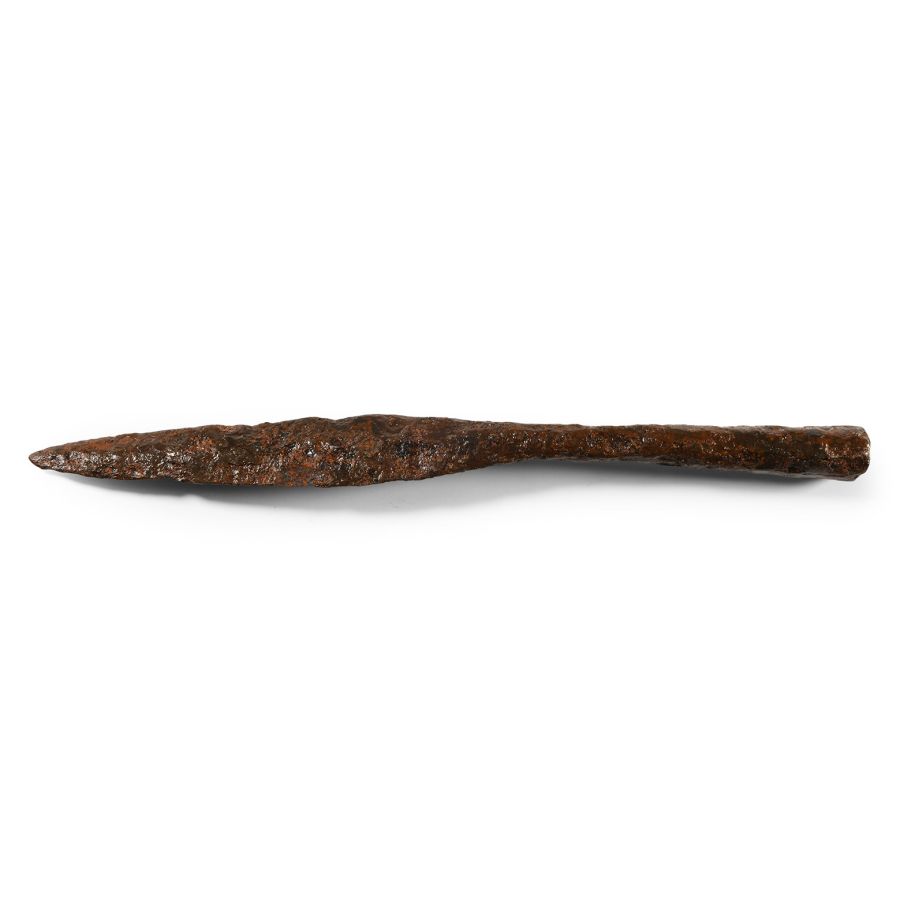
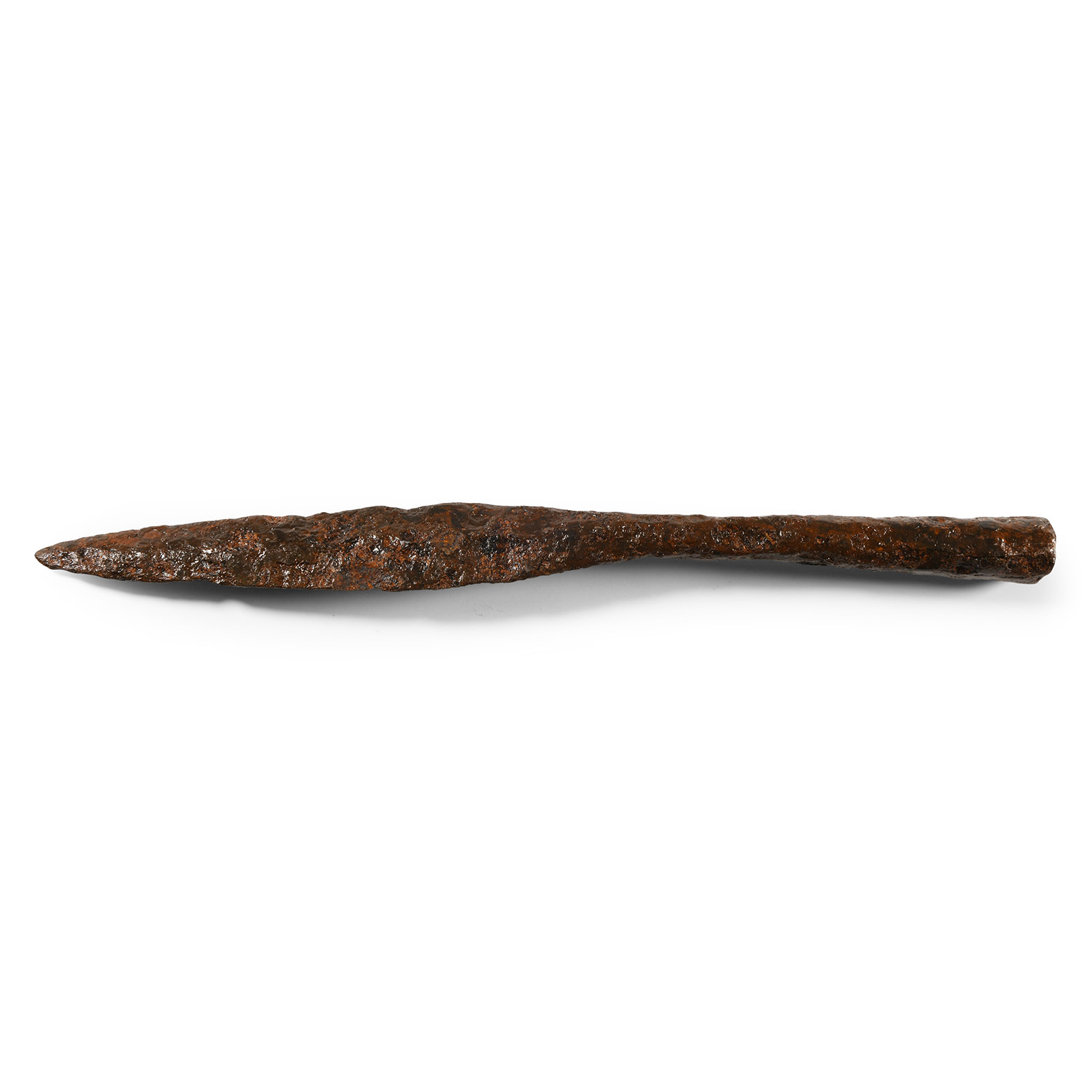
Anglo-Saxon Iron Socketted Spearhead
6TH-8TH CENTURY A.D.
10 1/4 in. (159 grams, 26 cm).
Lentoid-section narrow blade with thick shoulder, closed socket; Swanton's Group I2. [No Reserve]
ProvenanceFound near Wetwang, East Yorkshire, UK.
Acquired circa 2005.
Ian Wilkinson collection, Nottinghamshire, UK.
Exhibited at Harwich Museum, Harwich, Essex, UK, 14th March-9th June 2024; accompanied by a copy of a photograph of the artefact on display.
LiteratureCf. Swanton, M.J. Spearheads of the Anglo-Saxon Settlements, London, 1973, fig.47.
FootnotesThe spear-heads of group I2 belong to a larger number of blades with more slender and regularly curved leaf-shapes than previous types. The majority present profiles more regularly curved from junction to tip, the broader part of the blade near the middle, with the fuller comformably longer. All of the group are much of the length varying between some 25 and 35 cm.
CONDITIONTimeLine Auctions follows a vetting process to ensure the authenticity and legality of all items, reinforcing our commitment to integrity and responsible trading. Each antiquity, antique, and coin lot undergoes thorough examination by a vetting committee of at least ten external specialists, professional trade association members, scientists, and archaeologists: Our Vetting Process
AUCTIONS:
TimeLine is a leading auction house specialising in antiquities, ancient art, collectables, natural history, coins, medals, and books. Our auctions offer museums, collectors, historians, and enthusiasts the opportunity to acquire unique and historically significant pieces.
-
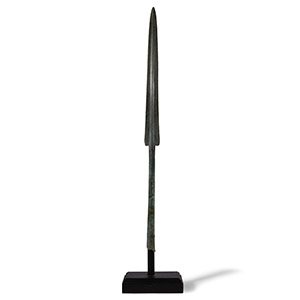
Marlik Bronze Spearhead with Linear Decoration
14th-10th century B.C.Estimate: £600 - 800 (+bp*)
Opening Bid: £300
Of triangular shape with projecting midribs with vertical grooves alongside, long folded socketted shaft with eighteen horizontal grooves at the base, hole for attachment to a wooden shaft. 436 grams total, 61 cm high including stand
Ex German collection, 1980s. From a Surrey, UK, private collection, 1990s.
This specimen belongs to the type VIII, subtype B of the Khorasani classification. Similar specimens were excavated in the Marlik Royal cemetery by Dr Negahban. The spearheads of this type are characterised by well projecting mid-ribs and long, folded sockets. -
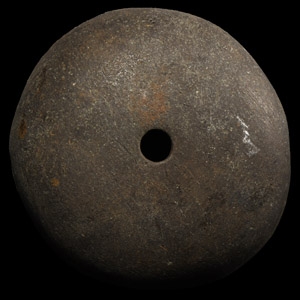
Large Romano-British Bronze Catapult Fitting
1st century A.D.Sold for (Inc. bp): £20
Substantial cast cupola with socket to the apex; possibly from a field artillery piece. 110 grams, 67 mm
Reputed to have been excavated near Viables in Hampshire at the end of the 19th century. From the estate of the late Jennifer Simmonds. Acquired from Jacobs & Hunt auctioneers, Petersfield, Hampshire, UK.
The circular umbo does not correspond to any known central shield boss, as it also lacks the lower edge; instead, it finds a good correspondence with the circular bosses that reinforced the lower and upper frame of a catapult, equipped with a central bronze cover. -
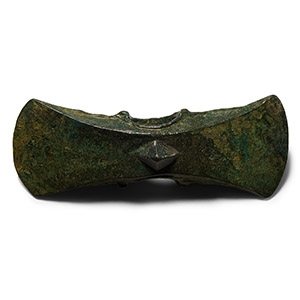
Luristan Bronze Double Axehead
13th-7th century B.C.Sold for (Inc. bp): £286
Double-edge axehead with flared blades, knops flanking the socket, pyramidal spurs. 222 grams, 10.8 cm
Ex German art market, 2000s. Acquired from an EU collector living in London. From the collection of Surrey, UK, gentleman.
