
Loading, please wait...
LOT 1724
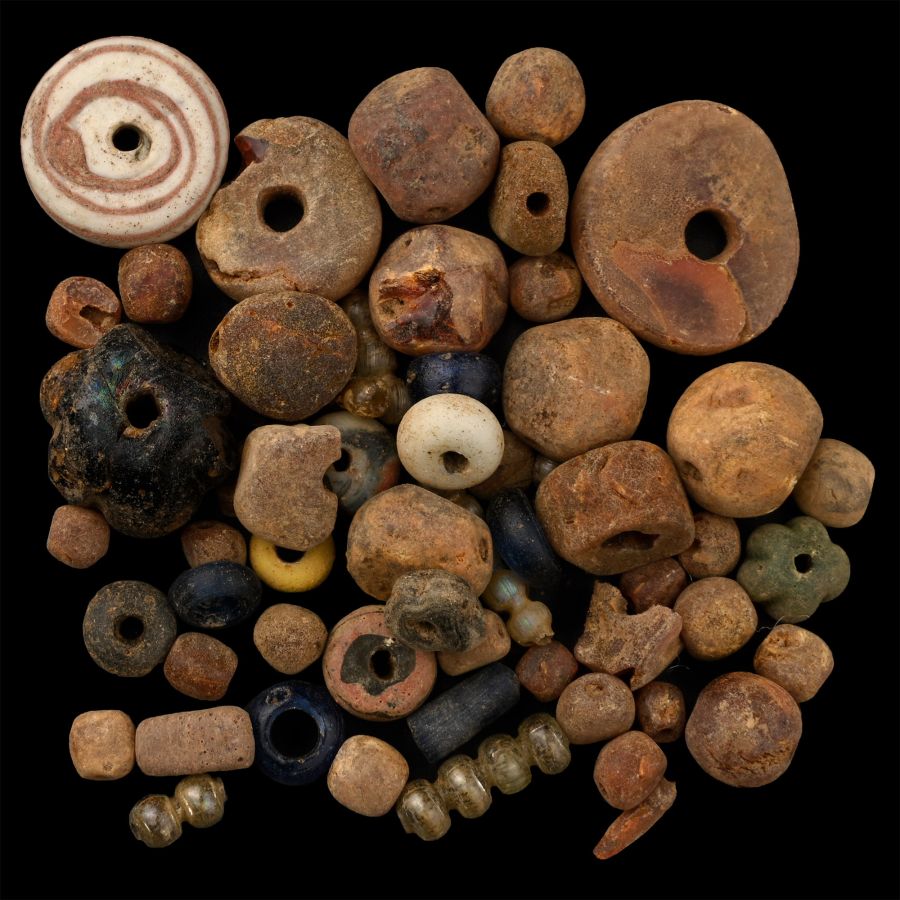
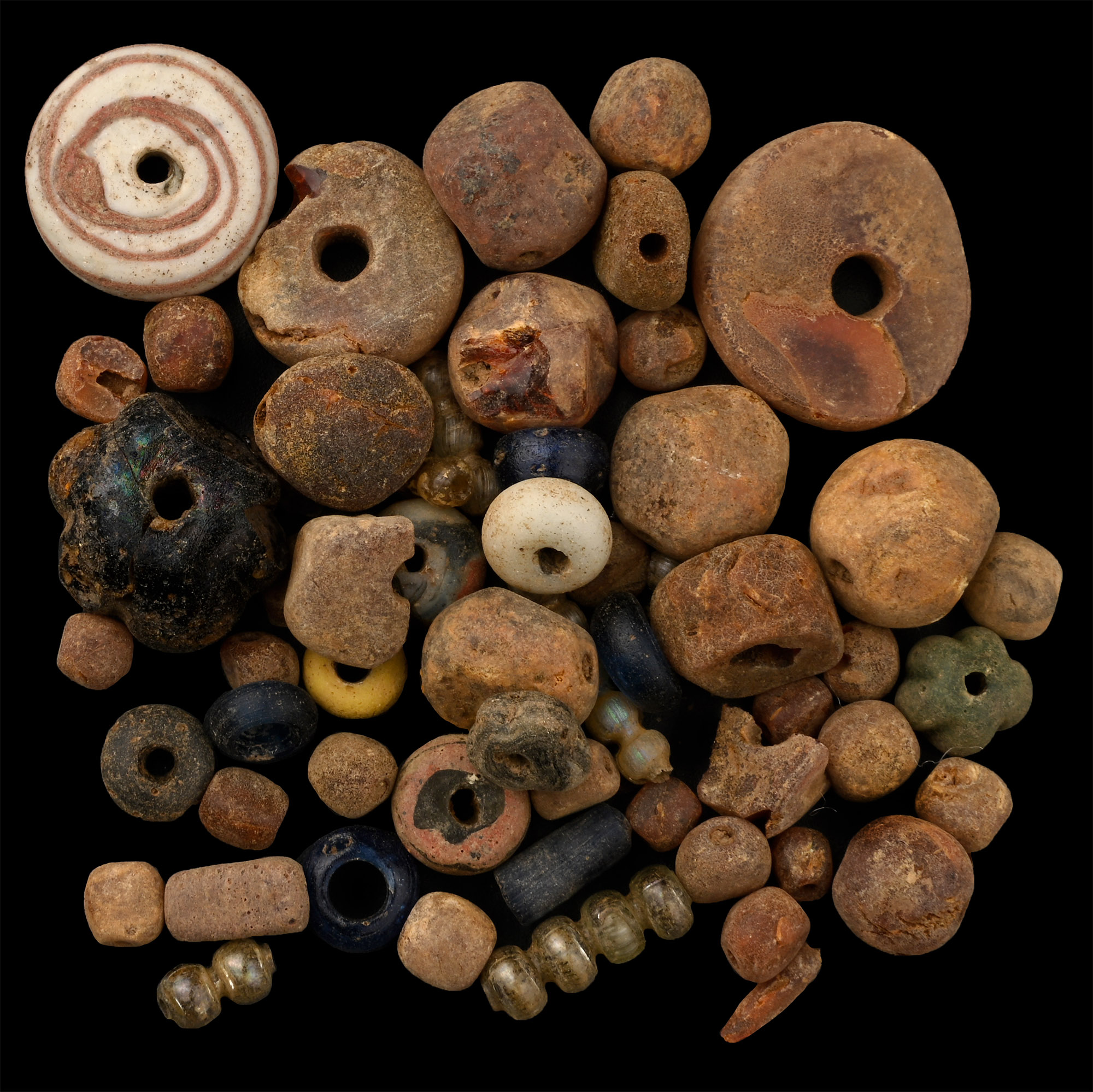
Anglo-Saxon Glass and Amber Necklace Bead Group.
LATE 5TH-6TH CENTURY A.D.
1/4 - 7/8 in. (32 grams total, 5-23 mm).
Including oblate, melon, annular and other types. [56]
ProvenanceFound Seaham, Co Durham, UK.
Property of a Durham private collector.
See Brugmann, B., Glass Beads from Early Anglo-Saxon Graves, Oxford, 2004.
CONDITIONTimeLine Auctions follows a vetting process to ensure the authenticity and legality of all items, reinforcing our commitment to integrity and responsible trading. Each antiquity, antique, and coin lot undergoes thorough examination by a vetting committee of at least ten external specialists, professional trade association members, scientists, and archaeologists: Our Vetting Process
AUCTIONS:
TimeLine is a leading auction house specialising in antiquities, ancient art, collectables, natural history, coins, medals, and books. Our auctions offer museums, collectors, historians, and enthusiasts the opportunity to acquire unique and historically significant pieces.
-

Saxon Bronze Artefact Group
6th-10th century A.D.Sold for (Inc. bp): £26
Including a disc brooch with pelletted rim, belt mount with inlaid detailing and other items. 44.5 grams total, 22-49 mm
Acquired on the UK art market in the 1970s-1990s. Property of a Nottinghamshire, UK, gentleman. This lot is accompanied by an illustrated lot declaration signed by the Head of the Antiquities Department, Dr Raffaele D'Amato. -

Saxon and Byzantine Bronze Artefact Collection
6th-12th century A.D.Sold for (Inc. bp): £20
Including dagger-chape with ring finial, garter buckle, strap end and other items, among which an important specimen of buckle D33. 49 grams total, 12-43 mm
From old Cheshire and Nottinghamshire private collections. From the property of a late Lincolnshire, UK, gentleman.
Type D33 of Eastern Roman buckles, dated to the second half of 6th century A.D., is formed with a solid, narrow, and long triangular fitting, which extends at the corners and is decorated with punched circular eyes. It has a triangular opening in the middle, and two transversely positioned pins on the underside. Their flat, oval bow, which widens towards the drift pin, is fitted with a stool-shaped thorn. -
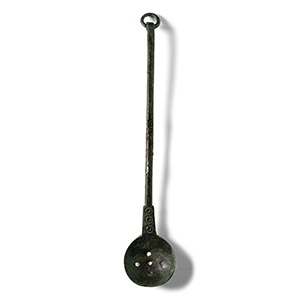
Saxon Bronze Strainer Spoon
5th-6th century A.D.Sold for (Inc. bp): £338
Comprising a round-section shank with scrolled end to retain the suspension ring; ring-and-dot stamp to outer face; flat panel to end with three more stamps, shallow bowl with five holes in quincunx formation. 29.9 grams, 19.2 cm
From the private collection of a London gentleman, from his grandfather's collection formed before the early 1970s.
