
Loading, please wait...
LOT 0299
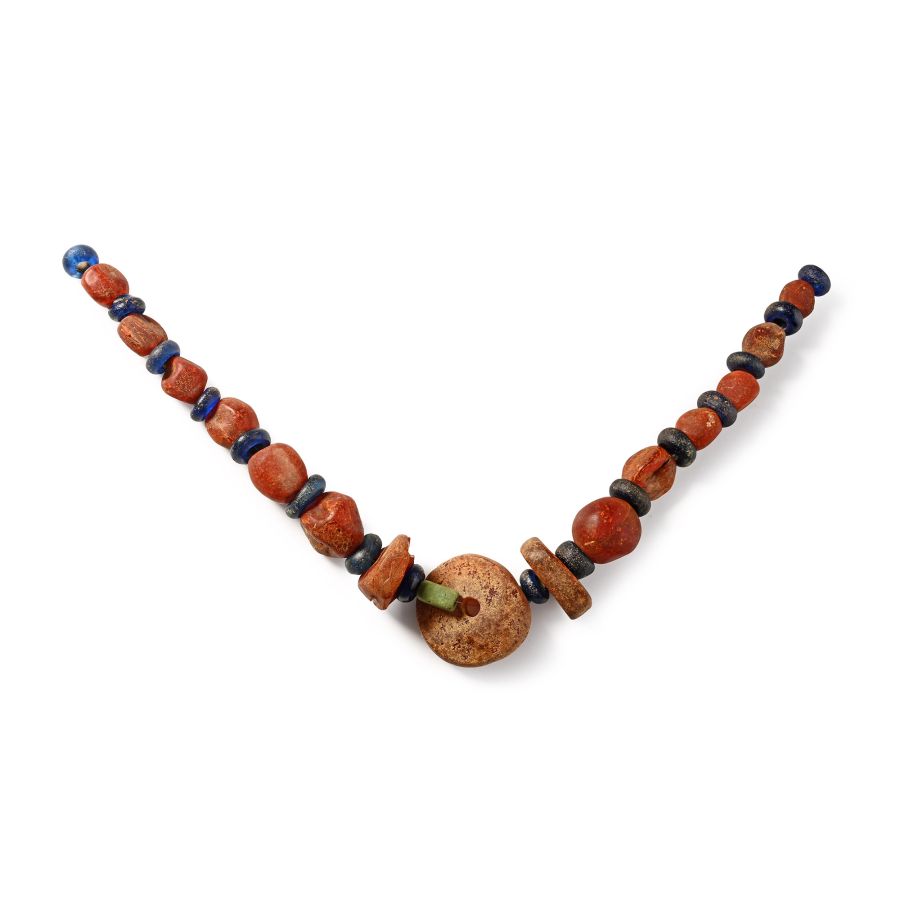
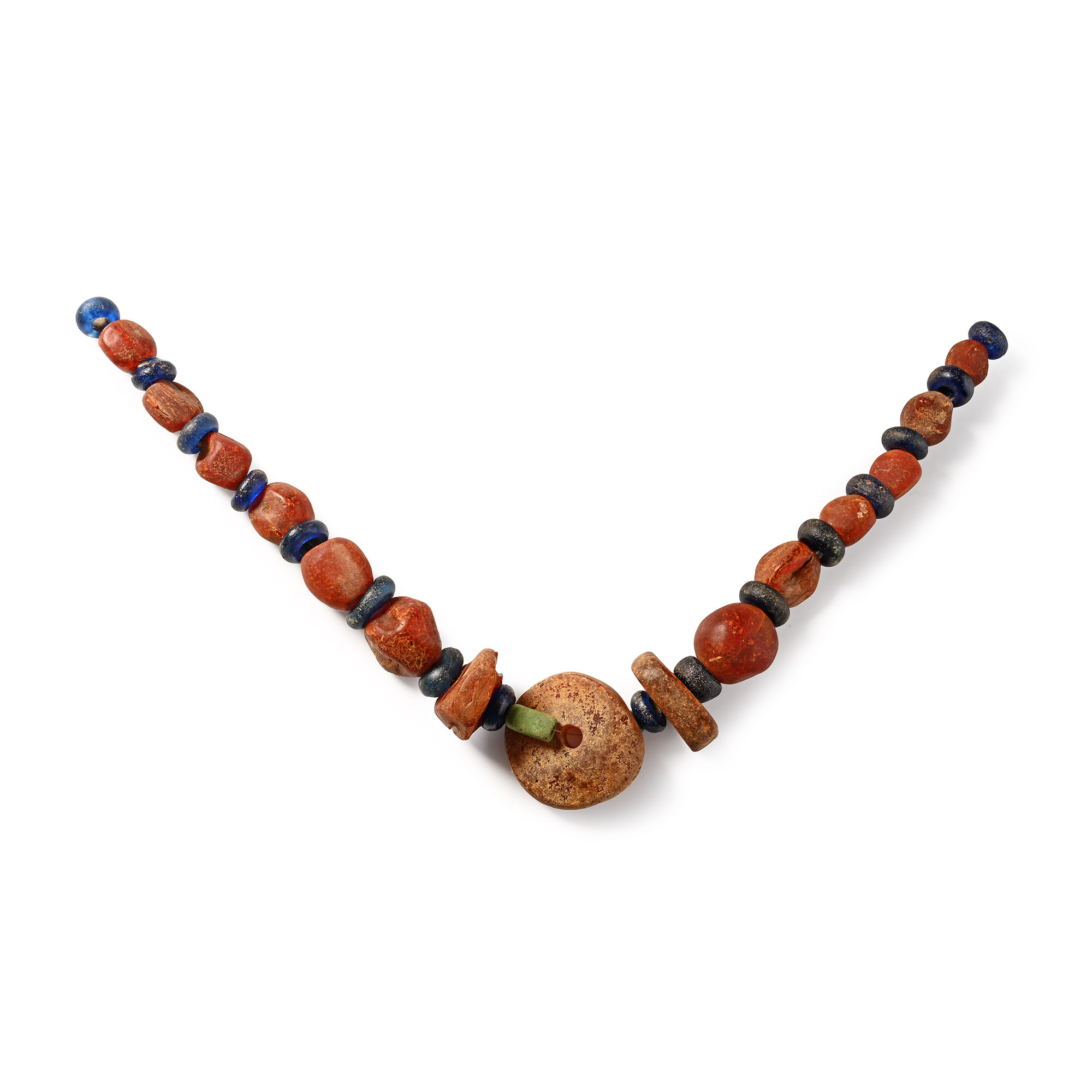
Anglo-Saxon Glass and Amber Bead Necklace String
LATE 5TH-6TH CENTURY A.D.
10 1/4 in. (32 grams, 26 cm).
Including annular, tubular, and other types, a large amber tabular bead to the centre.
ProvenanceFound Seaham, Co Durham, UK.
Property of a Durham private collector.
See Brugmann, B., Glass Beads from Early Anglo-Saxon Graves, Oxford, 2004.
CONDITIONTimeLine Auctions follows a vetting process to ensure the authenticity and legality of all items, reinforcing our commitment to integrity and responsible trading. Each antiquity, antique, and coin lot undergoes thorough examination by a vetting committee of at least ten external specialists, professional trade association members, scientists, and archaeologists: Our Vetting Process
AUCTIONS:
TimeLine is a leading auction house specialising in antiquities, ancient art, collectables, natural history, coins, medals, and books. Our auctions offer museums, collectors, historians, and enthusiasts the opportunity to acquire unique and historically significant pieces.
-
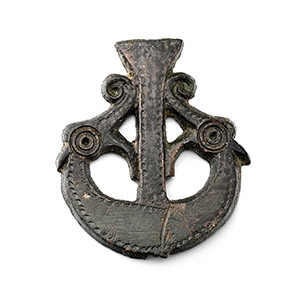
Anglo-Saxon Bronze Double Beast-Headed Mount
6th century A.D.Sold for (Inc. bp): £260
Pelta-shaped in plan, formed as a vertical column with flared base developing to a transverse crescent ending in dragon-heads with open jaws and curled upper lips placed against the column; punched pellet and crescent detailing. 13.7 grams, 38 mm
Found Barton Mills, Suffolk, UK. -
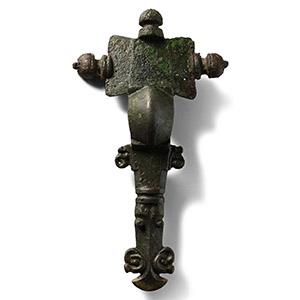
Large Anglo-Saxon Bronze Cruciform Brooch
Late 5th-6th century A.D.Estimate: £800 - 1,000 (+bp*)
Opening Bid: £400
Comprising a rectangular headplate with a central trapezoidal panel, three radiating collared D-section knops; a deep carinated bow with chamfered step at each end; trapezoidal foot with lateral coiled lappets; gusseted collar and carinated horse-head finial with scrolled nostrils; ferrous mass to reverse with impressed fabric, catchplate. 68 grams, 12.6 cm
Found Seaham, Co Durham, UK. Property of a Durham private collector. -
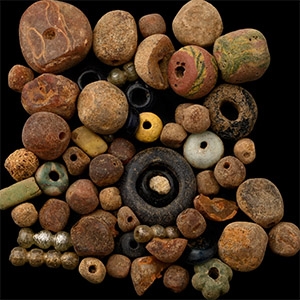
Anglo-Saxon Glass and Amber Necklace Bead Group
Late 5th-6th century A.D.Sold for (Inc. bp): £390
Including oblate, annular, mosaic and other types. 32 grams total, 5-20 mm
Found Seaham, Co Durham, UK. Property of a Durham private collector.
