
Loading, please wait...

LOT 0350
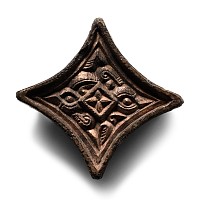
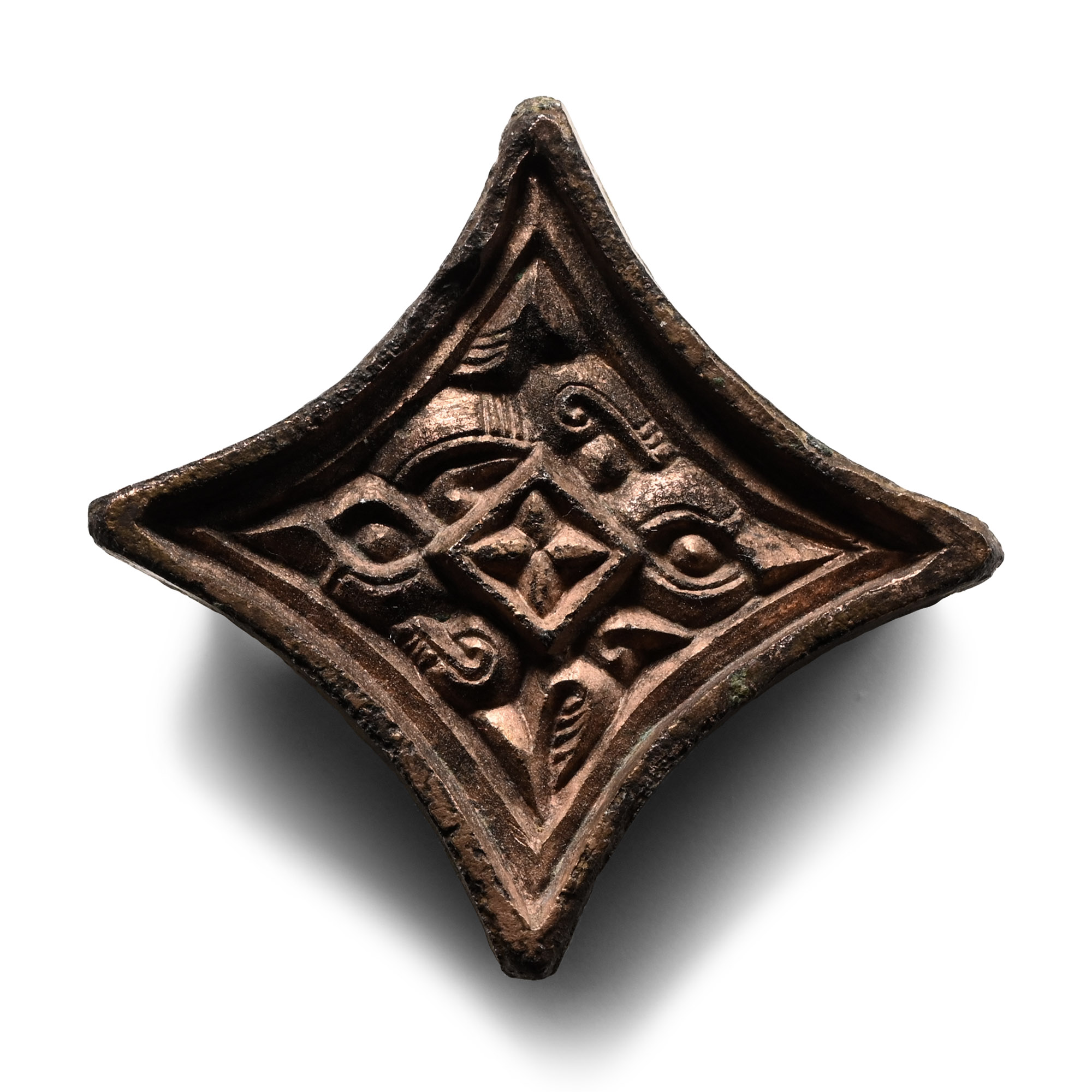
Anglo-Saxon Gilt Bronze Style 1 Mount
6TH CENTURY A.D.
1 in. (8.91 grams, 24 mm).
Lozenge with scooped sides and deep rim, band of Style 1 zoomorphic ornament, central escutcheon with quatrefoil. [No Reserve]
ProvenanceFound Norfolk, UK.
From an old private collection of Norfolk, UK, gentleman, formed since 1998.
Cf. Pollington, S., Kerr, L. & Hammond, B., Wayland's Work: Anglo-Saxon Art, Myth & Material Culture from the 4th to 7th century, Ely, 2010, plate 13(b), for similar gilt-bronze panel.
CONDITIONTimeLine Auctions follows a vetting process to ensure the authenticity and legality of all items, reinforcing our commitment to integrity and responsible trading. Each antiquity, antique, and coin lot undergoes thorough examination by a vetting committee of at least ten external specialists, professional trade association members, scientists, and archaeologists: Our Vetting Process
AUCTIONS:
TimeLine is a leading auction house specialising in antiquities, ancient art, collectables, natural history, coins, medals, and books. Our auctions offer museums, collectors, historians, and enthusiasts the opportunity to acquire unique and historically significant pieces.
-
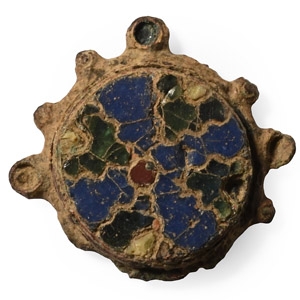
Late Anglo-Saxon Enamelled Gilt Bronze Cloisonne Brooch
Late 10th-11th century A.D.Sold for (Inc. bp): £59
With twelve peripheral lobes, the enamelled decoration composed of a blue wavy-armed cross with a central red disc, green and yellow between the arms. 3.96 grams, 24 mm
Found Flordon, Norfolk, UK. From an old private collection of Norfolk, UK, gentleman, formed since 1998. Accompanied by a copy of the British Museum's Portable Antiquities Scheme (PAS) report no.NMS-7D3199. -
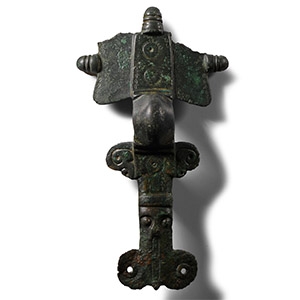
Anglo-Saxon Bronze Cruciform Brooch
6th century A.D.Sold for (Inc. bp): £156
With head knobs cast in one with the plate, side lugs below the arches and foot moulded with a stylised human head. 71 grams, 11.9 cm
Found UK. From a North Yorkshire, UK, private collection. Acquired from Adam Partridge Auctioneers, Macclesfield, UK. Property of Mr A.B., an American collector.
The long brooch is of developed Anglian cruciform type, originally possibly fitted with iron sprung pin of type G. The specimen shows an evolution from the Gothic crossbow type: especially in England, the knobs of the cruciform type brooches were cast integrally with the head-plate, which became larger and the bow below the arched section sprouted bronze lugs. -
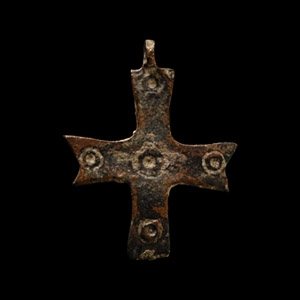
Saxon 'Published' Bronze Cross Pendant
6th-8th century A.D.Sold for (Inc. bp): £156
Cruciform pendant with impressed ring-and-dot motifs to the obverse, each arm with notched end. 6.7 grams, 39 mm
From the collection of the famous author, writer and speaker, Gordon Bailey, Essex, UK; formed since 1968.
