
Loading, please wait...
LOT 1697
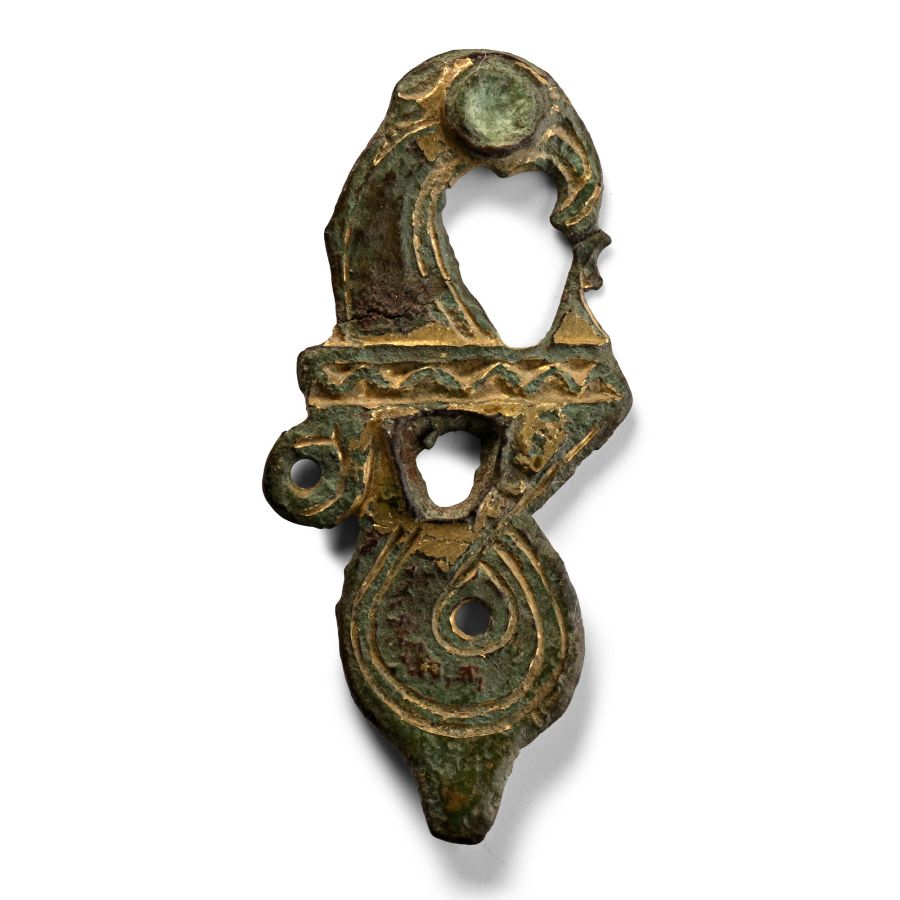
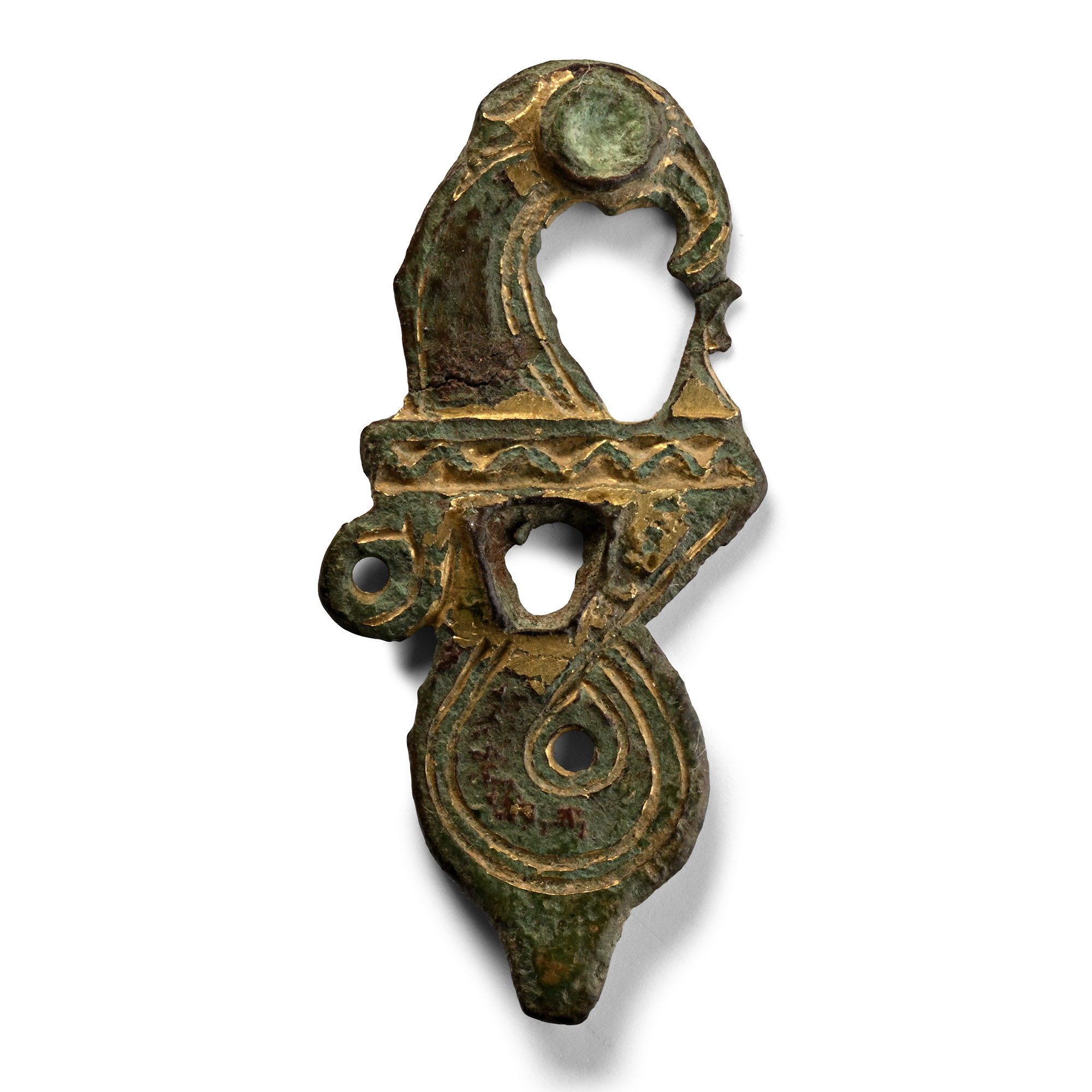
Anglo-Saxon Gilt-Bronze Purse Mount in the Shape of a Bird of Prey
CIRCA 500-600 A.D.
1 1/2 in. (3.27 grams, 40 mm).
Openwork appliqué comprising a horizontal panel with chip-carved undulating bar, above, the arched neck of a bird with hooked beak and circular cell for the eye, the beak connected to a vertical claw; beneath, body curved into a loop with the leg joining the median panel below the claw, lateral pierced attachment spur; eye with calcareous fill. [No Reserve]
ProvenanceFound Bishopstone, Seaford, Lewes, East Sussex, UK, in 2023.
Accompanied by a copy of the British Museum's Portable Antiquities Scheme (PAS) report no.SUSS-33C6E1.
TimeLine Auctions follows a vetting process to ensure the authenticity and legality of all items, reinforcing our commitment to integrity and responsible trading. Each antiquity, antique, and coin lot undergoes thorough examination by a vetting committee of at least ten external specialists, professional trade association members, scientists, and archaeologists: Our Vetting Process
AUCTIONS:
TimeLine is a leading auction house specialising in antiquities, ancient art, collectables, natural history, coins, medals, and books. Our auctions offer museums, collectors, historians, and enthusiasts the opportunity to acquire unique and historically significant pieces.
LOT 1697
Anglo-Saxon Gilt-Bronze Purse Mount in the Shape of a Bird of Prey
Sold for (Inc. bp): £221
-
Anglo-Saxon Bronze Zoomorphic Strap End
8th century A.D.Sold for (Inc. bp): £52
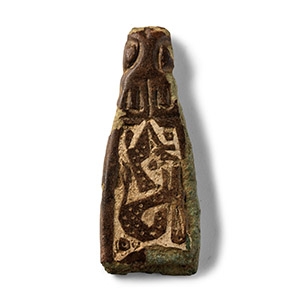
Triangular in plan with low-relief beast-head finial, Trewhiddle Style reserved speckled beast; upper end absent. 3.47 grams, 28 mm
Found Yorkshire, UK. -
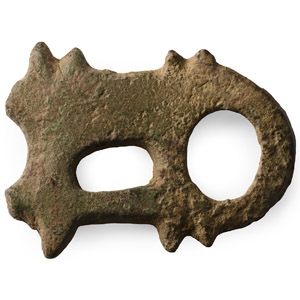
Late Anglo-Saxon Bronze Harness Fitting
Circa 1020-1100 A.D.Sold for (Inc. bp): £13
Flat in section with large loop at the upper edge, eccentrically-placed vertical slot, pairs of lateral lugs and scoop to the (broken) lower edge; Williams's Type 1 harness or bridle fitting. 19.7 grams, 41 mm
Found Tuesday 1st April 2025 in Wenham Parva, Babergh, Suffolk, UK. Accompanied by a copy of the British Museum's Portable Antiquities Scheme (PAS) report no.SF-934ACA. -
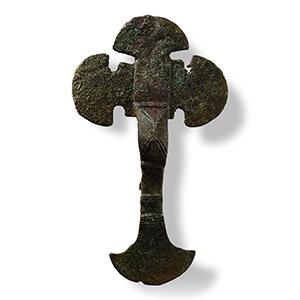
Anglo-Saxon Bronze Small-Long Brooch
Late 5th-6th century A.D.Sold for (Inc. bp): £91
With square headplate and three radiating D-shaped panels, narrow bow and footplate, pelta-shaped finial; pin-lug to reverse with remains of ferrous pin, catch below. 26 grams, 78 mm
Found Seaham, Co Durham, UK. Property of a Durham private collector.
