
Loading, please wait...
LOT 1713
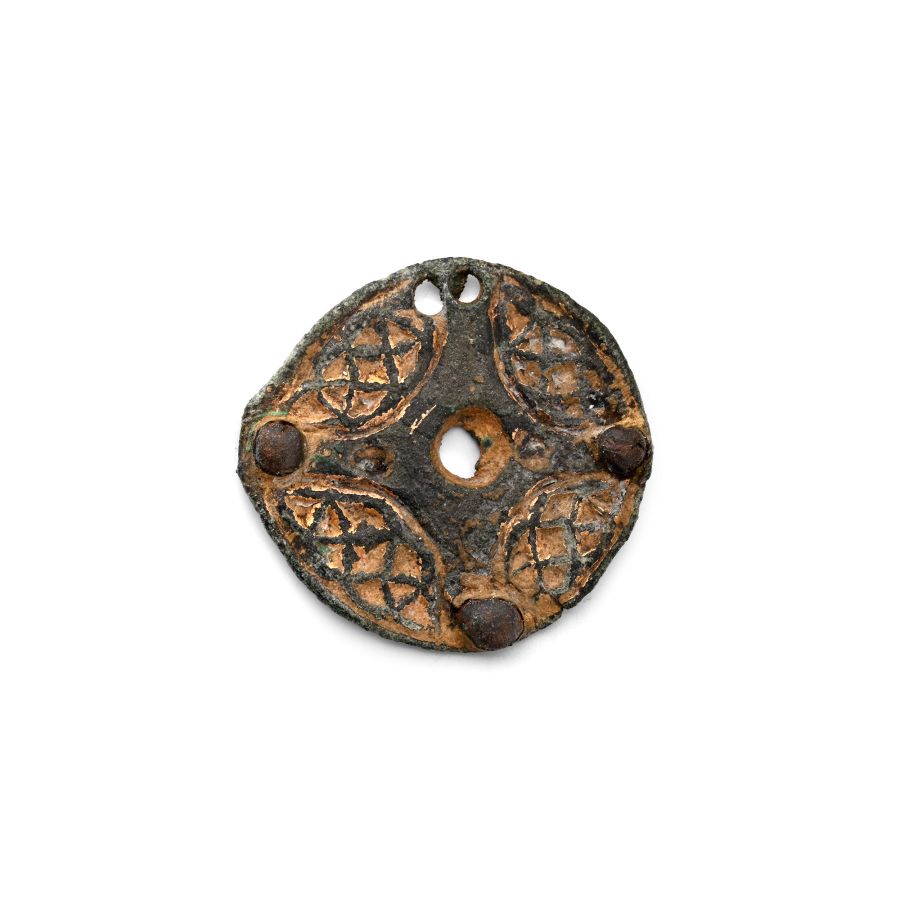
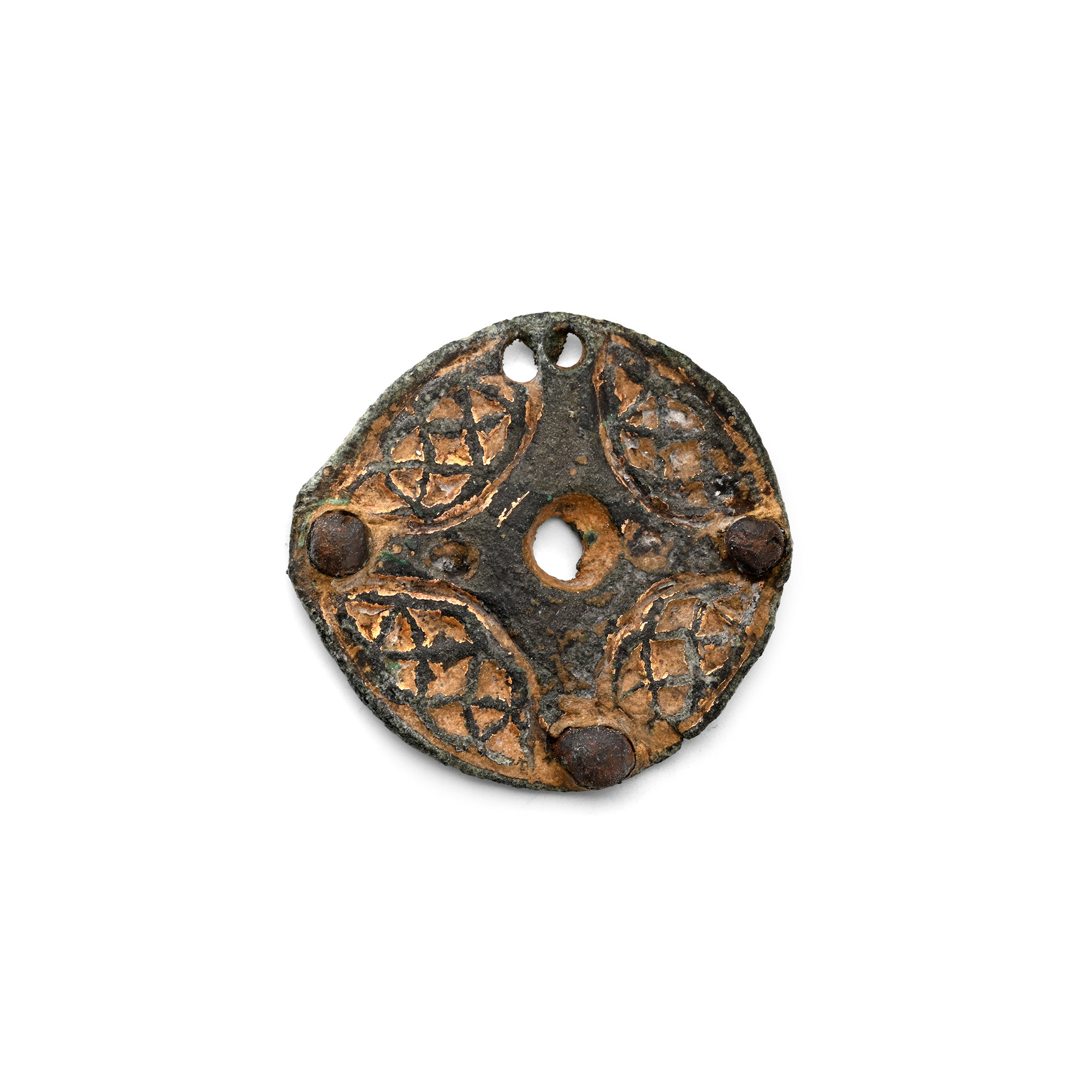
Anglo-Saxon Gilt Bronze Pin Head with Cross
7TH-8TH CENTURY A.D.
1 1/4 in. (8 grams, 31 mm).
Discoid with reserved central cross between four lentoid panels of reserved knotwork; end of broken shaft; later modified with holes to accept four domed rivets at the apices of the cross (three in situ) and one re-drilled; central mounting hole. [No Reserve]
ProvenanceFound Norfolk, UK.
LiteratureCf. Webster, L. & Backhouse, J., The Making of England. Anglo-Saxon Art and Culture AD 600-900, London, 1991, items 184, 185, for the comparable Witham pin-set, prior to modification.
CONDITIONTimeLine Auctions follows a vetting process to ensure the authenticity and legality of all items, reinforcing our commitment to integrity and responsible trading. Each antiquity, antique, and coin lot undergoes thorough examination by a vetting committee of at least ten external specialists, professional trade association members, scientists, and archaeologists: Our Vetting Process
AUCTIONS:
TimeLine is a leading auction house specialising in antiquities, ancient art, collectables, natural history, coins, medals, and books. Our auctions offer museums, collectors, historians, and enthusiasts the opportunity to acquire unique and historically significant pieces.
-
'The Bradbourne Horses' Anglo-Scandinavian Viking Bronze Ringerike Stirrup Apex Mount
1000-1100 A.D.Sold for (Inc. bp): £715
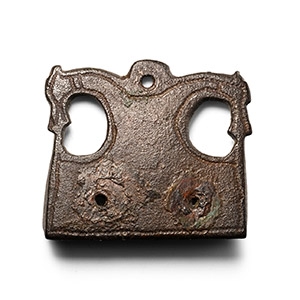
Rectangular mount with flange to each side of the reverse at the base, two mounting holes; upper edge formed as two addorsed horse-heads and median pierce lug; shallow incised line following the outer edges of the heads and necks, with suggestion of a bridle; Ringerike style. 47 grams, 53 mm
Found whilst searching with a metal detector in Bradbourne, Derbyshire Dales, East Midlands, UK. Accompanied by a copy of the British Museum's Portable Antiquities Scheme (PAS) report no.WMID-793298.
The sub-rectangular shape of this strap mount is similar to that of a Williams Class C, Type 2, although it is unusual in having the flanges on the sides as opposed to the base. The British Museum's Portable Antiquities Scheme (PAS) states: 'This is a find of note and has been designated: County / local importance'. -
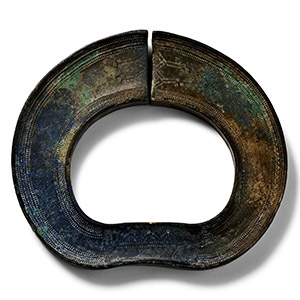
Viking Bronze Protective Armlet
9th-10th century A.D.Estimate: £800 - 1,000 (+bp*)
Opening Bid: £400
Omega-shaped in plan with raised flange rim to both edges; bands of punched ornament to each face. 216 grams, 11.2 cm
Acquired on the UK art market, 1995-2000s. Private collection, London, UK. -
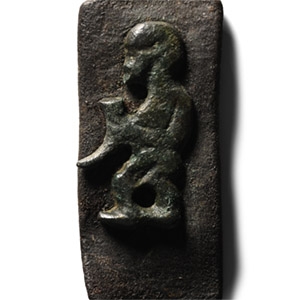
Scandinavian Pre-Viking Bronze Mount on Original Leather Strap Section
6th-7th century A.D.Estimate: £300 - 400 (+bp*)
Opening Bid: £120
Modelled in the half-round, profile figure with drinking horn, attached to a fragment of leather strap. 2.84 grams, 34 mm
From the private collection of a London gentleman, from his grandfather's collection formed before the early 1970s. This lot is accompanied by an illustrated lot declaration signed by the Head of the Antiquities Department, Dr Raffaele D'Amato.
