
Loading, please wait...
LOT 1717
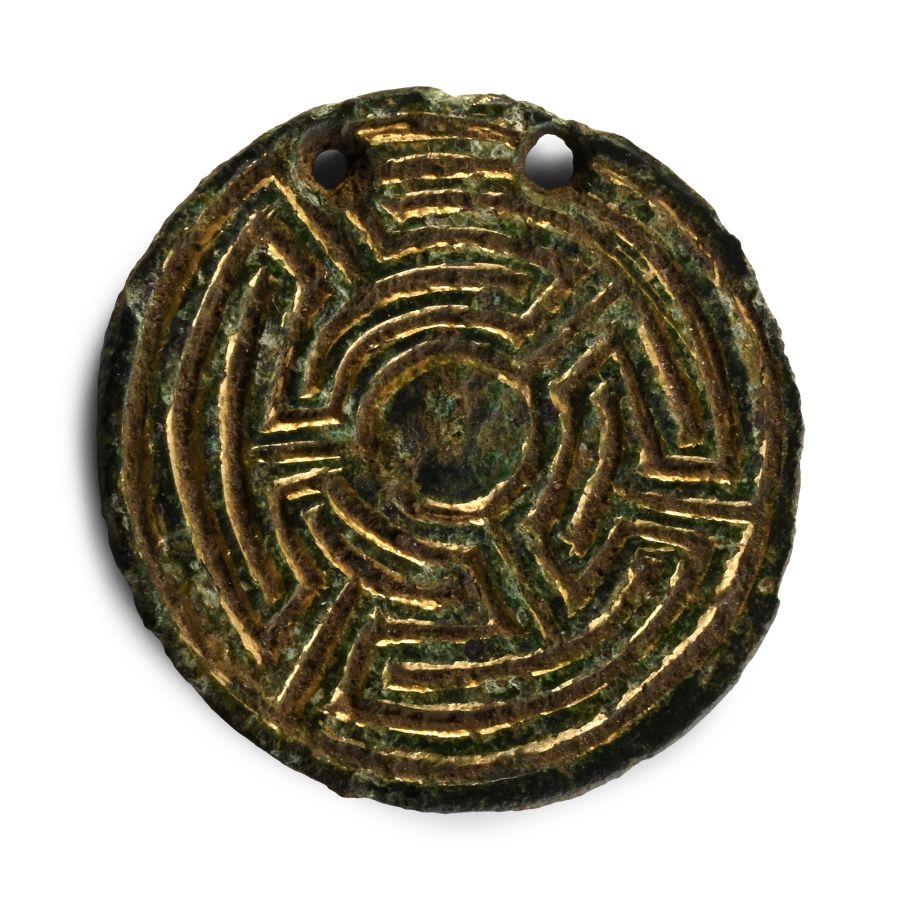
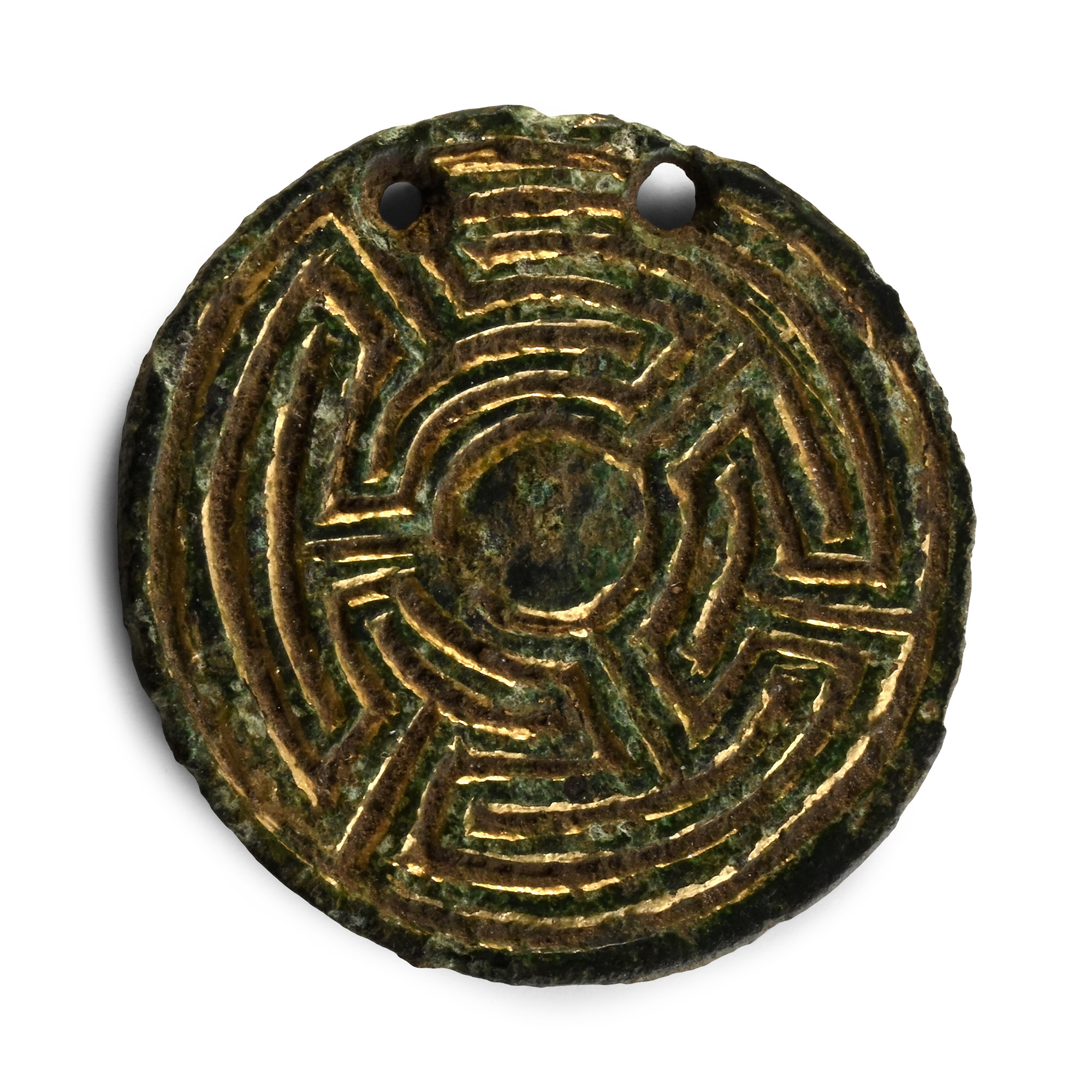
Anglo-Saxon Gilt Bronze Necklace Pendant with Trefoil Design
6TH CENTURY A.D.
3/4 in. (2.17 grams, 21 mm).
Discoid plaque with intricate maze design, pierced in two places for suspension or attachment. [No Reserve]
ProvenanceFound Gloucestershire, UK.
LiteratureCf. Hines, J., A New Corpus of Anglo-Saxon Great Square-Headed Brooches, London, 1997, pl.13(b) (Chessel Down).
FootnotesProbably the finial from a great square-headed brooch which has become detached; subsequently pierced either for re-attachment or possibly for use as a pendant.
CONDITIONTimeLine Auctions follows a vetting process to ensure the authenticity and legality of all items, reinforcing our commitment to integrity and responsible trading. Each antiquity, antique, and coin lot undergoes thorough examination by a vetting committee of at least ten external specialists, professional trade association members, scientists, and archaeologists: Our Vetting Process
AUCTIONS:
TimeLine is a leading auction house specialising in antiquities, ancient art, collectables, natural history, coins, medals, and books. Our auctions offer museums, collectors, historians, and enthusiasts the opportunity to acquire unique and historically significant pieces.
LOT 1717
Anglo-Saxon Gilt Bronze Necklace Pendant with Trefoil Design
Sold for (Inc. bp): £260
-
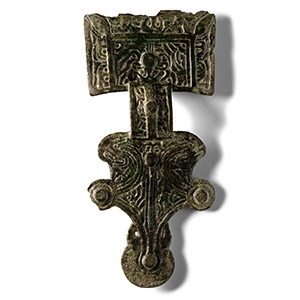
Large Anglo-Saxon Bronze Great Square-Headed Brooch
Late 5th-6th century A.D.Sold for (Inc. bp): £1,690
Comprising: rectangular headplate with raised borders and concentric bands of Style I animal ornament and central disc; three ribs to the shallow bow with central disc; horse-head lappets to the shoulders, cruciform footplate with raised inner rim and Style I motif, boss with surrounding tiered collar to the foot and lateral lugs; remains of catch, pin-lug and ferrous pin to the reverse. 86 grams, 13.4 cm
Found Seaham, Co Durham, UK. Property of a Durham private collector. -
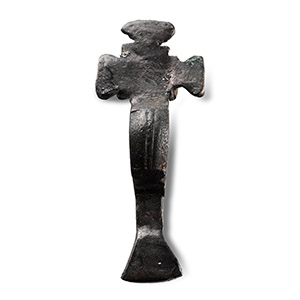
Anglo-Saxon Bronze Small-Long Brooch
Circa 6th century A.D.Sold for (Inc. bp): £26
Comprising a rectangular headplate with radiating arms, long bow with median punched ornament, triangular footplate with catch and pin-lugs to reverse. 11.3 grams, 61 mm
From the collection of a Buckinghamshire, UK, collector established from the earlier 1960s. -
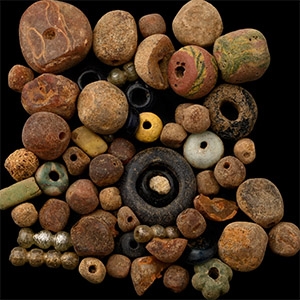
Anglo-Saxon Glass and Amber Necklace Bead Group
Late 5th-6th century A.D.Sold for (Inc. bp): £390
Including oblate, annular, mosaic and other types. 32 grams total, 5-20 mm
Found Seaham, Co Durham, UK. Property of a Durham private collector.
