
Loading, please wait...
LOT 1542
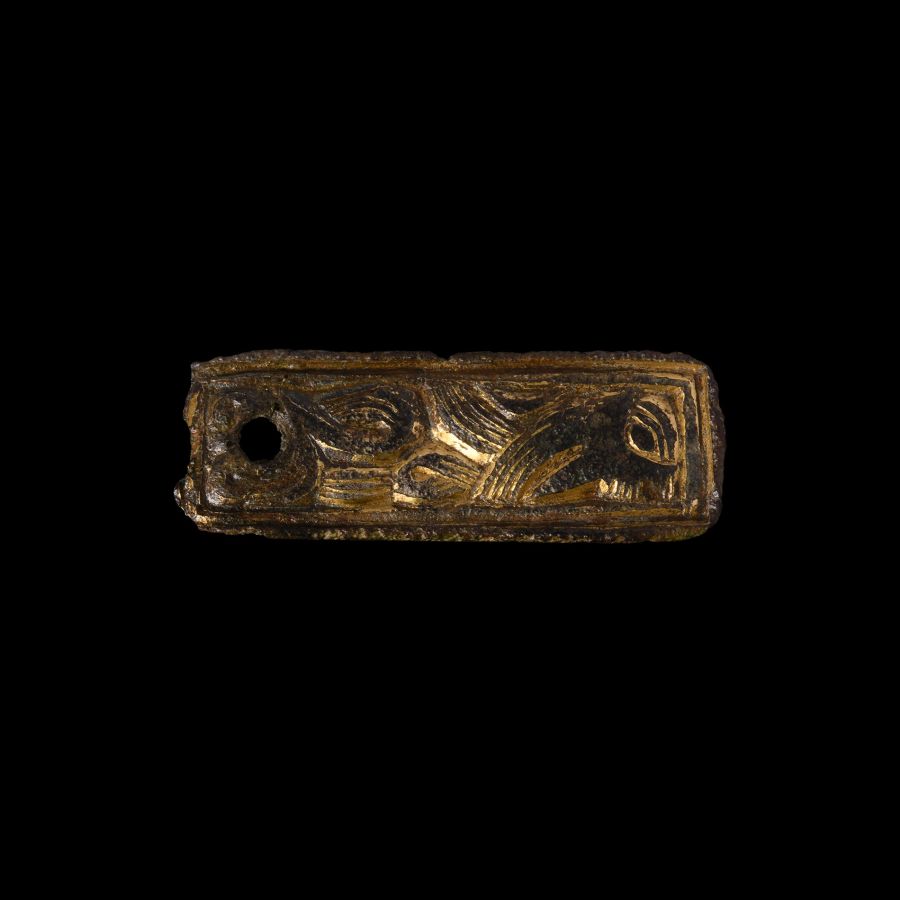
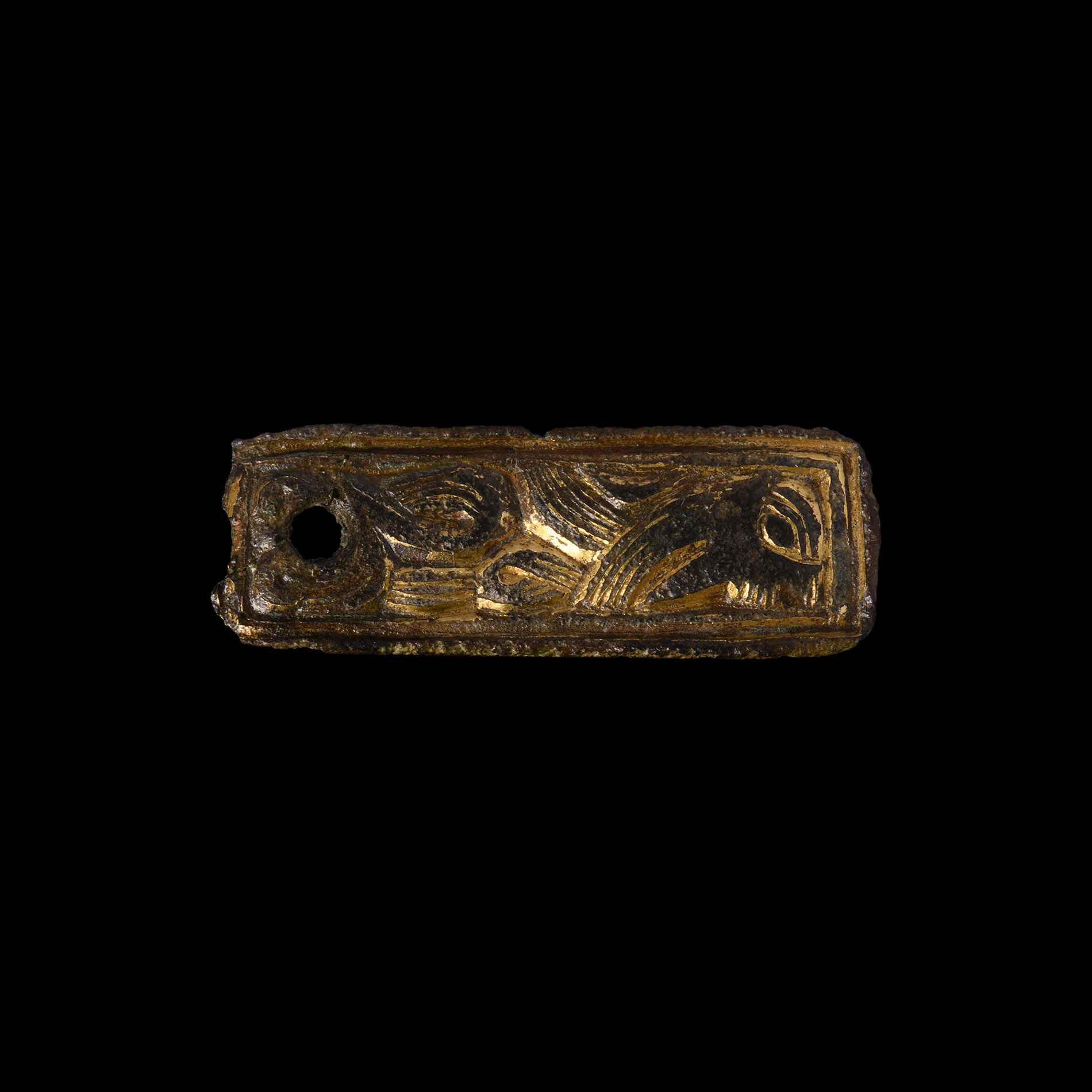
Anglo-Saxon Gilt Bronze Mount
6TH CENTURY A.D.
1 1/4 in. (2.9 grams, 33 mm).
Comprising a mounting lug to the reverse, hole to one end; raised border and panel of three-band Style I ornament. [No Reserve]
ProvenanceFound Saxmundham, Suffolk, UK.
LiteratureCf. West, S., A Corpus of Anglo-Saxon Finds From Suffolk, East Anglian Archaeology 84, Ipswich, 1998, p.137, item 13 (fragment).
CONDITIONTimeLine Auctions follows a vetting process to ensure the authenticity and legality of all items, reinforcing our commitment to integrity and responsible trading. Each antiquity, antique, and coin lot undergoes thorough examination by a vetting committee of at least ten external specialists, professional trade association members, scientists, and archaeologists: Our Vetting Process
AUCTIONS:
TimeLine is a leading auction house specialising in antiquities, ancient art, collectables, natural history, coins, medals, and books. Our auctions offer museums, collectors, historians, and enthusiasts the opportunity to acquire unique and historically significant pieces.
-
.jpg)
Anglo-Saxon Gilt Bronze Saucer Brooch Pair
5th-6th century A.D.Estimate: £2,500 - 3,500 (+bp*)
Opening Bid: £1,000
Each with an upturned rim and concentric bands of pellets and segmented circles; pin-lug and catch to the reverse. 50 grams total, 41-42 mm
Found near Evesham, Worcestershire, UK, in 1992. This lot has been checked against the Interpol Database of stolen works of art and is accompanied by search certificate no.203367.
A stunning and rare matched pair with heavy gold chip-carved mercury gilding. -
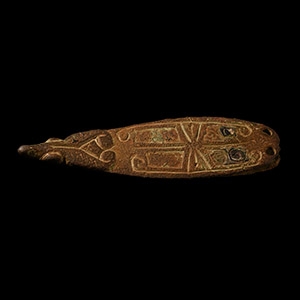
Large Anglo-Saxon Bronze Zoomorphic Strap End
Circa 9th century A.D.Sold for (Inc. bp): £33
Leaf-shaped with double piercing at the upper end, beast-head finial, remains of silver panels with niello ornament; Thomas's Class A 1. 12.5 grams, 66 mm
Found near Great Chesterford, Cambridgeshire, UK, 2000s. -
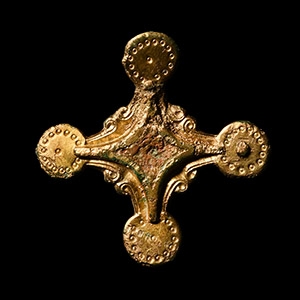
Anglo-Saxon Gilt Bronze Cross-Shaped Shield Mount
6th-7th century A.D.Sold for (Inc. bp): £234
Or casket mount, each arm terminating in a discoid plaque with a ring of punched pellets, the arms with scroll detailing to the junctions; central raised plaque with lozengiform cell filled with the remains of organic material; five lugs to the underside; some restoration. 18.99 grams, 42 mm
Found UK. Acquired 1978-2008. Ex property of a West Yorkshire lady.
