
Loading, please wait...
LOT 1620
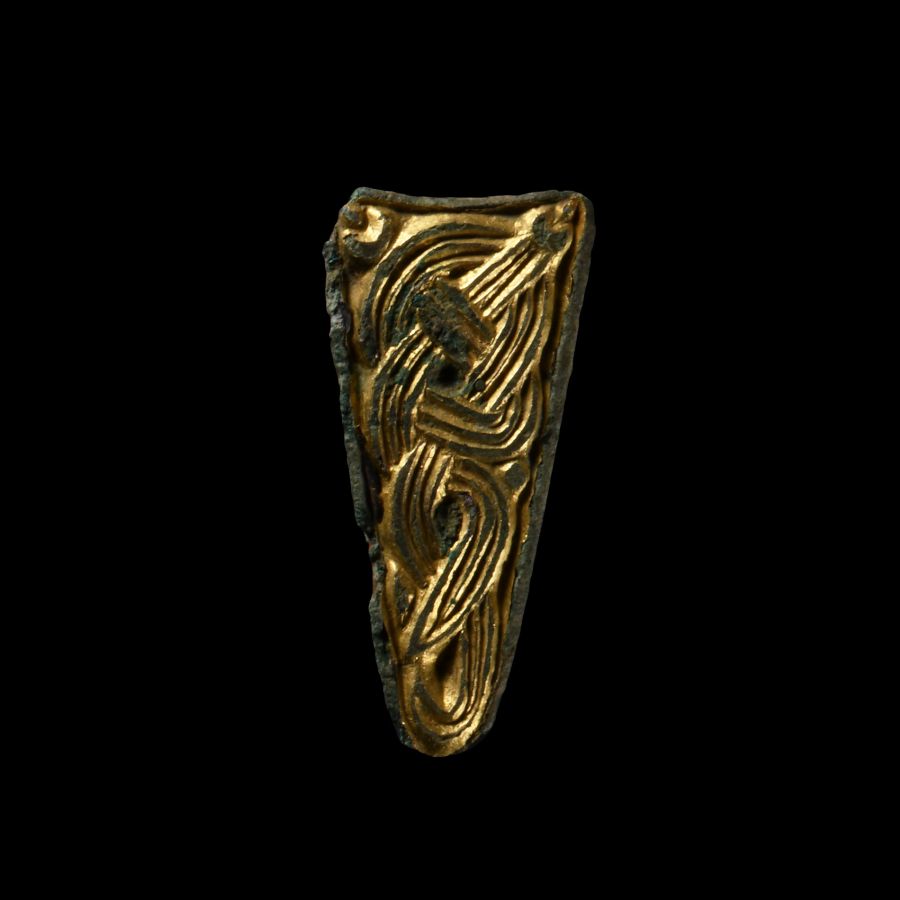
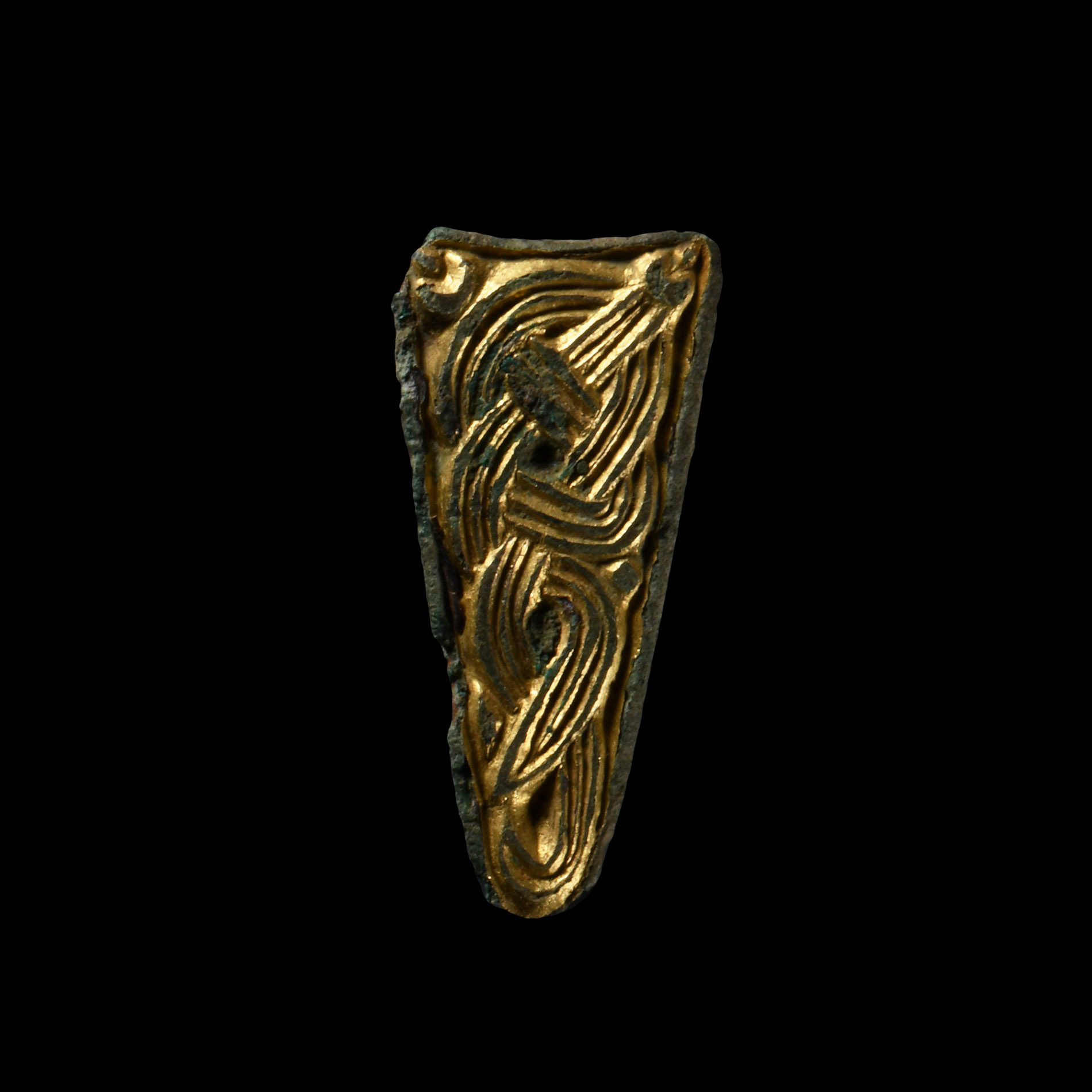
Anglo-Saxon Gilt Bronze Interlaced Belt Mount
LATE 5TH-6TH CENTURY A.D.
1 in. (1.56 grams, 22 mm).
Triangular gilt-bronze appliqué with two pierced lugs to the reverse, obverse with three-strand knotwork motif (Style II).
ProvenanceFound near Skirpenbeck, East Riding of Yorkshire, UK.
Accompanied by a copy of the British Museum's Portable Antiquities Scheme (PAS) report no.YORYM-2C0918.
TimeLine Auctions follows a vetting process to ensure the authenticity and legality of all items, reinforcing our commitment to integrity and responsible trading. Each antiquity, antique, and coin lot undergoes thorough examination by a vetting committee of at least ten external specialists, professional trade association members, scientists, and archaeologists: Our Vetting Process
AUCTIONS:
TimeLine is a leading auction house specialising in antiquities, ancient art, collectables, natural history, coins, medals, and books. Our auctions offer museums, collectors, historians, and enthusiasts the opportunity to acquire unique and historically significant pieces.
-
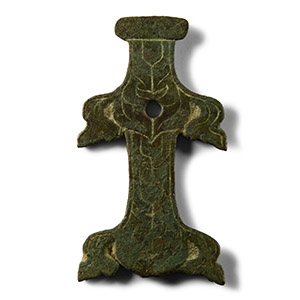
Late Anglo-Saxon Enamelled Bronze Mount with Dragon Heads
Circa 10th-11th century A.D.Sold for (Inc. bp): £111
With engraved foliate decoration, two pairs of stylised beast heads to the sides, a central hole for attachment. 61 grams, 90 mm
Believed to have been found in the UK. Acquired from C & T Auctioneers, Ashord, Kent, UK. Property of a Shropshire private collector. -
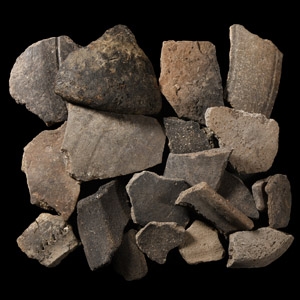
Anglo-Saxon Greyware Pottery Fragment Collection
6th-8th century A.D.Sold for (Inc. bp): £20
Mixed group of pottery shards including Ipswich Ware and other types. 682 grams total, 33-90 mm
UK gallery, early 2000s. -
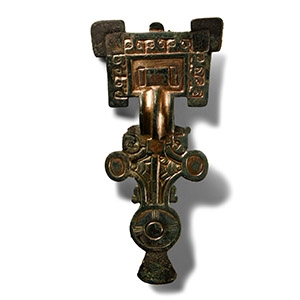
'The Dullingham' Anglo-Saxon Gilt Bronze Great Square-Headed Brooch
Late 5th-6th century A.D.Sold for (Inc. bp): £3,120
With trapezoidal headplate, shallow bow, narrow triangular foot and pelta-shaped finial, pin-lugs and catch to the reverse; the headplate with (originally silvered) angled panels to the upper corners and D-shaped lug at the middle of the upper edge; rectangular corner panels interrupting a frieze of Salin's Style I face motifs, inner plain band and raised rectangular panel above the junction with the ribbed bow; lappets of Salin's Style I profile heads flanking the junction of the bow with the footplate and vertical bar running to the finial, bisecting a cruciform panel with Salin's Style I zoomorphic forms, and outer plain lobes; finial comprising a disc with four radiating ribbed arms and central boss, pelta-shaped terminal; cleaned and one lateral lobe reattached. 82 grams, 13.8 cm
Found whilst searching with a metal detector near Dullingham, Cambridgeshire, UK, on Wednesday 4th October 2023, by David Pearson. Accompanied by a copy of the British Museum's Portable Antiquities Scheme (PAS) report no.SF-E6203C, and the museum drawings. Accompanied by a copy of a letter from the finder explaining the circumstances of finding. This lot has been checked against the Interpol Database of stolen works of art and is accompanied by search certificate no.12076-211956.
The individual elements of the design have parallels elsewhere in the corpus, and most are very similar to those on a brooch from Nassington (grave 33), pl.94(b) in Hines, 1997. The headplate is very similar in general although the Nassington example shows more punchmarks and tooling, and its lateral lobes and disc finial all bear guilloche detailing whereas those on the present example are plain. Large discoid finials to the footplate are not uncommon (e.g. from Ipswich and Bury St. Edmunds on Hines's pl.58) but the pelta-shaped extension appears to be unique; the ribbed cross in the circle as found on the finial is parallelled by the brooch from Chessel Down (Hines's pl.13(b)).
