
Loading, please wait...
LOT 1337
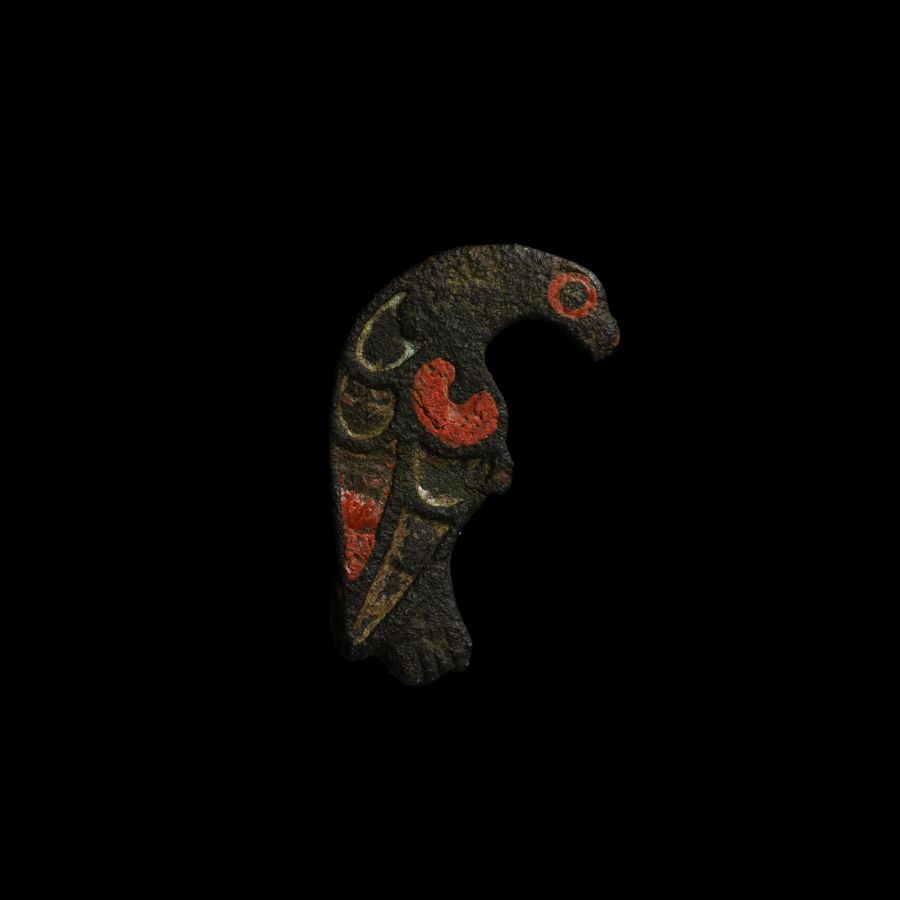
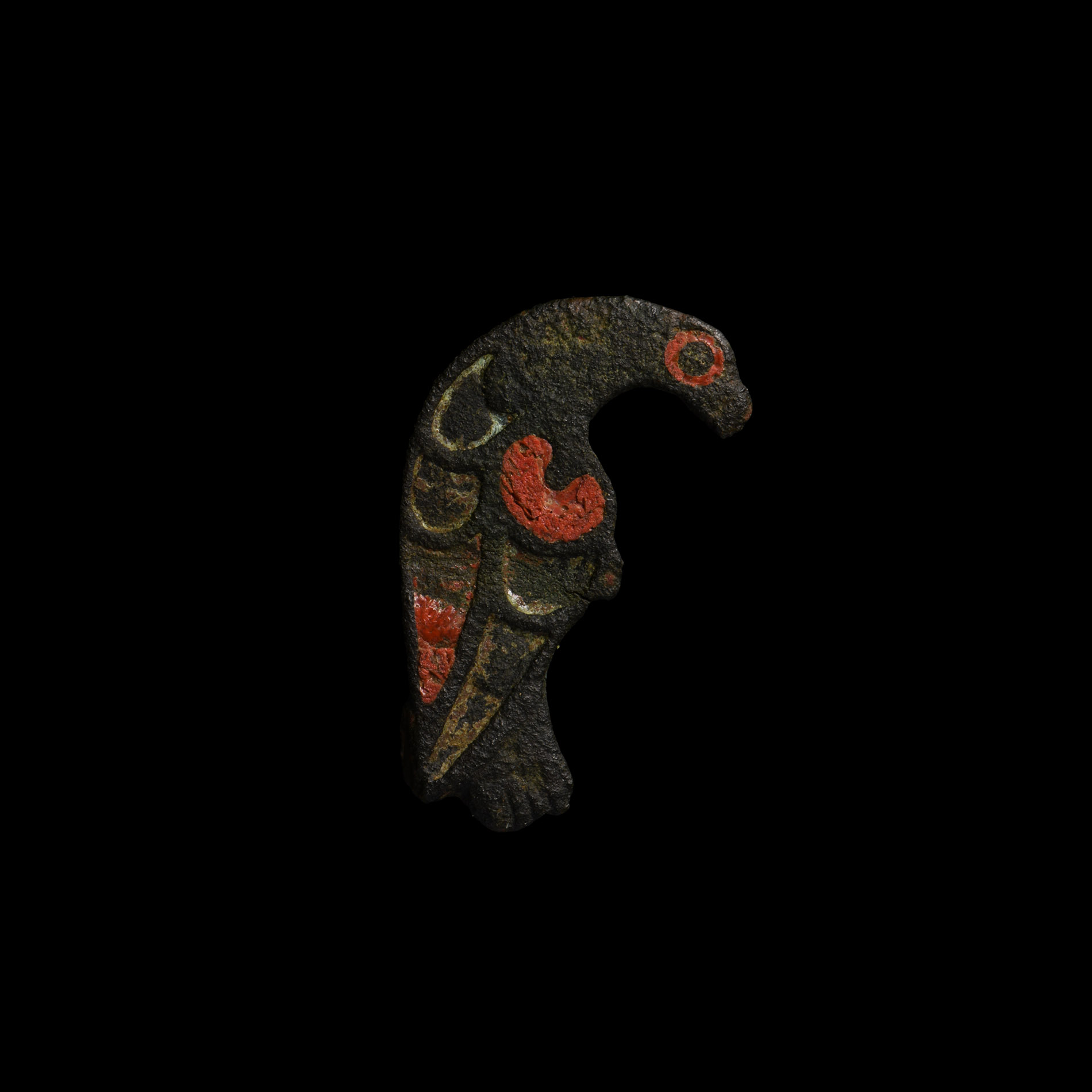
Anglo-Saxon Enamelled Bronze Bird Brooch
5TH CENTURY A.D.
1 1/8 in. (2.6 grams, 29 mm).
Featuring champlevé red and green enamelled cells to the body, eye and wing; to the reverse, the pin-lugs, bar and catchplate. [No Reserve]
ProvenanceFound near Droxford, Hampshire, UK.
From an old Hampshire collection.
Recorded with Winchester Museum.
One of a group of items from Hampshire of early Anglo-Saxon date featuring the decorative technique of champlevé enamelling. This technique is generally rare in early (5th century) contexts and may indicate the continuation of a Roman workshop in the Solent area or in coastal northern Gaul.
CONDITIONTimeLine Auctions follows a vetting process to ensure the authenticity and legality of all items, reinforcing our commitment to integrity and responsible trading. Each antiquity, antique, and coin lot undergoes thorough examination by a vetting committee of at least ten external specialists, professional trade association members, scientists, and archaeologists: Our Vetting Process
AUCTIONS:
TimeLine is a leading auction house specialising in antiquities, ancient art, collectables, natural history, coins, medals, and books. Our auctions offer museums, collectors, historians, and enthusiasts the opportunity to acquire unique and historically significant pieces.
-
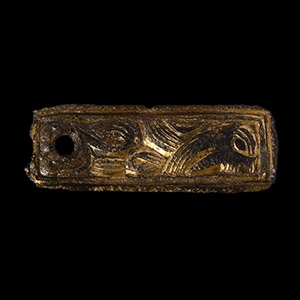
Anglo-Saxon Gilt Bronze Mount
6th century A.D.Sold for (Inc. bp): £72
Comprising a mounting lug to the reverse, hole to one end; raised border and panel of three-band Style I ornament. 2.9 grams, 33 mm
Found Saxmundham, Suffolk, UK. -
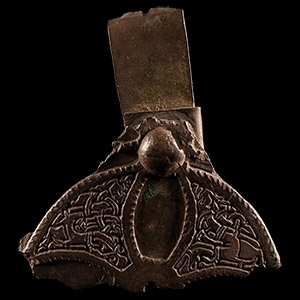
Saxon Silver Attachment Fragment
9th century A.D.Sold for (Inc. bp): £494
Comprising: a portion of a discoid mount with high-relief cross, the arms decorated with Trewhiddle Style animals and with notched edges, hole to the centre; lobe to the edge attached with a rivet to two rectangular straps, one extending for 34mm and the other broken off and folded to the rear. 24.1 grams, 51 mm
UK private collection, acquired in the 1980s.
The piece has the appearance of hack-silver in the light of the rough treatment it has received and the breakages. -
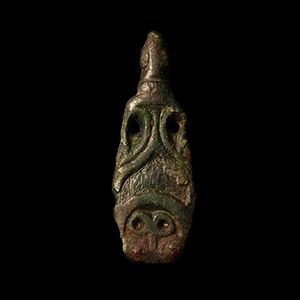
Saxon Bronze Zoomorphic Strap End
7th-9th century A.D.Sold for (Inc. bp): £13
Displaying zoomorphic motifs and a beast head terminal; perforated for attachment. 11.2 grams, 49 mm
From the collection of a North American gentleman, formed in the 1990s.
