
Loading, please wait...
LOT 1628
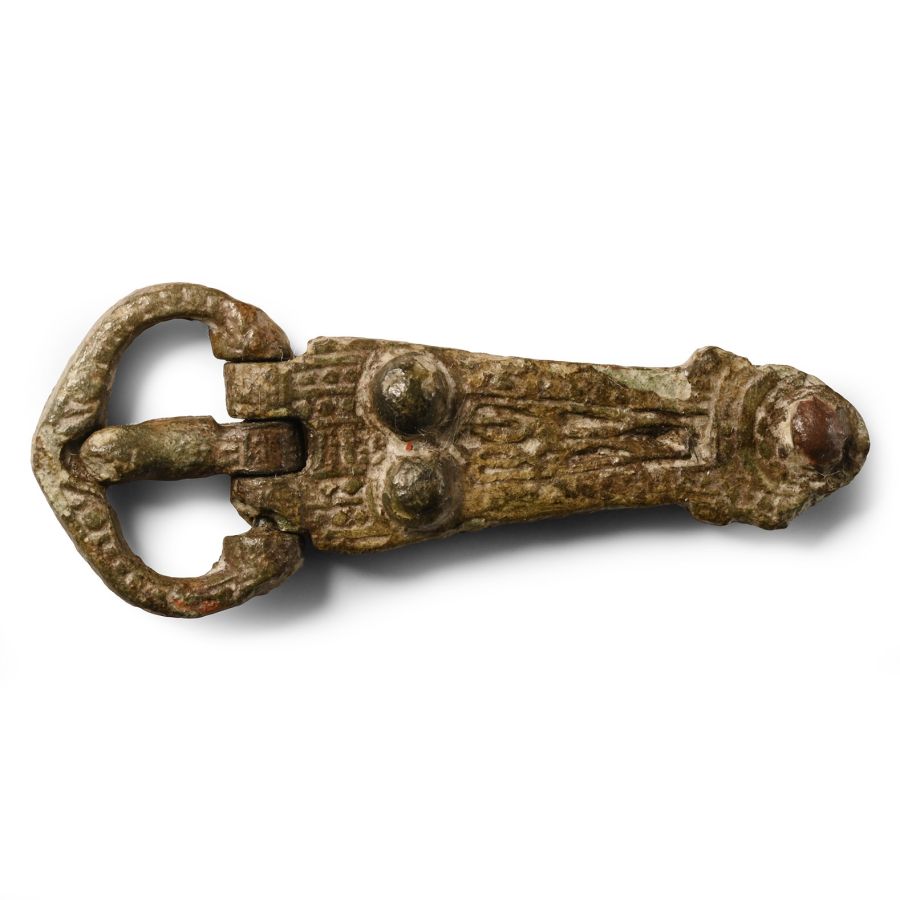
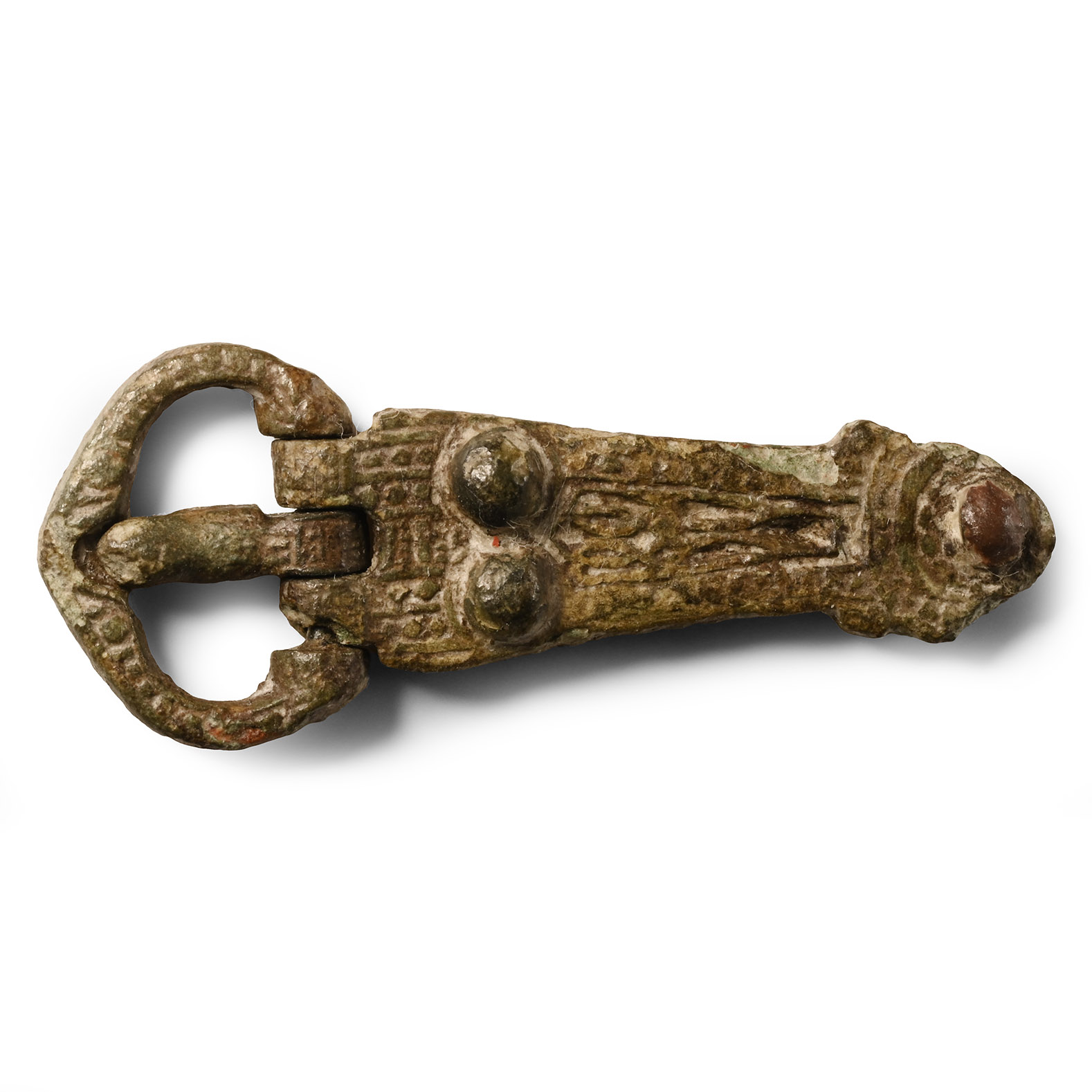
Anglo-Saxon 'East Anglia' Bronze Decorated Buckle and Plate
CIRCA 6TH CENTURY A.D.
2 in. (9.4 grams, 49 mm).
Triangular plate with three domed rivets, hinged loop and tongue; hatched ornament. [No Reserve]
ProvenanceFound whilst searching with a metal detector in East Anglia, UK.
CONDITIONTimeLine Auctions follows a vetting process to ensure the authenticity and legality of all items, reinforcing our commitment to integrity and responsible trading. Each antiquity, antique, and coin lot undergoes thorough examination by a vetting committee of at least ten external specialists, professional trade association members, scientists, and archaeologists: Our Vetting Process
AUCTIONS:
TimeLine is a leading auction house specialising in antiquities, ancient art, collectables, natural history, coins, medals, and books. Our auctions offer museums, collectors, historians, and enthusiasts the opportunity to acquire unique and historically significant pieces.
LOT 1628
Anglo-Saxon 'East Anglia' Bronze Decorated Buckle and Plate
Sold for (Inc. bp): £143
-
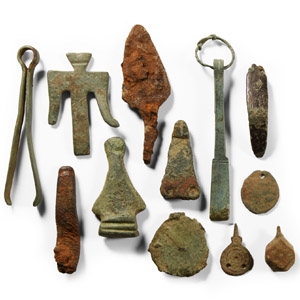
Anglo-Saxon Bronze Artefact Group
6th-8th century A.D.Sold for (Inc. bp): £59
Including hooked tags, chatelaine, tweezers and other items. 80 grams total, 18-68 mm
Found Cambridgeshire, UK. -
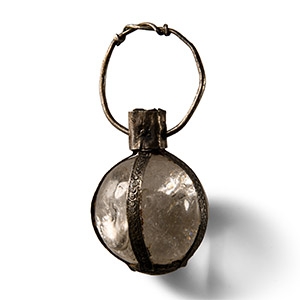
Large Saxon Period Silver Pendant with Rock Crystal Orb
6th-7th century A.D.Sold for (Inc. bp): £4,420
With discoid base and four straps containing the sphere, attached to a narrow collar at the top with a suspension ring; punched decoration to the straps. 96.4 grams, 88 mm
From the private collection of a London gentleman, from his grandfather's collection formed before the early 1970s. -
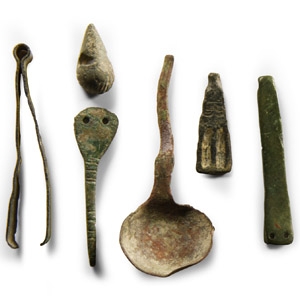
Anglo-Saxon Bronze Artefact Collection
6th-8th century A.D.Sold for (Inc. bp): £26
Including cosmetic tweezers with pointillé detailing; strap-end with silver inlay, hooked clothes fastener and other items. 28 grams total, 20-66 mm
Found Wiltshire, UK, before 1974.
