
Loading, please wait...
LOT 0373
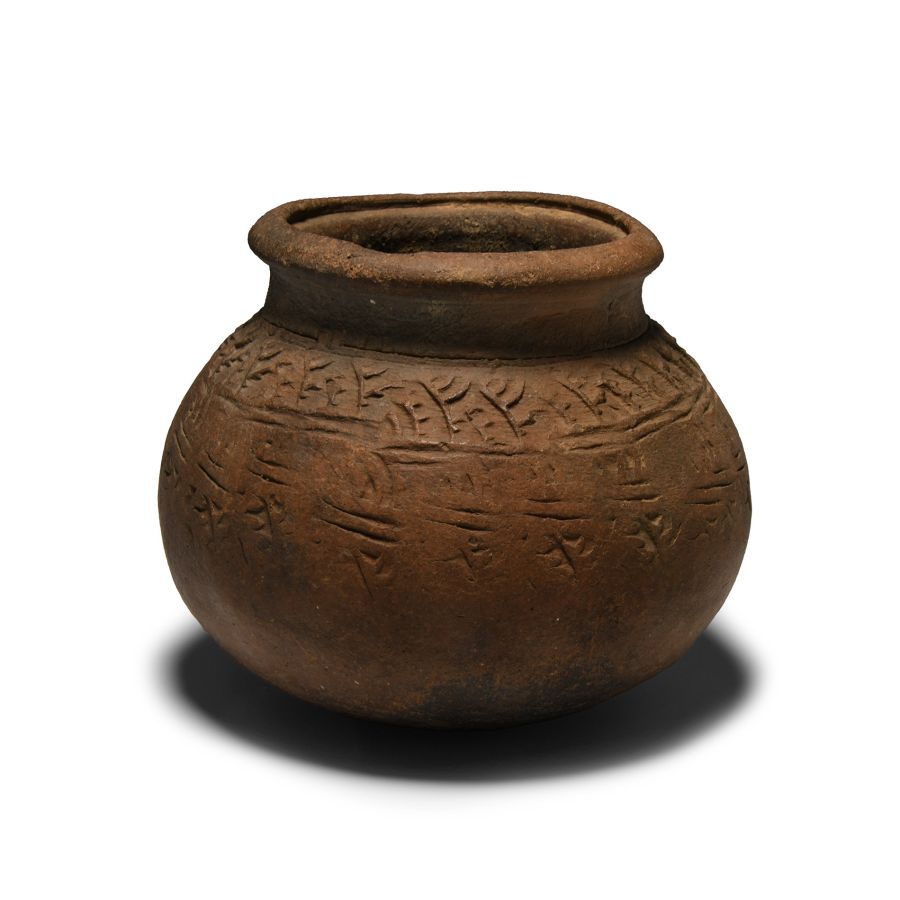
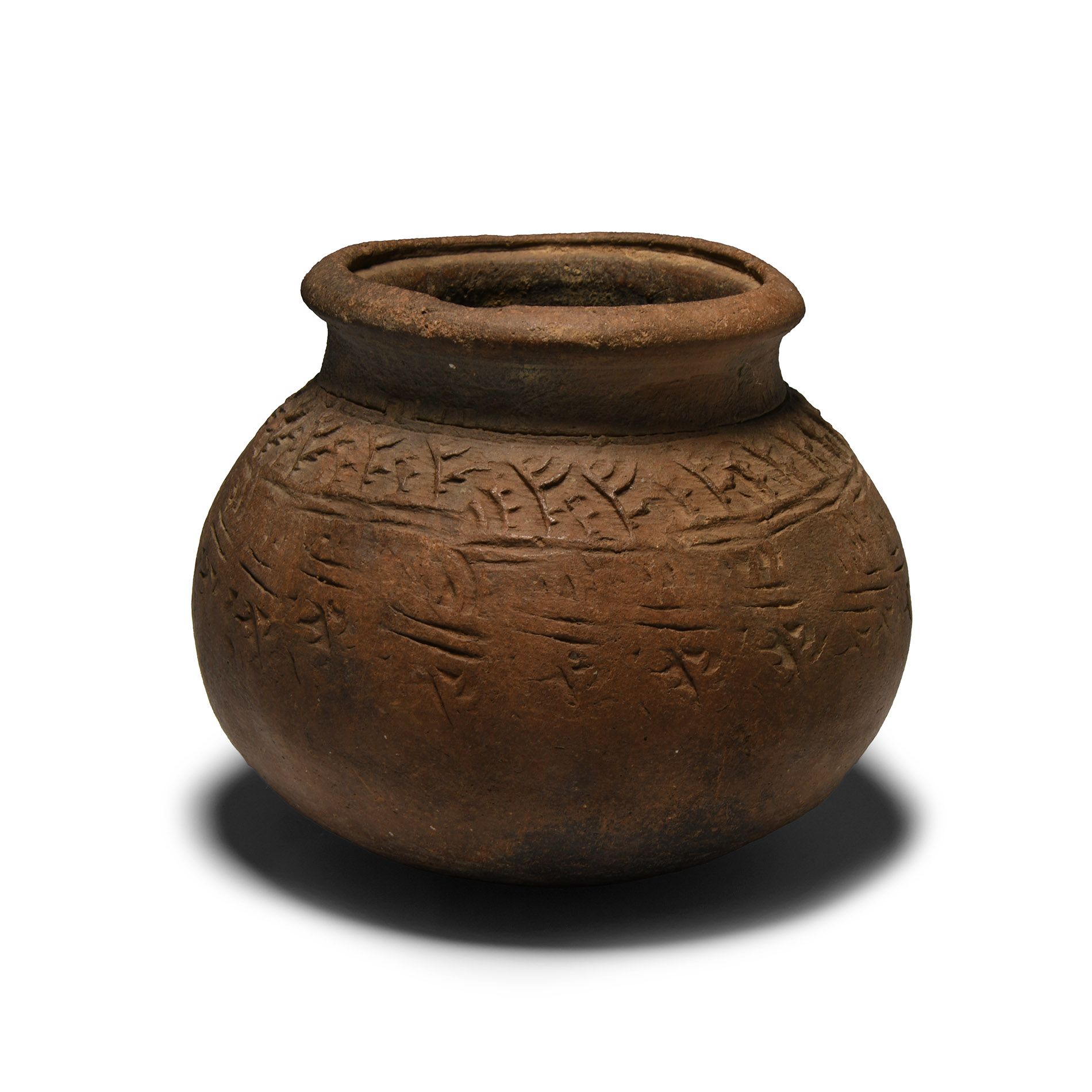
Anglo-Saxon Decorated Grey-Ware Urn
CIRCA 6TH-11TH CENTURY A.D.
5 1/2 in. (497 grams, 14 cm wide).
Squat vessel with rounded underside, gusseted neck and carinated mouth with inner lip; stamped frond decoration to the shoulder and body, arched stamp pattern between; underside with impressed ropework spiral pattern. [No Reserve]
ProvenanceEx English private collection, formed in the 1960s.
Acquired from Bonhams, London, 13 April 2011, no.245 (part).
From an important Cambridgeshire estate; thence by descent.
Accompanied by copies of the relevant Bonhams catalogue pages and the original Bonhams lot tag.
TimeLine Auctions follows a vetting process to ensure the authenticity and legality of all items, reinforcing our commitment to integrity and responsible trading. Each antiquity, antique, and coin lot undergoes thorough examination by a vetting committee of at least ten external specialists, professional trade association members, scientists, and archaeologists: Our Vetting Process
AUCTIONS:
TimeLine is a leading auction house specialising in antiquities, ancient art, collectables, natural history, coins, medals, and books. Our auctions offer museums, collectors, historians, and enthusiasts the opportunity to acquire unique and historically significant pieces.
-
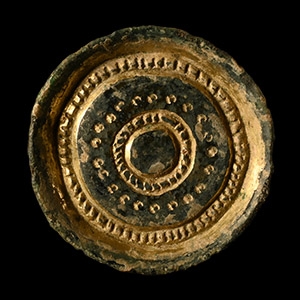
Anglo-Saxon Gold Chip-Carved Bronze Saucer Brooch
Circa 6th century A.D.Sold for (Inc. bp): £312
With central bosses within a pelletted ring, plain band with stamped roundels, billetted outer band and flared rim; pin-lug, pin and catch to the reverse. 7.01 grams, 26 mm
Found Cambridgeshire, UK. -
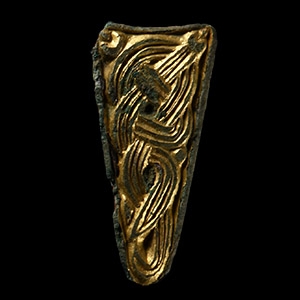
Anglo-Saxon Gilt Bronze Interlaced Belt Mount
Late 5th-6th century A.D.Sold for (Inc. bp): £286
Triangular gilt-bronze appliqué with two pierced lugs to the reverse, obverse with three-strand knotwork motif (Style II). 1.56 grams, 22 mm
Found near Skirpenbeck, East Riding of Yorkshire, UK. Accompanied by a copy of the British Museum's Portable Antiquities Scheme (PAS) report no.YORYM-2C0918. -
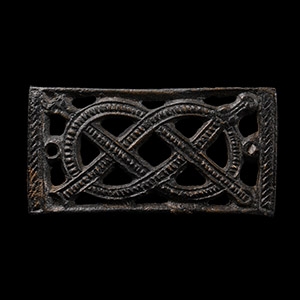
Anglo-Saxon Bronze Entwined Serpent Mount
6th-7th century A.D.Estimate: £200 - 300 (‡+bp*)
Opening Bid: £110
With openwork design of two serpents interlaced, each with billeted body and lentoid eyes, ropework border to the shorter sides; old collector's accession numbers to the underside '91.115' and '15871'. 10.9 grams, 46 mm
UK collection formed 1970s-1990s. Ex property of an English gentleman.
The decorative pattern of this mount is similar to what, according to S. West, is an Anglo-Saxon die found in Suffolk, where legless animal forms are represented lying head to tail, with beaded bodies within a beaded border. Also here the animals are showing interlaced jaws and headed bodies, all contained in a border.
