
Loading, please wait...
LOT 1662
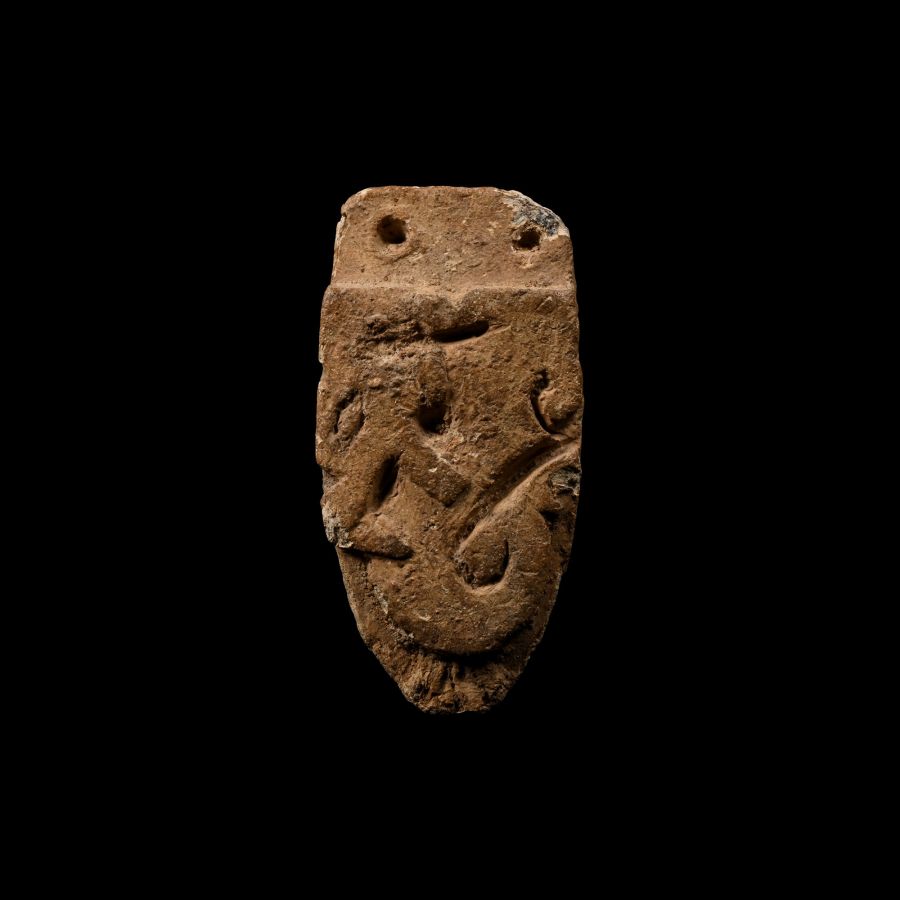
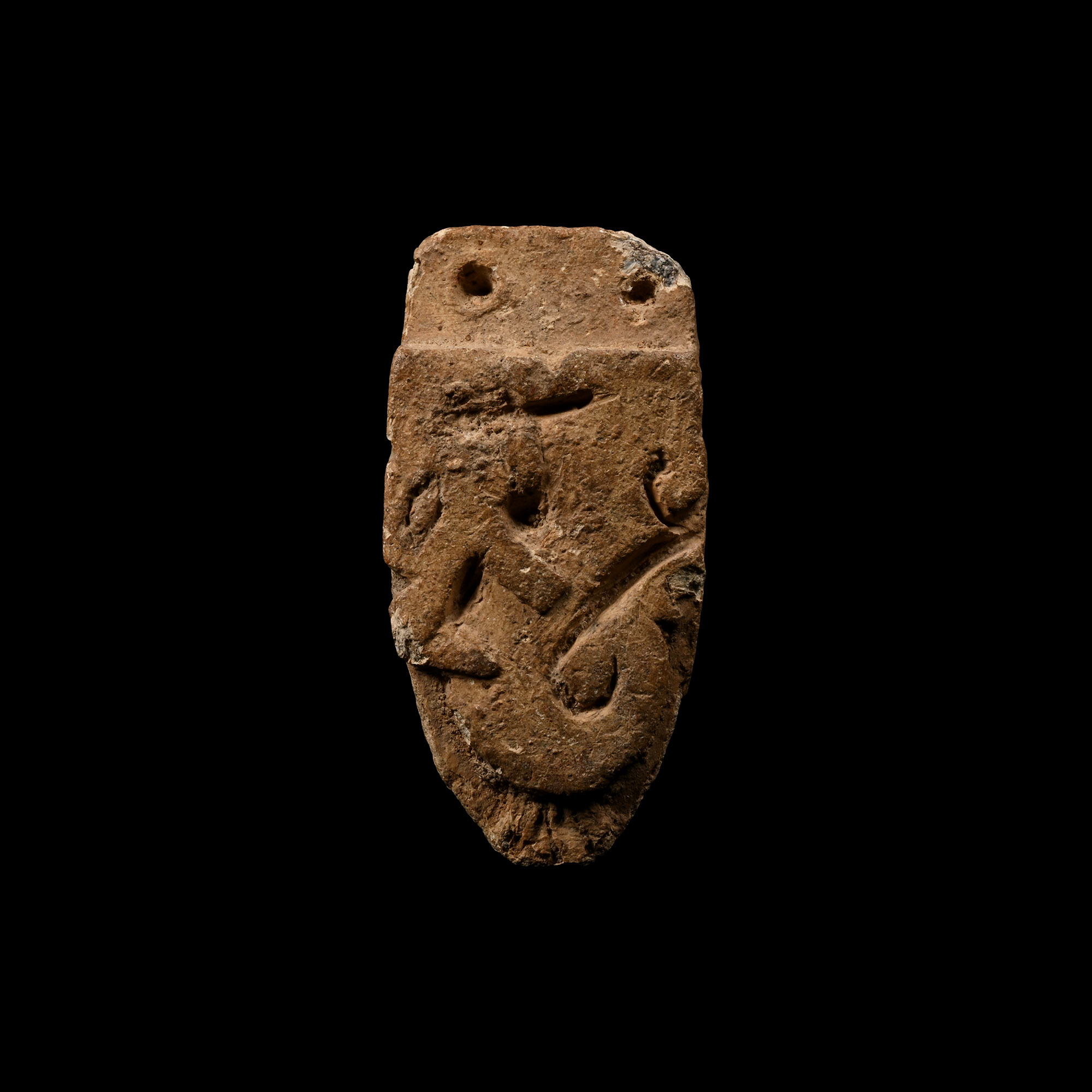
Anglo-Saxon 'Carolingian' Lead Strap End
8TH CENTURY A.D.
1 1/4 in. (14.8 grams, 32 mm).
Tongue-shaped with an interlaced beast design, transverse bar above. [No Reserve]
ProvenanceFound Sutton Fields, Sutton on the Forest, Yorkshire, UK, in April 2013.
From the private collection of Robin Sykes, Yorkshire, UK, formed since the late 1990s.
Accompanied by an illustrated record card by Jim Halliday.
This lot is accompanied by an illustrated lot declaration signed by the Head of the Antiquities Department, Dr Raffaele D'Amato.
TimeLine Auctions follows a vetting process to ensure the authenticity and legality of all items, reinforcing our commitment to integrity and responsible trading. Each antiquity, antique, and coin lot undergoes thorough examination by a vetting committee of at least ten external specialists, professional trade association members, scientists, and archaeologists: Our Vetting Process
AUCTIONS:
TimeLine is a leading auction house specialising in antiquities, ancient art, collectables, natural history, coins, medals, and books. Our auctions offer museums, collectors, historians, and enthusiasts the opportunity to acquire unique and historically significant pieces.
-
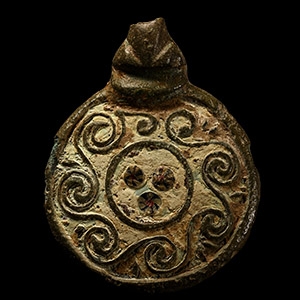
'The Stathern' Anglo-Saxon Enamelled Bronze Hanging Bowl Mount with Millefiori Inlays
6th-7th century A.D.Estimate: £1,500 - 2,000 (+bp*)
Opening Bid: £608
Discoid and hollow to the reverse with raised rim and suspension hook base; panel of seven La Tène spirals with an enamelled field, commas between, central raised ring with three equally spaced millefiori glass inlays; extremely rare. 11.60 grams, 40 mm
Found whilst searching with a metal detector near Stathern, Leicestershire, UK, in February 2005. This lot has been cleared against the Art Loss Register database, and is accompanied by an illustrated lot declaration signed by the Head of the Antiquities Department, Dr Raffaele D'Amato.
Such mounts are found on hanging bowls mainly in 6th-7th century Anglo-Saxon princely or royal burials. They probably formed part of the so-called 'economy of prestige' in which decorative high-status tableware and feasting equipment circulated among the leading families of the various British and Anglo-Saxon kingdoms. A number of these items have been found in 7th century burial mounds such as Sutton Hoo (Suffolk), Prittlewell (Essex) and Benty Grange (Derbyshire). The decoration and manufacturing techniques suggest an origin among the late Romano-British groups of western and northern Britain. -
.jpg)
Anglo-Saxon Gilt Bronze Star Saucer Brooch with Composite Boss
Late 5th-6th century A.D.Sold for (Inc. bp): £468
With a deep flange, chamfered inner ridge and wavy line, second chamfered edge with a high-relief five pointed star within a multiple stranded border surrounding a central rivetted boss, remains of catchplate and pin-lug to verso; rare with composite boss. 20 grams, 18 mm
Found whilst searching with a metal detector in Middle Aston, Cherwell, Oxfordshire, UK, on Wednesday 8th August 2024. Accompanied by a copy of the British Museum's Portable Antiquities Scheme (PAS) report no.OXON-B9A7B7. This lot is accompanied by an illustrated lot declaration signed by the Head of the Antiquities Department, Dr Raffaele D'Amato.
Saucer brooches are a female Saxon fashion, contemporary with the Anglian penannular and cruciform types, normally worn at the shoulders to secure a tubular dress. -
.jpg)
Anglo-Saxon Gilt Bronze Wrist Clasp
450-570 A.D.Sold for (Inc. bp): £39
Rectangular in plan with six vandykes to the trailing edge, hook beneath the forward edge, transverse grooves flanking a panel of Salin's Style I ornament (Tiermensch). 6.69 grams, 43 mm
Found near Skirpenbeck, Yorkshire, UK, in 2019. From an old Yorkshire, UK, collection. Accompanied by a copy of the British Museum's Portable Antiquities Scheme (PAS) report no.YORYM-DDC0C9. This lot is accompanied by an illustrated lot declaration signed by the Head of the Antiquities Department, Dr Raffaele D'Amato.
