
Loading, please wait...
LOT 1699
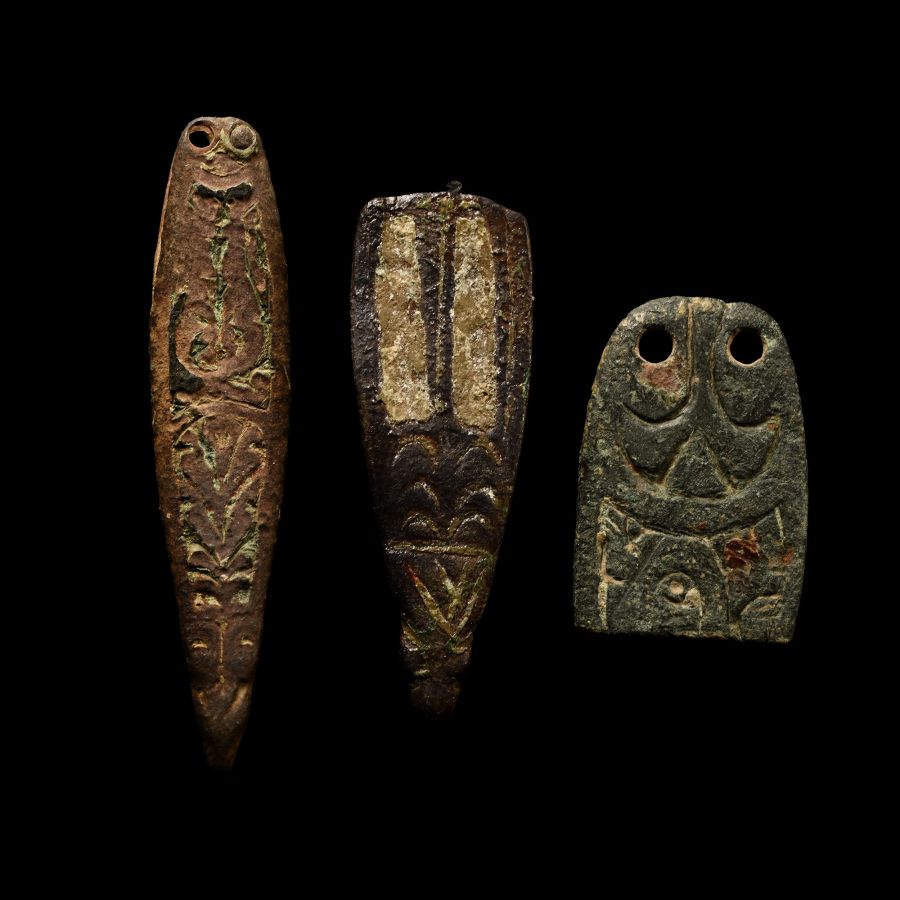
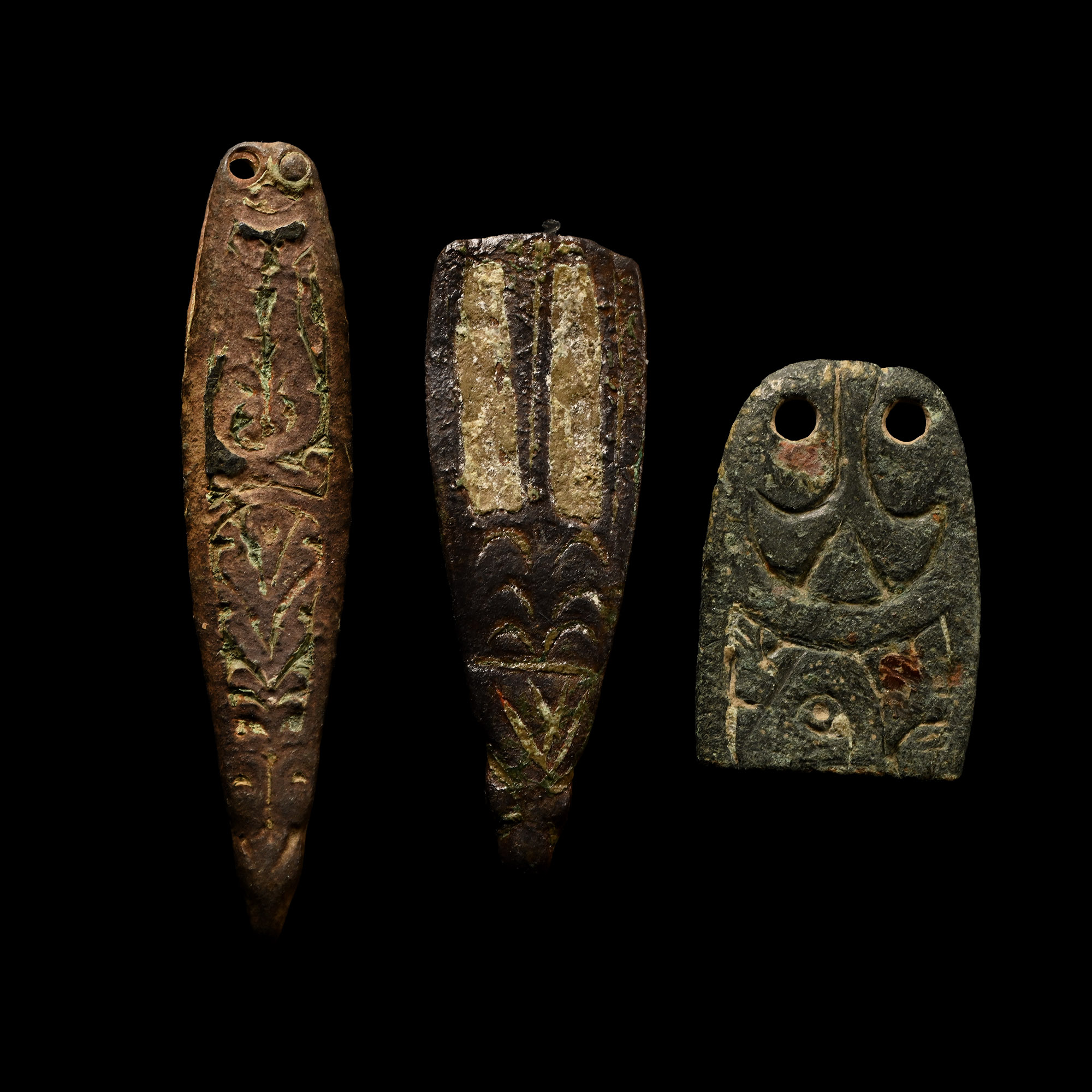
Anglo-Saxon Bronze Strap End Group
9TH CENTURY A.D.
1 - 1 3/4 in. (11.2 grams total, 24-47 mm).
Comprising one convex-sided with niello palmette design, beast-head finial; one convex-sided with beast-head finial, recesses above; one fragment with Trewhiddle Style beast and palmette; Thomas's Class A. [3, No Reserve]
ProvenanceFound north Kent, UK.
Previously on loan to the Ashmolean Museum, Oxford, UK.
Ex Midlands collection.
Property of a Kent, UK, lady collector since 2013.
This lot is accompanied by an illustrated lot declaration signed by the Head of the Antiquities Department, Dr Raffaele D'Amato.
Cf. Thomas, G., Late Anglo-Saxon and Viking Age Strap-Ends 750-1100: Part 1, Finds Research Group datasheet 32, Sleaford, 2007, items 4, 6, 12, for type.
CONDITIONTimeLine Auctions follows a vetting process to ensure the authenticity and legality of all items, reinforcing our commitment to integrity and responsible trading. Each antiquity, antique, and coin lot undergoes thorough examination by a vetting committee of at least ten external specialists, professional trade association members, scientists, and archaeologists: Our Vetting Process
AUCTIONS:
TimeLine is a leading auction house specialising in antiquities, ancient art, collectables, natural history, coins, medals, and books. Our auctions offer museums, collectors, historians, and enthusiasts the opportunity to acquire unique and historically significant pieces.
-
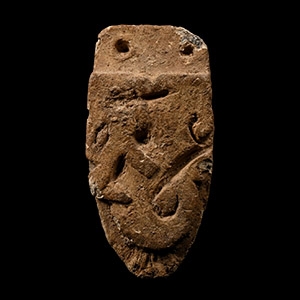
Anglo-Saxon 'Carolingian' Lead Strap End
8th century A.D.Sold for (Inc. bp): £13
Tongue-shaped with an interlaced beast design, transverse bar above. 14.8 grams, 32 mm
Found Sutton Fields, Sutton on the Forest, Yorkshire, UK, in April 2013. From the private collection of Robin Sykes, Yorkshire, UK, formed since the late 1990s. Accompanied by an illustrated record card by Jim Halliday. This lot is accompanied by an illustrated lot declaration signed by the Head of the Antiquities Department, Dr Raffaele D'Amato. -
.jpg)
Anglo-Saxon Gilt Bronze Star Saucer Brooch with Composite Boss
Late 5th-6th century A.D.Sold for (Inc. bp): £468
With a deep flange, chamfered inner ridge and wavy line, second chamfered edge with a high-relief five pointed star within a multiple stranded border surrounding a central rivetted boss, remains of catchplate and pin-lug to verso; rare with composite boss. 20 grams, 18 mm
Found whilst searching with a metal detector in Middle Aston, Cherwell, Oxfordshire, UK, on Wednesday 8th August 2024. Accompanied by a copy of the British Museum's Portable Antiquities Scheme (PAS) report no.OXON-B9A7B7. This lot is accompanied by an illustrated lot declaration signed by the Head of the Antiquities Department, Dr Raffaele D'Amato.
Saucer brooches are a female Saxon fashion, contemporary with the Anglian penannular and cruciform types, normally worn at the shoulders to secure a tubular dress. -
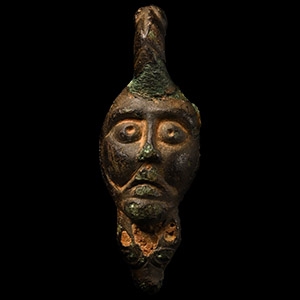
Irish Bronze Hanging Bowl Mount
7th-8th century A.D.Sold for (Inc. bp): £1,170
Comprising: ellipsoid central domed panel forming a bearded mask with impressed points to the pellet eyes, trumpet-shaped nose and deltoid moustache above a broad lower lip; above, curved suspension hook with horse-head detailing to the end and segmented mane; below, a triangular beast-head with narrow muzzle and ovoid ears, almond-shaped eyes. 8.47 grams, 45 mm
Found Sutton Fields, Sutton on the Forest, Yorkshire, UK, on 27 May 2005. From the private collection of Robin Sykes, Yorkshire, UK, formed since the late 1990s. Accompanied by an illustrated record card by Jim Halliday incorrectly identified as Romano-Celtic. This lot is accompanied by an illustrated lot declaration signed by the Head of the Antiquities Department, Dr Raffaele D'Amato.
