
Loading, please wait...
LOT 1741
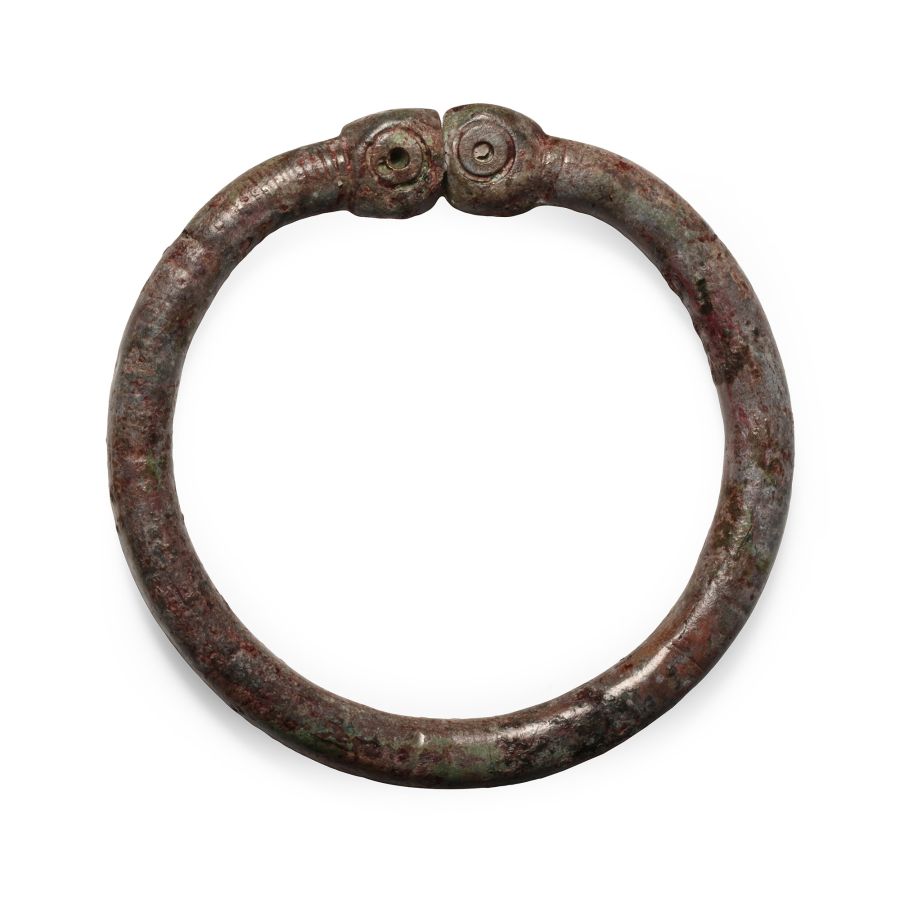
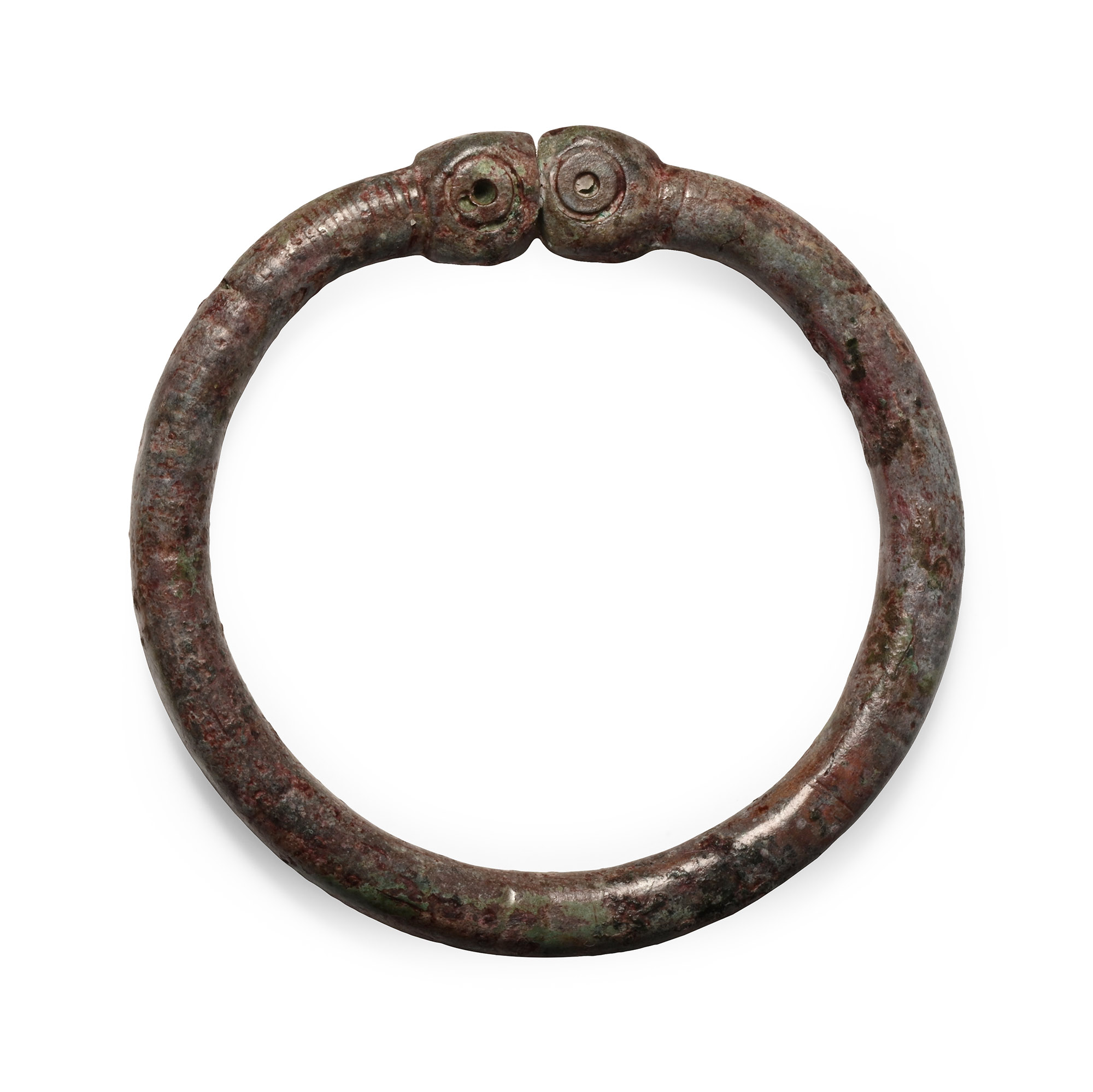
Anglo-Saxon Bronze Penannular Brooch
LATE 5TH-6TH CENTURY A.D.
2 1/8 in. (27.6 grams, 54 mm).
Round in section with lobe finals each with ring-and-dot motif to the upper face, ribbing to the shank, pin absent. [No Reserve]
ProvenanceFound Seaham, Co Durham, UK.
Property of a Durham private collector.
Cf. MacGregor, A. & Bolick, E., A Summary Catalogue of the Anglo-Saxon Collections (Non-Ferrous Metals), Oxford, 1993, item 11.2, for type.
CONDITIONTimeLine Auctions follows a vetting process to ensure the authenticity and legality of all items, reinforcing our commitment to integrity and responsible trading. Each antiquity, antique, and coin lot undergoes thorough examination by a vetting committee of at least ten external specialists, professional trade association members, scientists, and archaeologists: Our Vetting Process
AUCTIONS:
TimeLine is a leading auction house specialising in antiquities, ancient art, collectables, natural history, coins, medals, and books. Our auctions offer museums, collectors, historians, and enthusiasts the opportunity to acquire unique and historically significant pieces.
-
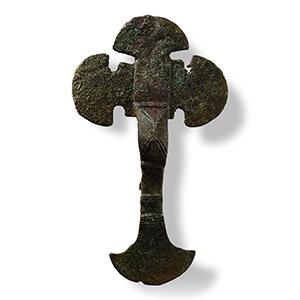
Anglo-Saxon Bronze Small-Long Brooch
Late 5th-6th century A.D.Sold for (Inc. bp): £91
With square headplate and three radiating D-shaped panels, narrow bow and footplate, pelta-shaped finial; pin-lug to reverse with remains of ferrous pin, catch below. 26 grams, 78 mm
Found Seaham, Co Durham, UK. Property of a Durham private collector. -
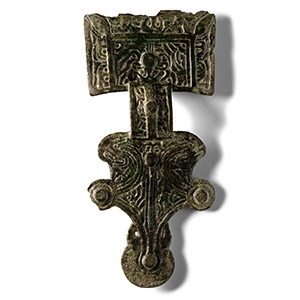
Large Anglo-Saxon Bronze Great Square-Headed Brooch
Late 5th-6th century A.D.Sold for (Inc. bp): £1,690
Comprising: rectangular headplate with raised borders and concentric bands of Style I animal ornament and central disc; three ribs to the shallow bow with central disc; horse-head lappets to the shoulders, cruciform footplate with raised inner rim and Style I motif, boss with surrounding tiered collar to the foot and lateral lugs; remains of catch, pin-lug and ferrous pin to the reverse. 86 grams, 13.4 cm
Found Seaham, Co Durham, UK. Property of a Durham private collector. -
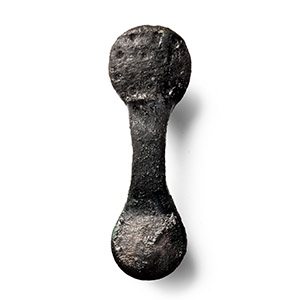
Anglo-Saxon Bronze Ansate Brooch
Circa 6th century A.D.Sold for (Inc. bp): £26
Comprising two discoid lobes joined by a narrow arch, pin-lugs and a catch to the reverse. 5.31 grams, 42 mm
From the collection of a Buckinghamshire, UK, collector established from the earlier 1960s.
