Loading, please wait...
Details
LOT 1703
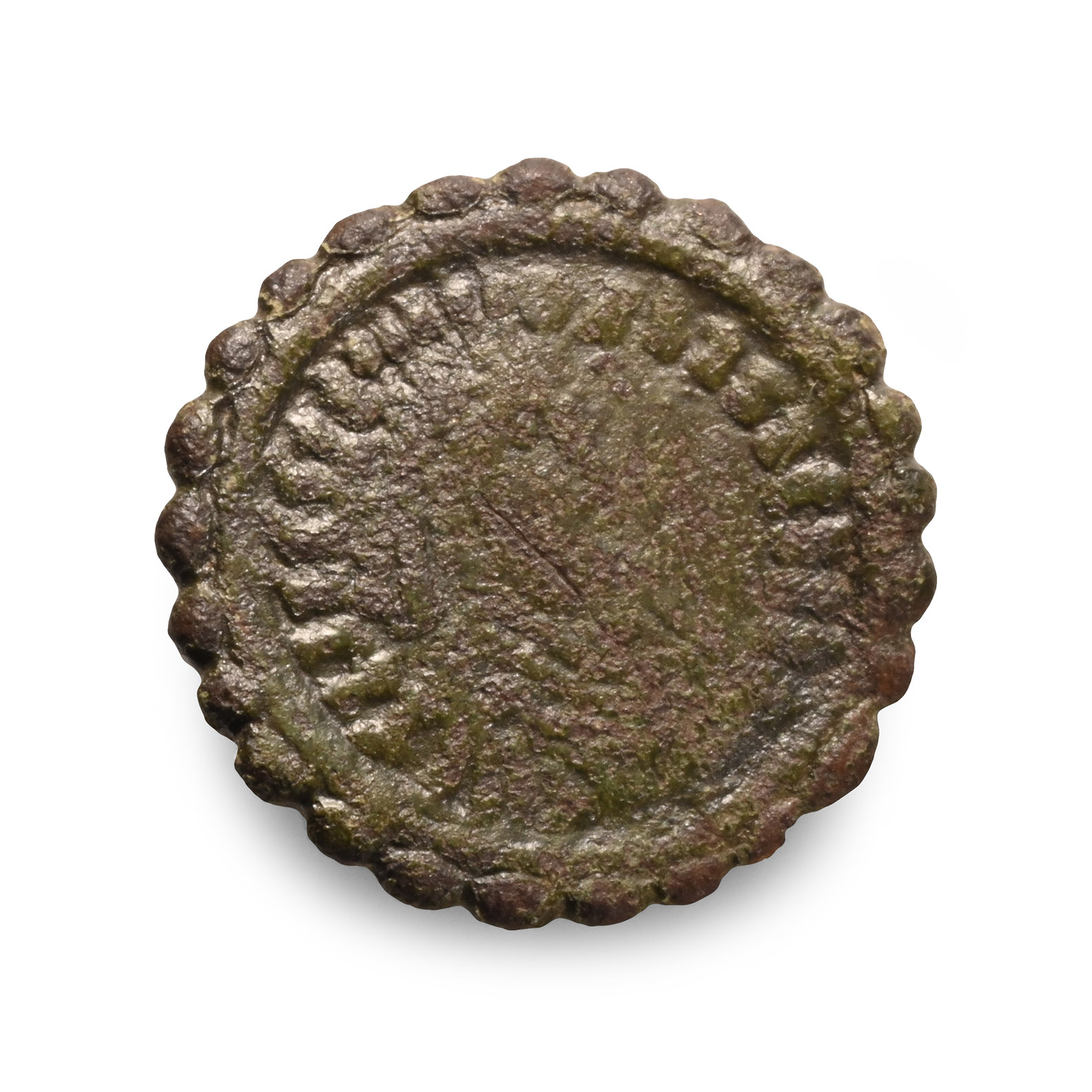
Anglo-Saxon Bronze Nummular Brooch
CIRCA 9TH CENTURY A.D.
1 1/8 in. (7.2 grams, 28 mm).
With dentilled rim and profile bust in imitation of a coin design. [No Reserve]
Provenance
Found Lincolnshire, UK.
From an old private collection of Norfolk, UK, gentleman, formed since 1998.
Literature
Cf. Abramson, T., Sceattas. An Illustrated Guide, King's Lynn, 2006, p.63 (Vanimundus Series Va type 55, silver variety VaB); Hammond, B., British Artefacts vol.2 - Middle Saxon & Viking, Witham, 2010, item 1.1.2-e.
CONDITIONVETTING:
TimeLine Auctions follows a vetting process to ensure the authenticity and legality of all items, reinforcing our commitment to integrity and responsible trading. Each antiquity, antique, and coin lot undergoes thorough examination by a vetting committee of at least ten external specialists, professional trade association members, scientists, and archaeologists: Our Vetting Process
AUCTIONS:
TimeLine is a leading auction house specialising in antiquities, ancient art, collectables, natural history, coins, medals, and books. Our auctions offer museums, collectors, historians, and enthusiasts the opportunity to acquire unique and historically significant pieces.
RELATED LOTS
-
Anglo-Saxon Gilt Bronze Cruciform Brooch Fragment
6th century A.D.Sold for (Inc. bp): £169
'Florid' type with square panel of Style I ornament to the headplate and fragment of one lateral lug with billet ornament, deep bow with square stud, footplate with Style I orament and one lappet, upper section of the mask forming the foot; ferrous lump from the pin and catch to the reverse. 70 grams, 91 mm
Found Lincolnshire, UK. From an old private collection of Norfolk, UK, gentleman, formed since 1998. -
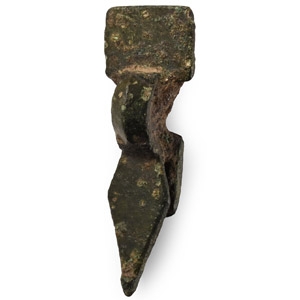
Anglo-Saxon Gilt Bronze Radiate-Headed Brooch
Later 5th-6th century A.D.Sold for (Inc. bp): £33
With oval headplate with three knobs, the obverse decorated with curvilinear knotted ridged design, rounded bow; ferrous remains to the reverse. 4.84 grams, 30 mm
Found Skirpenbeck, East Riding of Yorkshire, UK. From an old private collection of a Norfolk, UK, gentleman, formed since 1998. Accompanied by a copy of the British Museum's Portable Antiquities Scheme (PAS) report no.YORYM-2A90CB. -
Anglo-Saxon Gilt Bronze Cruciform Brooch Burial Group
6th century A.D.Sold for (Inc. bp): £12,350
Comprising a large cruciform brooch and two bronze small-long brooches; (A) the cruciform of 'florid' type much gilding and applied silver ornament; the headplate a central rectangle with a high-relief Style I motif, framed on three sides by sheet-silver bands and with panels of gilt billeting to the outer edges, lateral and upper flanges each formed as a stylised male face with conical eyes flanked by avian heads and with a T-shaped sheet-silver beard; the bow broad and flat with vertical columns of punched-pot detailing, and surmounted at the apex by a square panel with green enamel fill and reserved quatrefoil; the lower body with similar panel to the headplate with lateral vertical bands with punched detailing, outer edges with applied sheet-silver panels; below, the foot formed as a stern male face with heavy brows and conical eyes developing to a broad pelta-shaped finial with Style I ornament inside a raised border, lateral avian heads and punched detailing; to the reverse, a ferrous lump attached to the pin-lug and feint solder-scar where the catch was attached; some traces of mineralised fabric; (B) bronze small-long brooch with rectangular headplate divided into three panels, each with punched-point to the outer edges, shallow bow, narrow neck to the footplate with transverse ribbing, trapezoidal foot with punched-point edging; to the reverse, a large pin-lug with ferrous accretion and a small hooked catch below; (C) bronze small-long brooch with rectangular headplate flanked on three sides by T-shaped extensions with stepped profile, incised borderlines and punched pellets; deep carinated bow with stepped corners; pelta-shaped foot with punched pellets to the edges; to the reverse, a D-shaped pin-lug with ferrous accretion inside the bow, narrow catch with hooked edge absent. 225 grams total, 6.3-17.5 cm
Found East Anglia, UK, early 1990s. Accompanied by a written report compiled by Anglo-Saxon specialist Stephen Pollington. This lot has been checked against the Interpol Database of stolen works of art and is accompanied by a search certificate number no.12287-221153.
The group belongs to a standard assemblage in 6th century female graves, with two smaller brooches worn at the shoulders to support a peplos dress, and a larger and more ornamental brooch worn on the chest to close a shawl or mantle.