
Loading, please wait...
LOT 1734
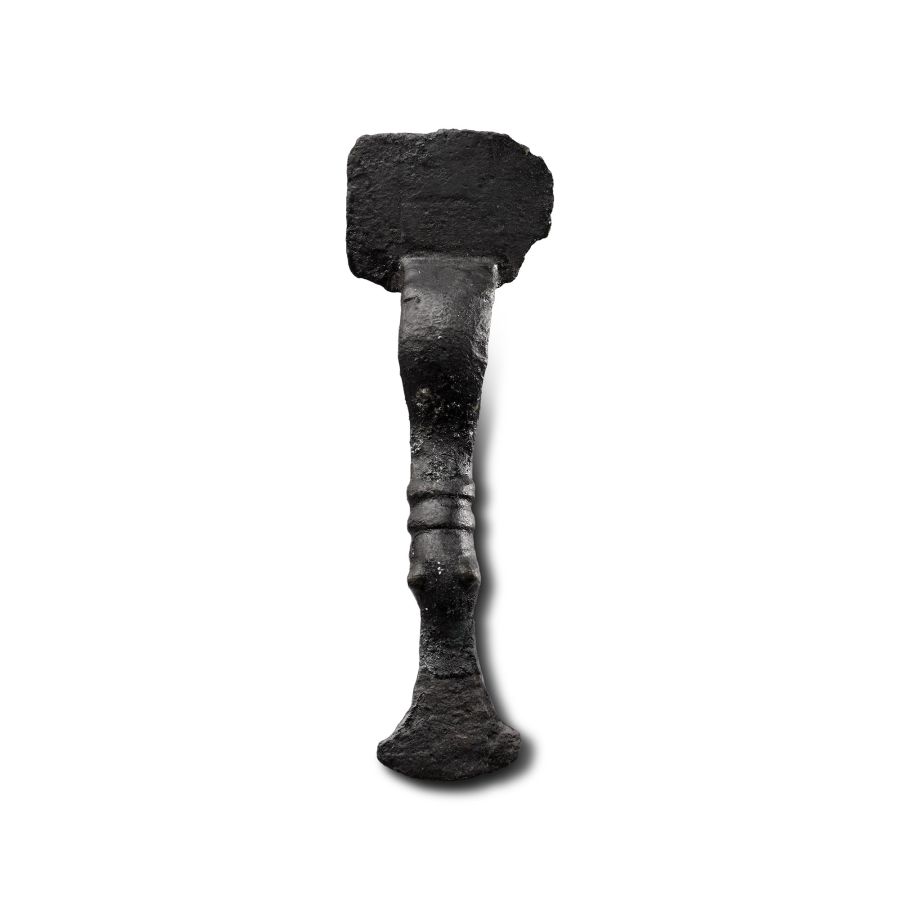
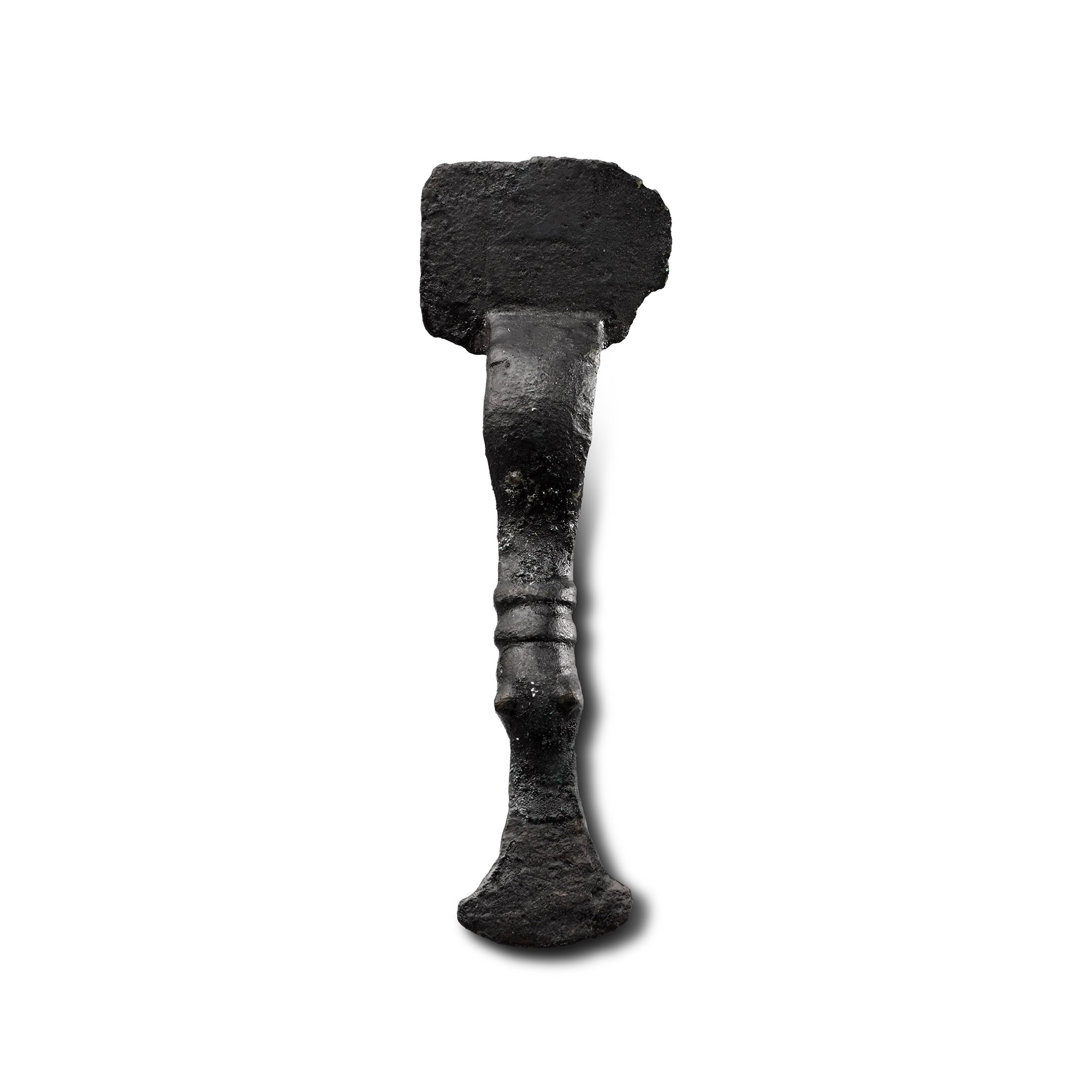
Anglo-Saxon Bronze Long Brooch
CIRCA 6TH CENTURY A.D.
3 1/4 in. (16.4 grams, 83 mm).
Comprising a rectangular headplate with raised trapezoidal panel, shallow bow, horse-head footplate with catch to reverse; repaired from parts. [No Reserve]
ProvenanceFrom the collection of a Buckinghamshire, UK, collector established from the earlier 1960s.
CONDITIONTimeLine Auctions follows a vetting process to ensure the authenticity and legality of all items, reinforcing our commitment to integrity and responsible trading. Each antiquity, antique, and coin lot undergoes thorough examination by a vetting committee of at least ten external specialists, professional trade association members, scientists, and archaeologists: Our Vetting Process
AUCTIONS:
TimeLine is a leading auction house specialising in antiquities, ancient art, collectables, natural history, coins, medals, and books. Our auctions offer museums, collectors, historians, and enthusiasts the opportunity to acquire unique and historically significant pieces.
-
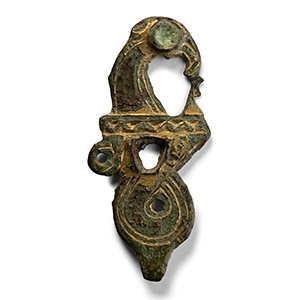
Anglo-Saxon Gilt-Bronze Purse Mount in the Shape of a Bird of Prey
Circa 500-600 A.D.Sold for (Inc. bp): £221
Openwork appliqué comprising a horizontal panel with chip-carved undulating bar, above, the arched neck of a bird with hooked beak and circular cell for the eye, the beak connected to a vertical claw; beneath, body curved into a loop with the leg joining the median panel below the claw, lateral pierced attachment spur; eye with calcareous fill. 3.27 grams, 40 mm
Found Bishopstone, Seaford, Lewes, East Sussex, UK, in 2023. Accompanied by a copy of the British Museum's Portable Antiquities Scheme (PAS) report no.SUSS-33C6E1. -
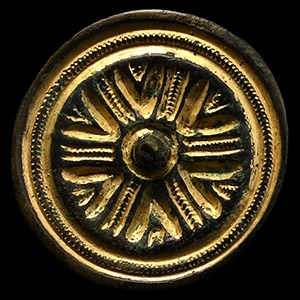
Large Anglo-Saxon Gilt Bronze Saucer Brooch
Late 5th-6th century A.D.Estimate: £1,200 - 1,700 (+bp*)
Opening Bid: £600
Discoid in plan with raised rim and inner ridge decorated with notches, six radiating arms with notch detailing and interstitial chevrons; central knop rivetted from reverse; remains of catch to reverse. 20.4 grams, 37 mm
Found Seaham, Co Durham, UK. Property of a Durham private collector. -
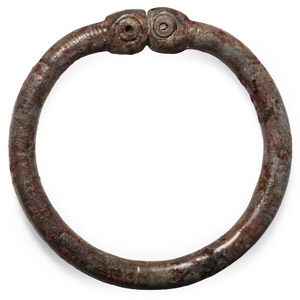
Anglo-Saxon Bronze Penannular Brooch
Late 5th-6th century A.D.Sold for (Inc. bp): £46
Round in section with lobe finals each with ring-and-dot motif to the upper face, ribbing to the shank, pin absent. 27.6 grams, 54 mm
Found Seaham, Co Durham, UK. Property of a Durham private collector.
