
Loading, please wait...
LOT 0295
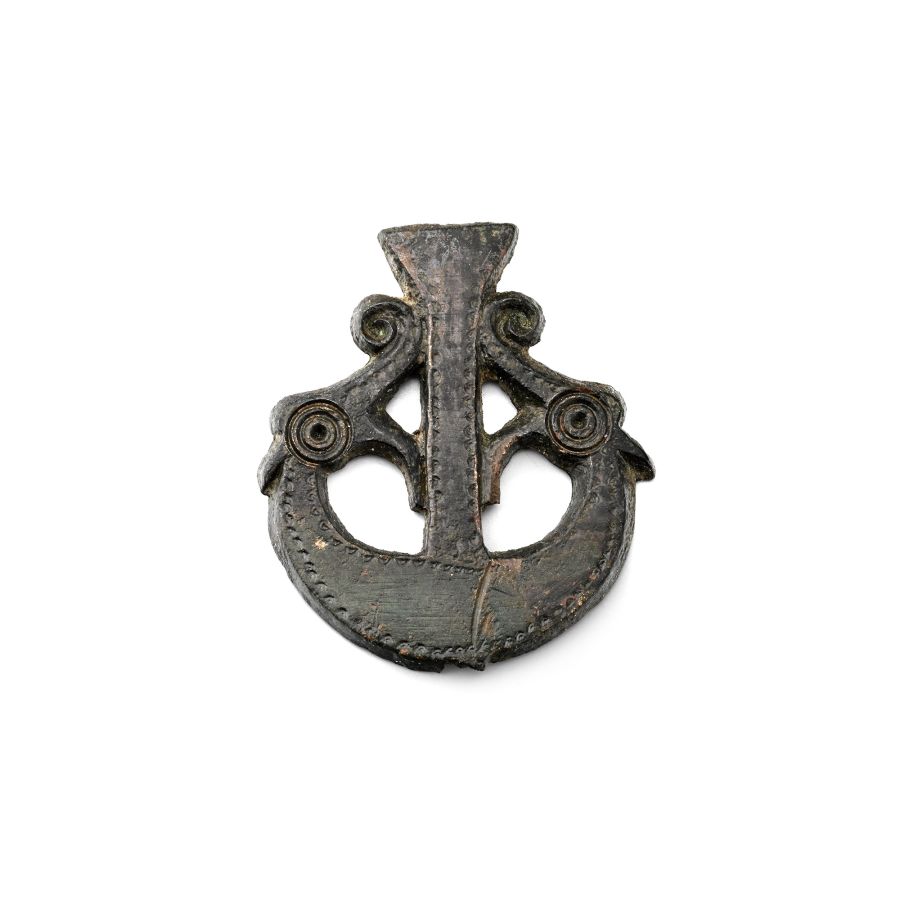
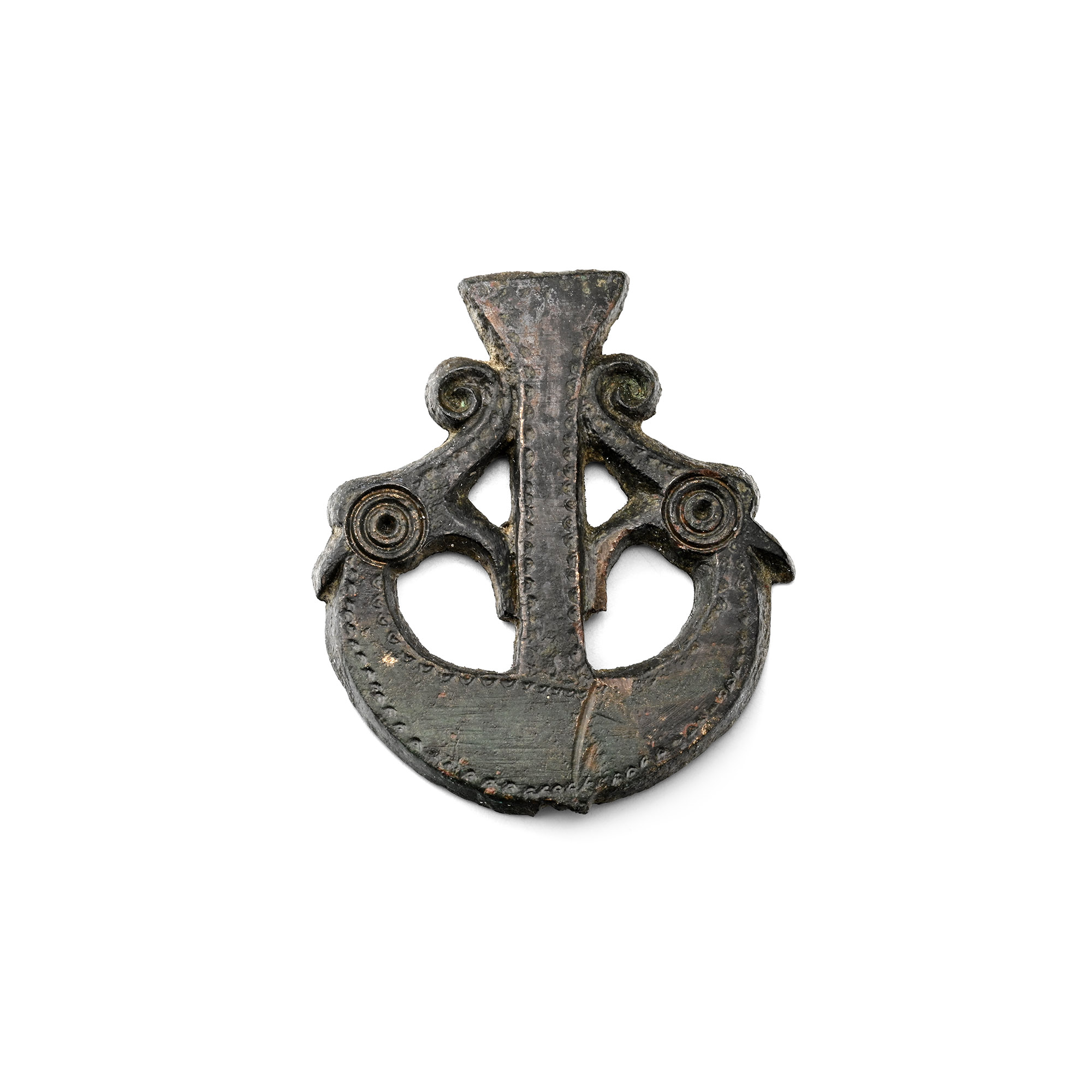
Anglo-Saxon Bronze Double Beast-Headed Mount
6TH CENTURY A.D.
1 1/2 in. (13.7 grams, 38 mm).
Pelta-shaped in plan, formed as a vertical column with flared base developing to a transverse crescent ending in dragon-heads with open jaws and curled upper lips placed against the column; punched pellet and crescent detailing.
ProvenanceFound Barton Mills, Suffolk, UK.
LiteratureCf. Hines, J., A New Corpus of Anglo-Saxon Great Square-Headed Brooches, London, 1997, item 23, for similar addorsed dragon heads with curled lips.
CONDITIONTimeLine Auctions follows a vetting process to ensure the authenticity and legality of all items, reinforcing our commitment to integrity and responsible trading. Each antiquity, antique, and coin lot undergoes thorough examination by a vetting committee of at least ten external specialists, professional trade association members, scientists, and archaeologists: Our Vetting Process
AUCTIONS:
TimeLine is a leading auction house specialising in antiquities, ancient art, collectables, natural history, coins, medals, and books. Our auctions offer museums, collectors, historians, and enthusiasts the opportunity to acquire unique and historically significant pieces.
-
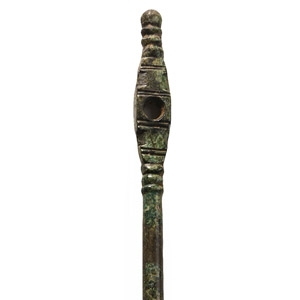
Anglo-Saxon Bronze Lady's Dress Pin
Late 5th-6th century A.D.Sold for (Inc. bp): £59
Comprising a slender shank with tiered ribs, a pierced baluster and knop finisal 11.5 grams, 16.2 cm
Found Seaham, Co Durham, UK. Property of a Durham private collector. -
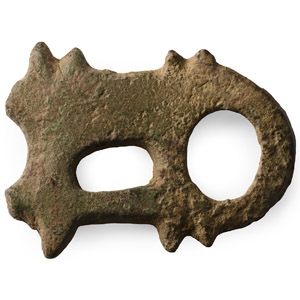
Late Anglo-Saxon Bronze Harness Fitting
Circa 1020-1100 A.D.Sold for (Inc. bp): £13
Flat in section with large loop at the upper edge, eccentrically-placed vertical slot, pairs of lateral lugs and scoop to the (broken) lower edge; Williams's Type 1 harness or bridle fitting. 19.7 grams, 41 mm
Found Tuesday 1st April 2025 in Wenham Parva, Babergh, Suffolk, UK. Accompanied by a copy of the British Museum's Portable Antiquities Scheme (PAS) report no.SF-934ACA. -
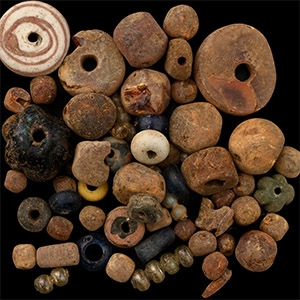
Anglo-Saxon Glass and Amber Necklace Bead Group.
Late 5th-6th century A.D.Sold for (Inc. bp): £364
Including oblate, melon, annular and other types. 32 grams total, 5-23 mm
Found Seaham, Co Durham, UK. Property of a Durham private collector.
