
Loading, please wait...
LOT 1315
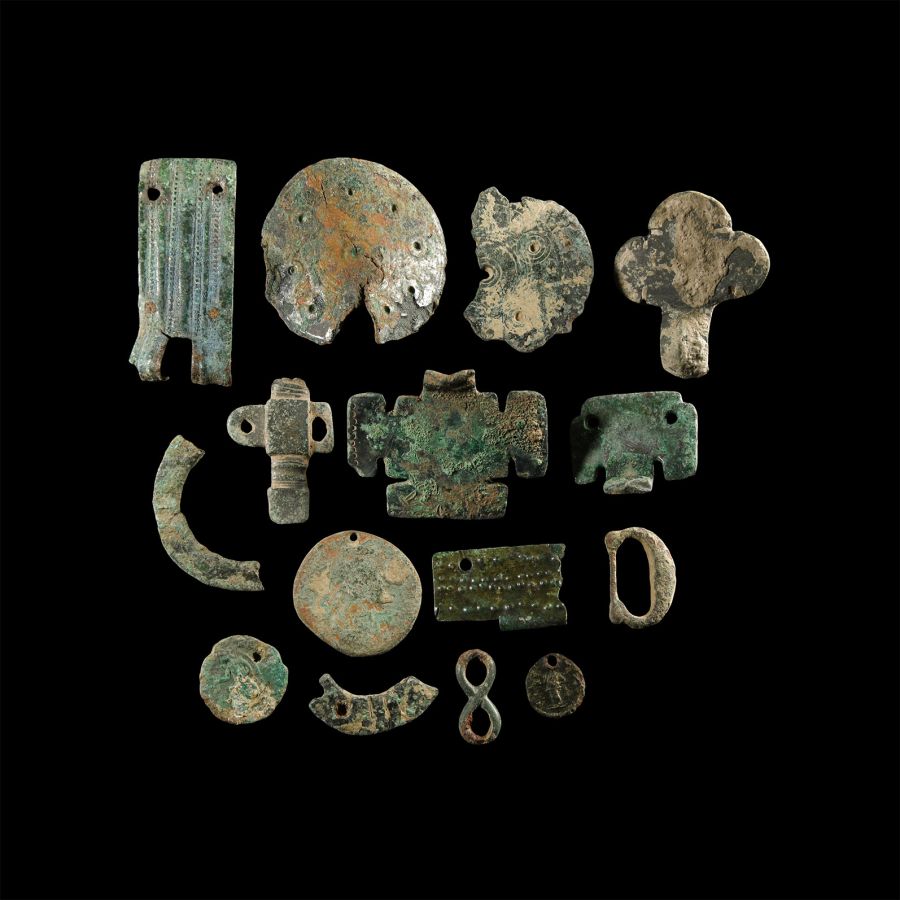
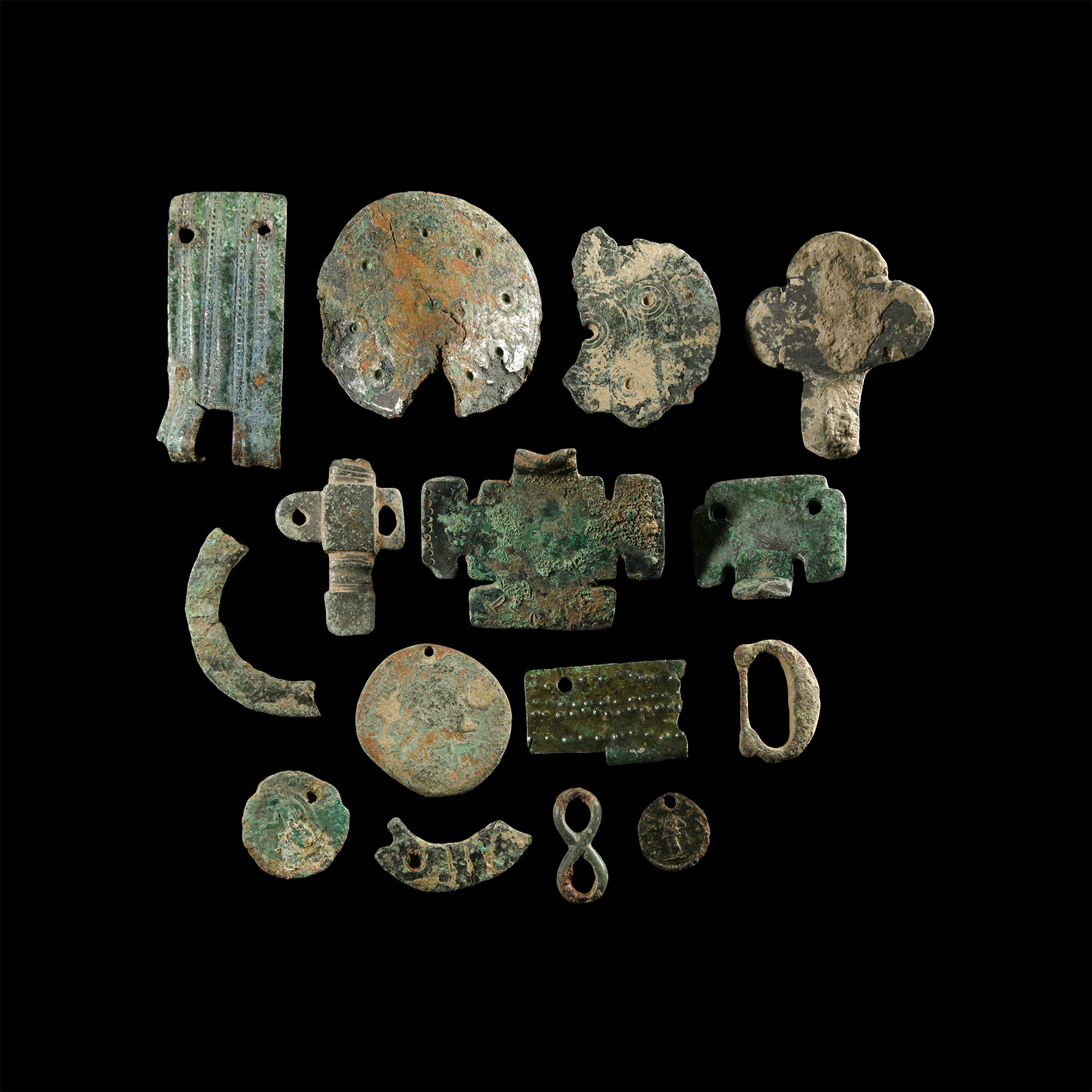
Anglo-Saxon Bronze Artefact Group
CIRCA 6TH CENTURY A.D.
1/2 - 1 3/4 in. (86 grams total, 12-46 mm).
Mainly comprising fragmentary artefacts, including: brooch elements displaying ornament; sleeve clasps with repoussé pellets; loop fittings; buckles; pierced roundel with figure to one face and star in crescent to the other; together with other items. [15, No Reserve]
ProvenanceCambridgeshire collection, 1990s.
CONDITIONTimeLine Auctions follows a vetting process to ensure the authenticity and legality of all items, reinforcing our commitment to integrity and responsible trading. Each antiquity, antique, and coin lot undergoes thorough examination by a vetting committee of at least ten external specialists, professional trade association members, scientists, and archaeologists: Our Vetting Process
AUCTIONS:
TimeLine is a leading auction house specialising in antiquities, ancient art, collectables, natural history, coins, medals, and books. Our auctions offer museums, collectors, historians, and enthusiasts the opportunity to acquire unique and historically significant pieces.
-
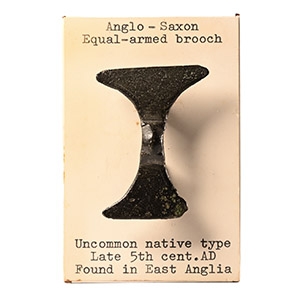
Anglo-Saxon Bronze Equal-Armed Brooch
5th century A.D.Sold for (Inc. bp): £65
Of bow-tie form with raised central section; pin lug and catchplate to reverse; mounted on a custom-made display stand with accompanying description reading 'Uncommon native type / Late 5th cent. AD / Found in East Anglia / Evolved from continental brooches, the few known are from East Anglia. cf. Salin 1940, 176; Reichstein 1975, Taf. 110, 2 and 3.' 68 grams, 86 mm high including stand
Found East Anglia, UK. From the Hattatt collection, 1985. Ex Astarte collection with reference no.00/531/09. -
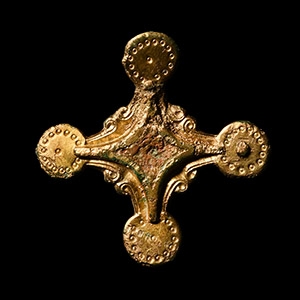
Anglo-Saxon Gilt Bronze Cross-Shaped Shield Mount
6th-7th century A.D.Sold for (Inc. bp): £234
Or casket mount, each arm terminating in a discoid plaque with a ring of punched pellets, the arms with scroll detailing to the junctions; central raised plaque with lozengiform cell filled with the remains of organic material; five lugs to the underside; some restoration. 18.99 grams, 42 mm
Found UK. Acquired 1978-2008. Ex property of a West Yorkshire lady. -
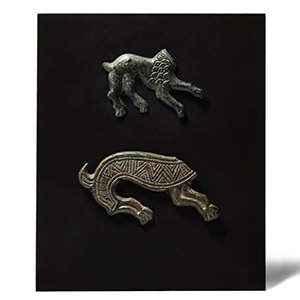
Eurasian Bronze Avar Patrix Group
8th-9th century A.D.Sold for (Inc. bp): £117
Comprising: flat bronze patrix of a hound with billets and zigzag detailing to the body curved foreleg, tail and hindleg; similar patrix of a feline with beaded collar and punched mane detailing, legs extended; mounted on a custom-made presentation stand. 411 grams total, 14 cm high including stand
Ex London gallery, 1990s. with old labels to the reverse.
Patrices were used to create thin sheet-silver or gold appliqués which were used to decorate wooden items, ritual items, clothing, horse-harness and other items.
