
Loading, please wait...
LOT 1488
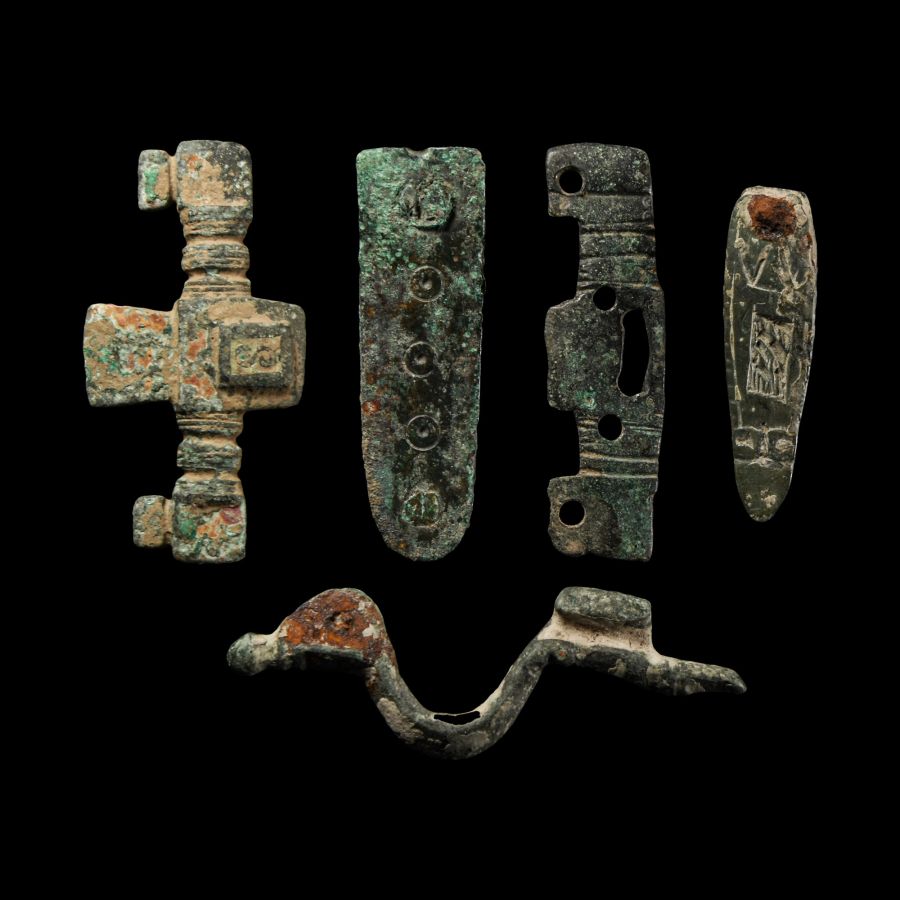
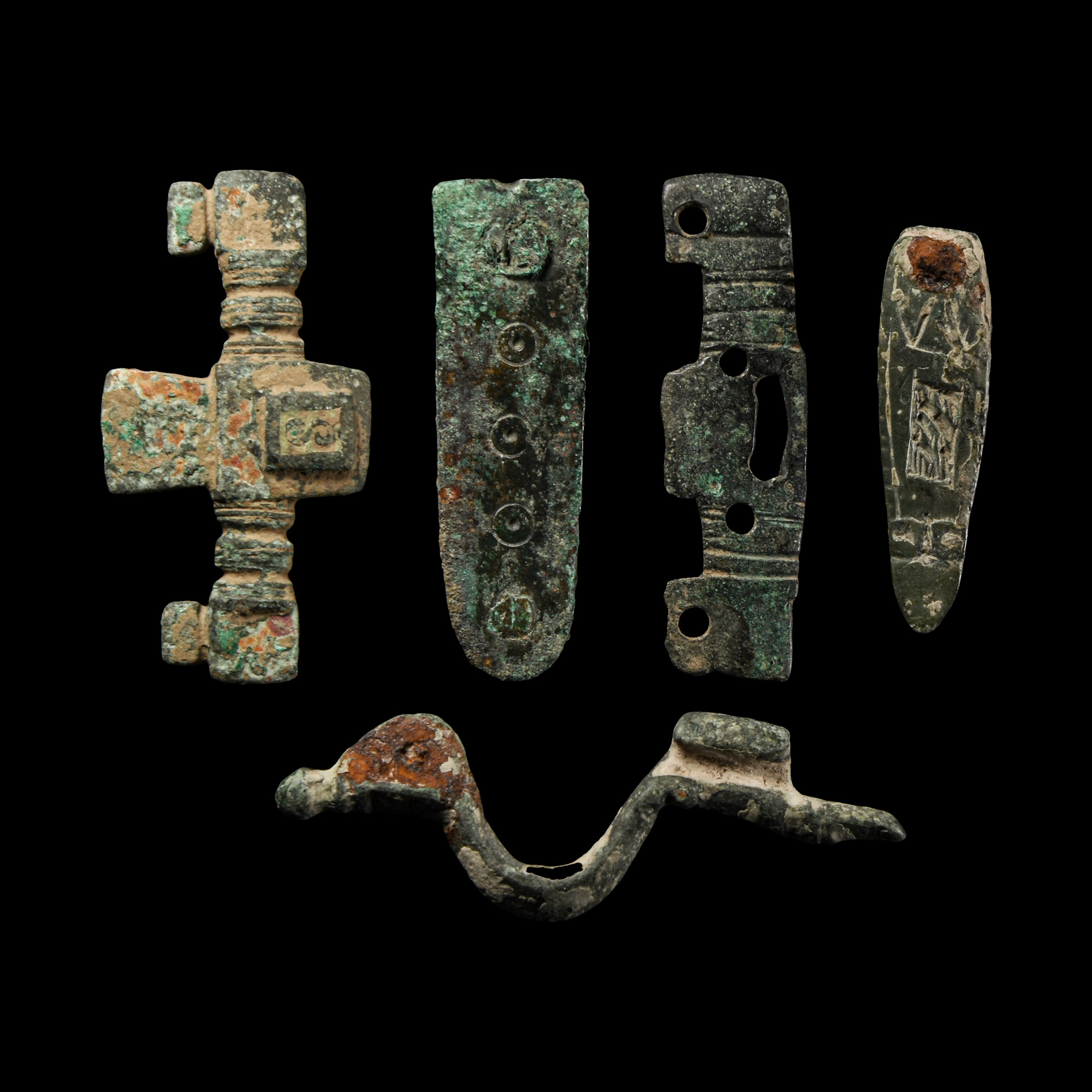
Anglo-Saxon Bronze Artefact Group
6TH CENTURY A.D.
1 3/8 - 2 in. (24.2 grams total, 34-51 mm).
Comprising strap ends decorated with zoomorphic and geometric designs; sleeve clasps displaying decorative grooves and ribbing together with some remains of enamelled ornament; remains of a bow brooch with beast head footplate. [5, No Reserve]
ProvenanceCambridgeshire collection, 1990s.
LiteratureSee MacGregor, A. & Bolick, E., A Summary Catalogue of the Anglo-Saxon Collections (Non-Ferrous Metals), Oxford, 1993, items 29.29, 29.31, for wrist-clasps.
CONDITIONTimeLine Auctions follows a vetting process to ensure the authenticity and legality of all items, reinforcing our commitment to integrity and responsible trading. Each antiquity, antique, and coin lot undergoes thorough examination by a vetting committee of at least ten external specialists, professional trade association members, scientists, and archaeologists: Our Vetting Process
AUCTIONS:
TimeLine is a leading auction house specialising in antiquities, ancient art, collectables, natural history, coins, medals, and books. Our auctions offer museums, collectors, historians, and enthusiasts the opportunity to acquire unique and historically significant pieces.
-
.jpg)
Anglo-Saxon Gilt Bronze Saucer Brooch Pair
5th-6th century A.D.Estimate: £2,500 - 3,500 (+bp*)
Opening Bid: £1,000
Each with an upturned rim and concentric bands of pellets and segmented circles; pin-lug and catch to the reverse. 50 grams total, 41-42 mm
Found near Evesham, Worcestershire, UK, in 1992. This lot has been checked against the Interpol Database of stolen works of art and is accompanied by search certificate no.203367.
A stunning and rare matched pair with heavy gold chip-carved mercury gilding. -
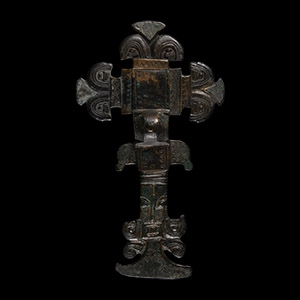
Anglo-Saxon Gilt Bronze Florid Cruciform Brooch
Circa 6th century A.D.Sold for (Inc. bp): £1,690
Displaying Style I detailing, bird heads to the three headplate lobes, geometric ornament and facing human head; deep bow with central stud; footplate with horse-head detailing and lateral lappets; trace remains of gilding; pin lug and catchplate to reverse. 88 grams, 13.2 cm
Acquired 1990s-early 2000s. East Anglian private collection. This lot has been checked against the Interpol Database of stolen works of art and is accompanied by searcher certificate no. 201091. -
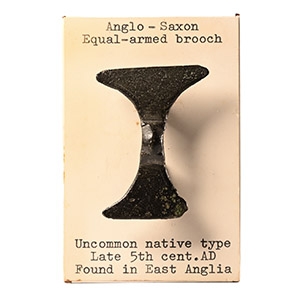
Anglo-Saxon Bronze Equal-Armed Brooch
5th century A.D.Sold for (Inc. bp): £65
Of bow-tie form with raised central section; pin lug and catchplate to reverse; mounted on a custom-made display stand with accompanying description reading 'Uncommon native type / Late 5th cent. AD / Found in East Anglia / Evolved from continental brooches, the few known are from East Anglia. cf. Salin 1940, 176; Reichstein 1975, Taf. 110, 2 and 3.' 68 grams, 86 mm high including stand
Found East Anglia, UK. From the Hattatt collection, 1985. Ex Astarte collection with reference no.00/531/09.
