
Loading, please wait...

LOT 1717
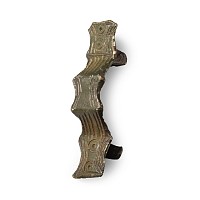
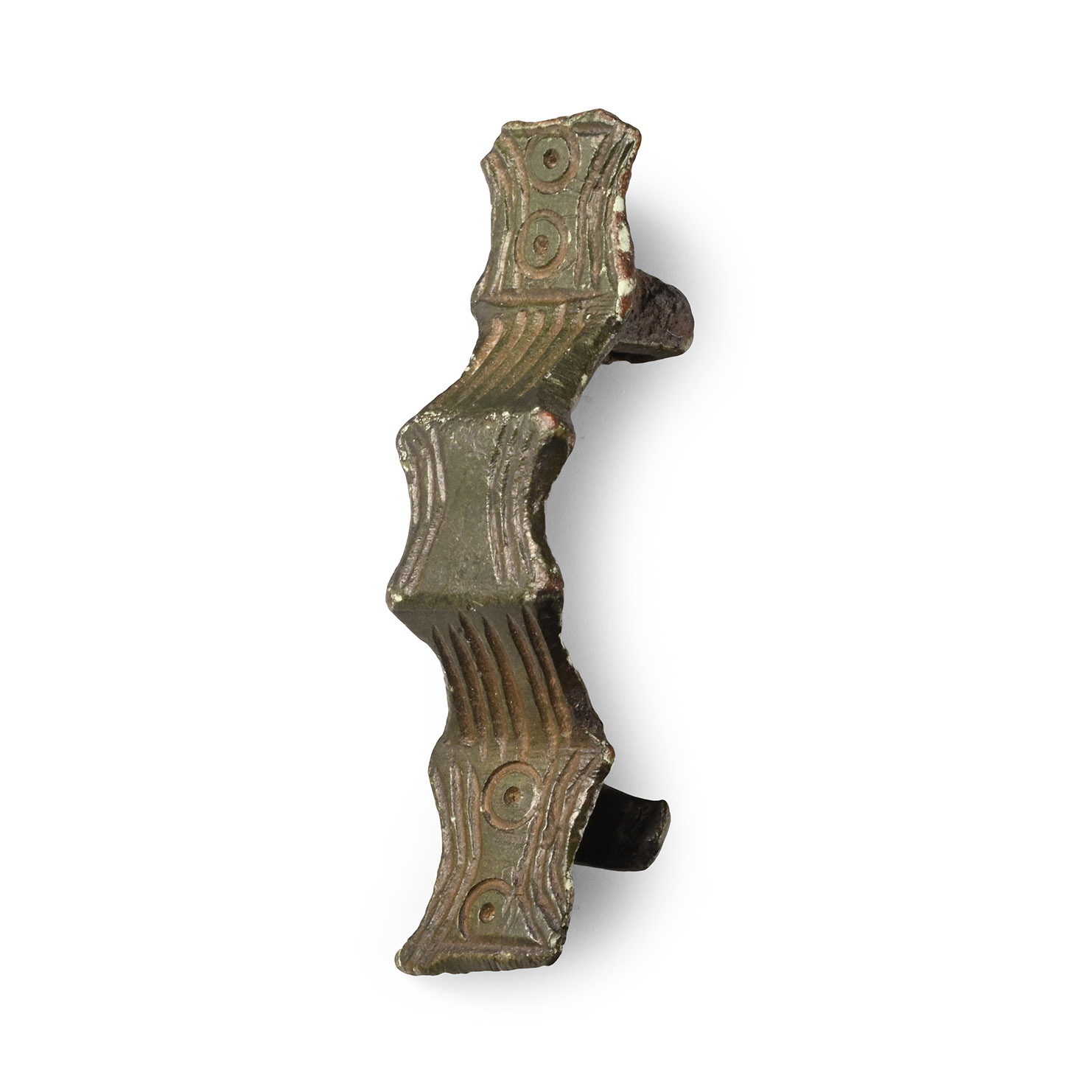
Anglo-Saxon Bronze Ansate Brooch
CIRCA 6TH-7TH CENTURY A.D.
2 in. (8.76 grams, 50 mm).
Rectangular with scooped edges and stepped profile, incised hatching and ring-and-dot ornament. [No Reserve]
ProvenanceFound Lincolnshire, UK.
From an old private collection of Norfolk, UK, gentleman, formed since 1998.
TimeLine Auctions follows a vetting process to ensure the authenticity and legality of all items, reinforcing our commitment to integrity and responsible trading. Each antiquity, antique, and coin lot undergoes thorough examination by a vetting committee of at least ten external specialists, professional trade association members, scientists, and archaeologists: Our Vetting Process
AUCTIONS:
TimeLine is a leading auction house specialising in antiquities, ancient art, collectables, natural history, coins, medals, and books. Our auctions offer museums, collectors, historians, and enthusiasts the opportunity to acquire unique and historically significant pieces.
-
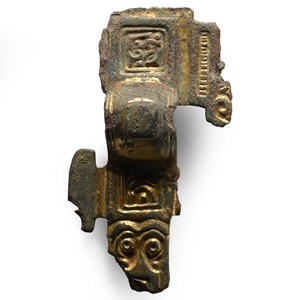
Anglo-Saxon Gilt Bronze Cruciform Brooch Fragment
6th century A.D.Sold for (Inc. bp): £169
'Florid' type with square panel of Style I ornament to the headplate and fragment of one lateral lug with billet ornament, deep bow with square stud, footplate with Style I orament and one lappet, upper section of the mask forming the foot; ferrous lump from the pin and catch to the reverse. 70 grams, 91 mm
Found Lincolnshire, UK. From an old private collection of Norfolk, UK, gentleman, formed since 1998. -
.jpg)
Anglo-Saxon Gilt Bronze Dress Pin Head
8th century A.D.Sold for (Inc. bp): £130
Fragment of a discoid pin-head with openwork cross detailing and Insular Style interlace radiating from a central boss. 3.67 grams, 33 mm
Found Norfolk, UK. From an old private collection of Norfolk, UK, gentleman, formed since 1998. Accompanied by a copy of UK Detector Finds Database (UKDFD) report no.57994.
Dress pins of this type were worn in sets of three connected with chains or thongs. -
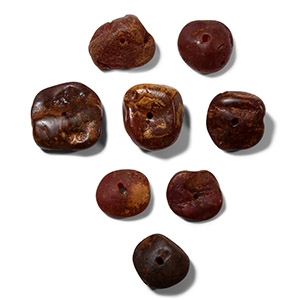
Large Saxon Amber Bead Group
Circa 6th-7th century A.D.Sold for (Inc. bp): £338
Comprising eight large beads, the larger ones of amorphous form and the smaller ones worked into regular shapes. 106 grams total, 33-44 mm
From the private collection of a London gentleman, from his grandfather's collection formed before the early 1970s.
