
Loading, please wait...
LOT 1598
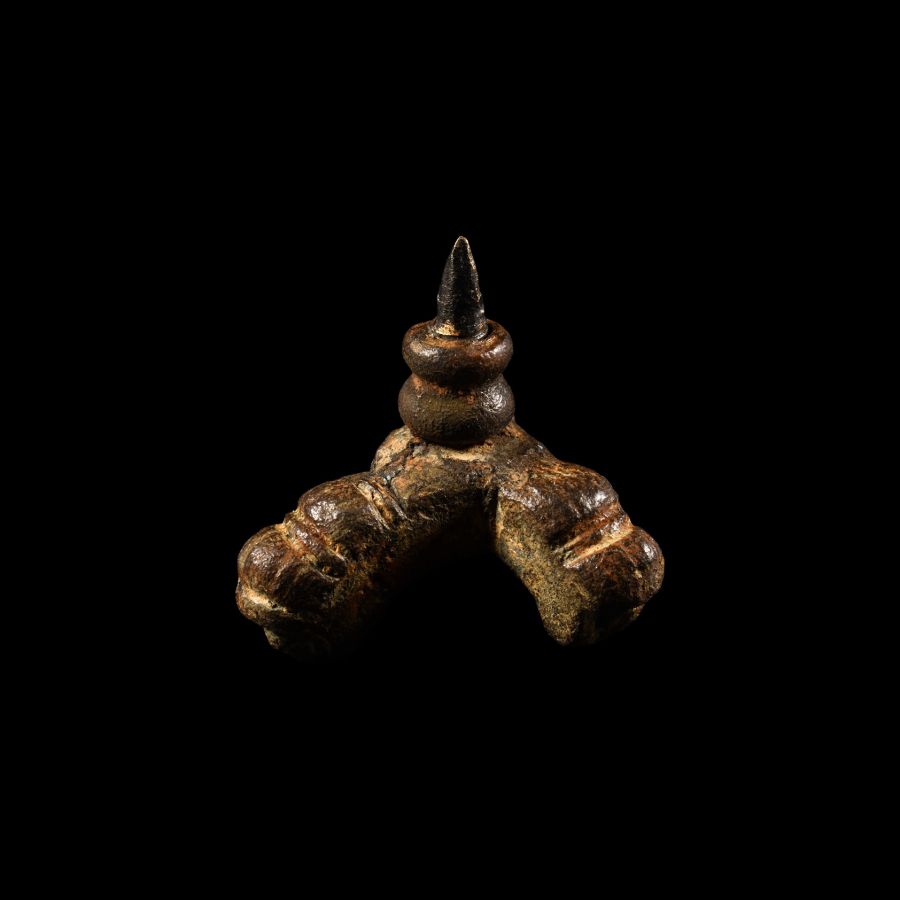
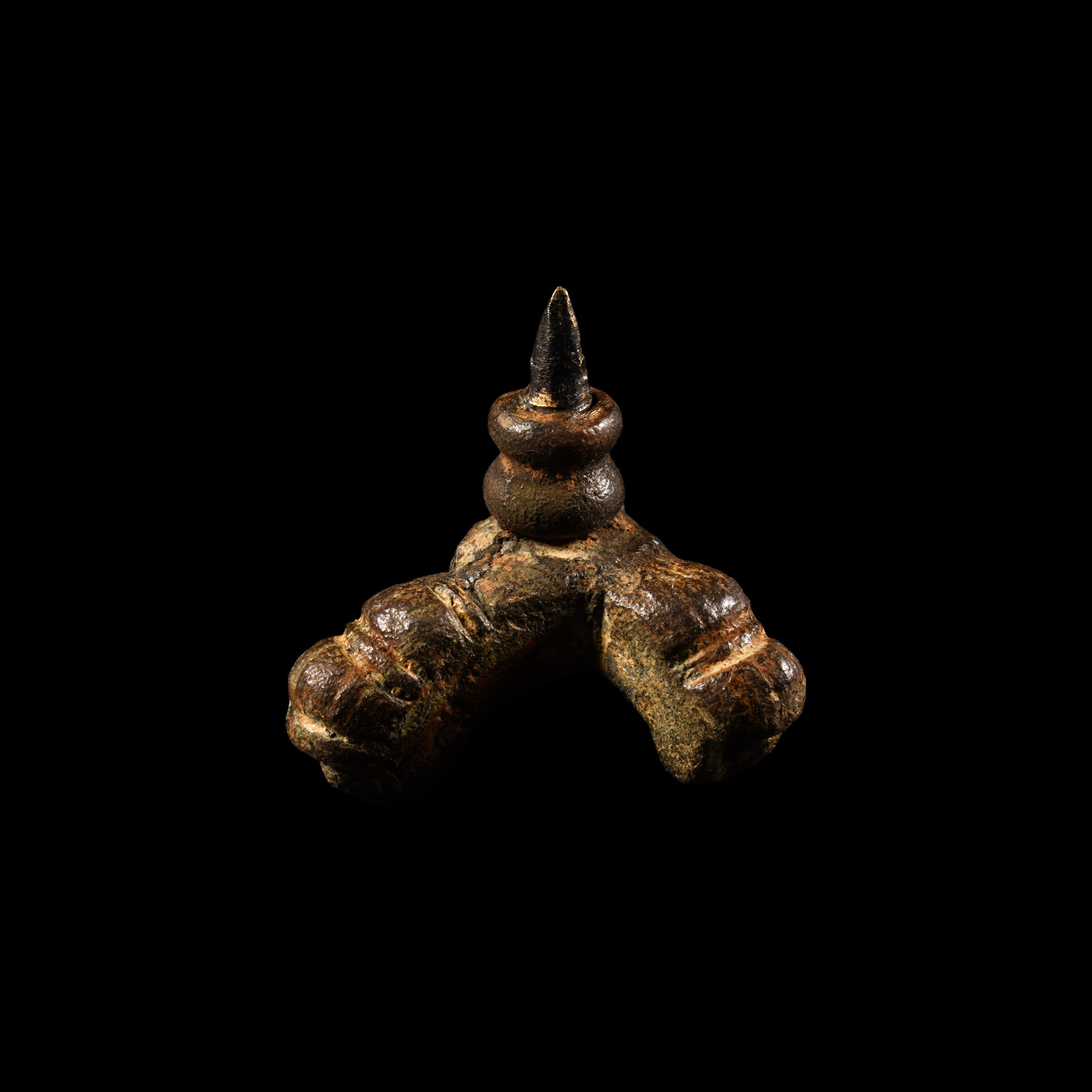
Anglo-Norman Gilt Bronze Travelling Pricket Candle Stick with Beast Heads
11TH-12TH CENTURY A.D.
1 1/8 in. (17.6 grams, 30 mm).
Of tripod form, each leg formed as a stylised beast head, balustered central shaft and central conical spike.
ProvenanceFound Harrogate, UK.
CONDITIONTimeLine Auctions follows a vetting process to ensure the authenticity and legality of all items, reinforcing our commitment to integrity and responsible trading. Each antiquity, antique, and coin lot undergoes thorough examination by a vetting committee of at least ten external specialists, professional trade association members, scientists, and archaeologists: Our Vetting Process
AUCTIONS:
TimeLine is a leading auction house specialising in antiquities, ancient art, collectables, natural history, coins, medals, and books. Our auctions offer museums, collectors, historians, and enthusiasts the opportunity to acquire unique and historically significant pieces.
LOT 1598
Anglo-Norman Gilt Bronze Travelling Pricket Candle Stick with Beast Heads
Sold for (Inc. bp): £111
-
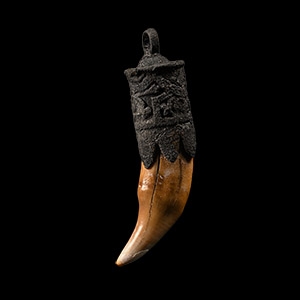
Medieval Bronze Pendant with Fang
Circa 11th century A.D.Sold for (Inc. bp): £208
Composed of the tooth of a bear or wolf held in a claw setting with oval cross-section, a band of vegetal ornament around the top, suspension loop above. 7.53 grams, 54 mm
European collection, 1990s. Property of a Cambridgeshire, UK, gentleman. -
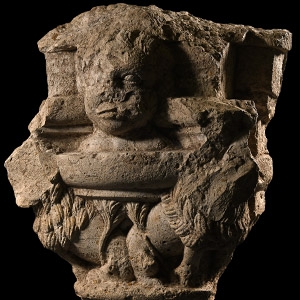
Medieval Stone Capital with Prophet Daniel and Lions
Spain or Southern France, 12th century A.D.Sold for (Inc. bp): £845
From an architectural column with a square upper face developing to a rounded base; a decorative frieze carved in the half-round depicting two seated lions, each with its tail looped around its lower body, supporting a pedestal on which a facing bust of a young boy is resting. 25.7 kg, 36 cm
Good condition
with Piasa, 7 June 2013, lot 17. Ex central London gallery. Accompanied by an academic report by Dr Raffaele D’Amato. This lot has been checked against the Interpol Database of stolen works of art and is accompanied by search certificate no.11738-202062.
The form of the capital and the shape of the beasts are similar to those sculptures that survive in churches on the pilgrimage route to Santiago da Compostela – namely in Southern France and Northern Spain, but the bodies of the lions have many correspondences with the capital sculptures of Poitou. The lions were considered to be guardians against evil and the image of the young boy is probably a representation of the prophet Daniel. There is a similar capital in the Church of d'Airvault (Deux-Sèvres) also ornamented with lions and a human head. -

Published Medieval Thames Pewter The Holy Face Pilgrim's Badge
Circa 14th-15th century A.D.Sold for (Inc. bp): £845
Presenting relief design of Christ crucified, wearing long V-neck robe tied at the waist with a knotted girdle and with full sleeves, the sun and moon beneath his feet; stitching loops to the remaining arms, pellet border and raised lettering: 'S[IGNVM SANCTI] VV / LTI / [LV]CEN / SIS' (sign of the Holy Face of Lucca); Lucca, Italy. 5.75 grams, 5 cm
Found Billingsgate spoil from the Thames foreshore, London, UK.
Lucca was situated on the Via Francigena, the principal route for English pilgrims travelling to Rome. Its most treasured relic was the 'Volto Santo', (the Holy Face), a large-than-life figure of Christ crucified, the face reputedly carved by an angel. This badge is a souvenir of the Volto Santo.
