
![Ancient Roman Imperial Coins - Mixed Silver Denarius, Antoninianus and Siliqua Group [9]](https://timelineauctions.com/upload/images/items/213217.jpg "Ancient Roman Imperial Coins - Mixed Silver Denarius, Antoninianus and Siliqua Group [9]")
LOT 2735
Ancient Roman Imperial Coins - Mixed Silver Denarius, Antoninianus and Siliqua Group [9] 1st century B.C.-3rd century A.D.
Comprising: mixed denominations, types and issues; including a Republican denarius, Antoninus Pius denarius, an antoninianus of Gordian III, and a clipped siliqua. Poor-very fine.(24.9 grams total, 12-24 mm.). [9, No Reserve]
ProvenanceAcquired since the 1970s.
From the private collection of a Surrey, UK, gentleman.
TimeLine Auctions follows a vetting process to ensure the authenticity and legality of all items, reinforcing our commitment to integrity and responsible trading. Each antiquity, antique, and coin lot undergoes thorough examination by a vetting committee of at least ten external specialists, professional trade association members, scientists, and archaeologists: Our Vetting Process
AUCTIONS:
TimeLine is a leading auction house specialising in antiquities, ancient art, collectables, natural history, coins, medals, and books. Our auctions offer museums, collectors, historians, and enthusiasts the opportunity to acquire unique and historically significant pieces.
LOT 2735
Ancient Roman Imperial Coins - Mixed Silver Denarius, Antoninianus and Siliqua Group [9]
Sold for (Inc. bp): £143
-
.jpg)
Ancient Roman Imperial Coins - Probus - Victory Billon AR Antoninianus 281 A.D.
Sold for (Inc. bp): £20
Rome mint. Obv: PROB-VS P F AVG, radiate bust right, cuirassed. Rev: VICTORIA AVG, Victory advancing left, holding wreath and trophy, R (thunderbolt) in exergue. 4.95 grams, 22 mm.
Near extremely fine.
Acquired on the UK market. Ian Roper collection. With coin ticket. -
![Ancient Roman Imperial Coins - Maximinus II - AE Follis Group [5]](https://timelineauctions.com/upload/images/items/small/211531-s.jpg)
Ancient Roman Imperial Coins - Maximinus II - AE Follis Group [5] 310-313 A.D.
Sold for (Inc. bp): £39
Group comprising: mixed issues, types and reverses. 33.20 grams total, 22-25 mm.
Fine to nearly extremely fine.
Acquired on the UK market. Ian Roper collection. Including five coin tickets. -
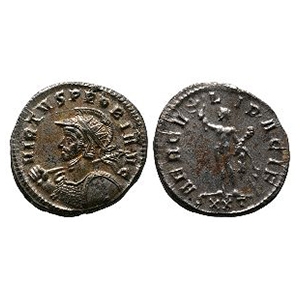
Ancient Roman Imperial Coins - Probus - Hercules Billon AR Antoninianus 277 A.D.
Sold for (Inc. bp): £72
Ticinum mint. Obv: VIRTVS PROBI AVG, radiate, helmetted, heroically nude bust left, holding spear and aegis, seen from back. Rev: HERCVLI PACIF, Hercules standing left, holding branch and club; lion's skin over arm; SXXT in exergue. 3.96 grams, 22 mm.
Extremely fine.
Acquired on the UK market. Ian Roper collection. With coin ticket.
