
Loading, please wait...
LOT 2408
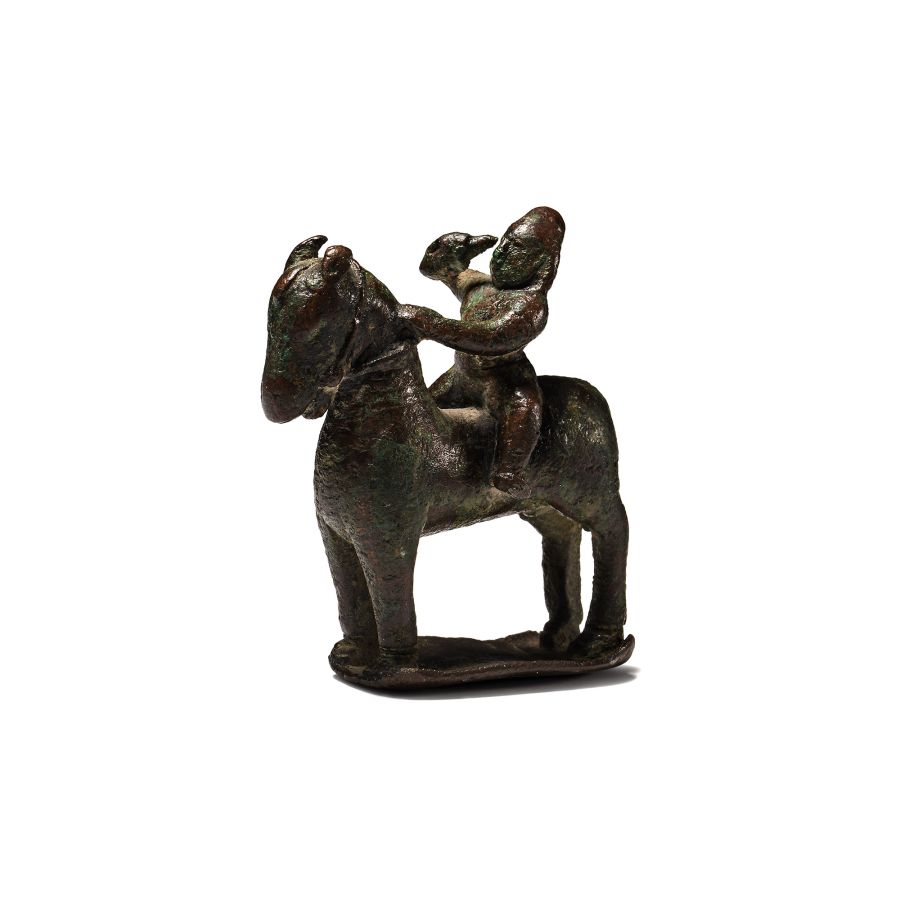
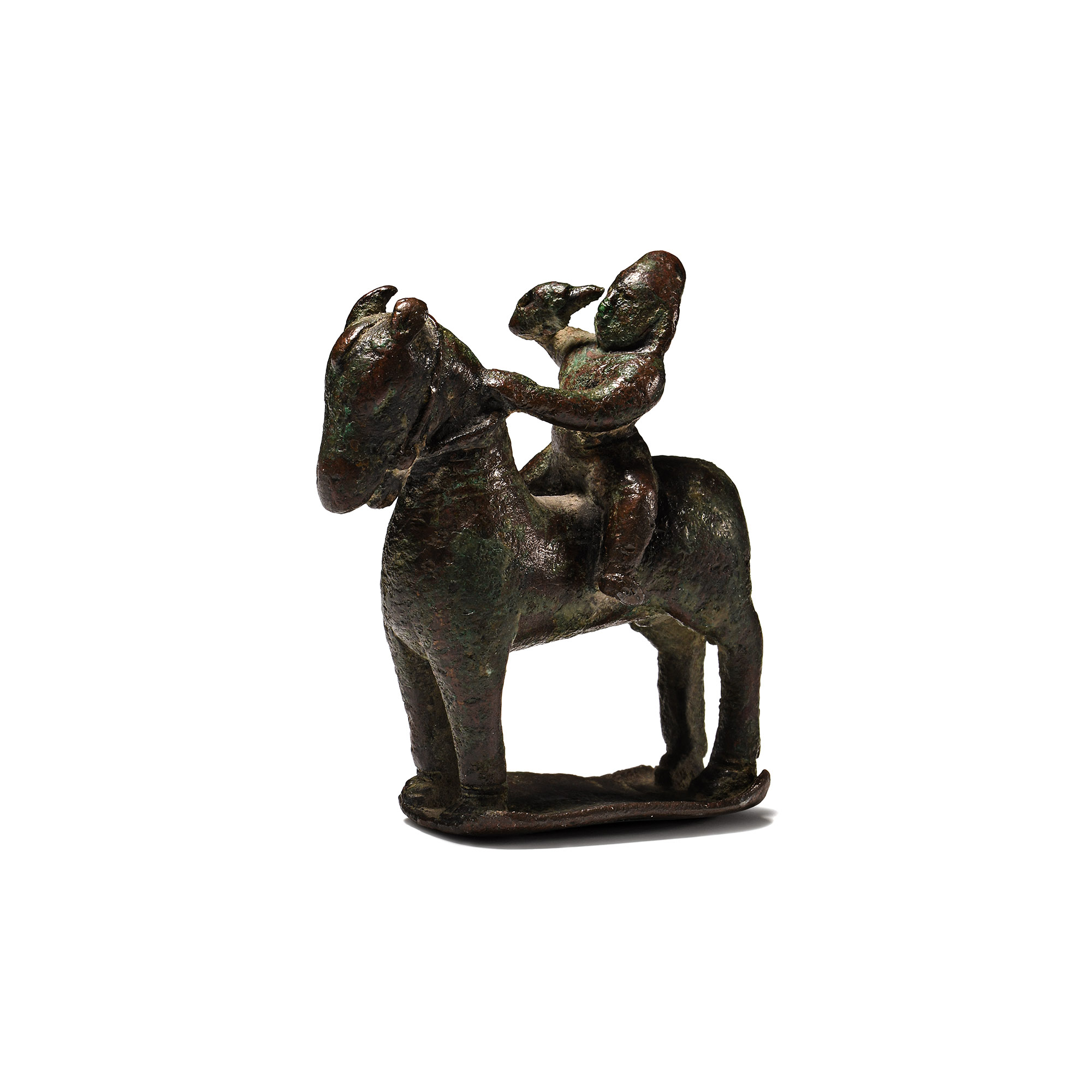
Ancient Indian Bronze Horse and Rider Figure
4TH-6TH CENTURY A.D.
2 in. (92 grams, 52 mm).
Formed in the round standing on an oblong base; stylised detailing to the anatomy and trappings of both figures.
ProvenanceAcquired in Europe before 1992.
This lot has been checked against the Interpol Database of stolen works of art and is accompanied by search certificate no.11813-206792.
TimeLine Auctions follows a vetting process to ensure the authenticity and legality of all items, reinforcing our commitment to integrity and responsible trading. Each antiquity, antique, and coin lot undergoes thorough examination by a vetting committee of at least ten external specialists, professional trade association members, scientists, and archaeologists: Our Vetting Process
AUCTIONS:
TimeLine is a leading auction house specialising in antiquities, ancient art, collectables, natural history, coins, medals, and books. Our auctions offer museums, collectors, historians, and enthusiasts the opportunity to acquire unique and historically significant pieces.
LOT 2408
Ancient Indian Bronze Horse and Rider Figure
Estimate £1,000 - 1,400€1,160 - 1,620 (for guidance only)$1,350 - 1,890 (for guidance only)
-
.jpg)
Indus Valley Etched Orange Carnelian Necklace Bead Group
Circa 2nd millennium B.C. or laterSold for (Inc. bp): £195
Composed of polished carnelian beads including spherical, conical, drum, oval and other types, etched with geometric designs. 41 grams total, 6-14 mm
UK gallery, early 2000s. -
West Central Asian Stamp Seal with Eagle
23rd-20th century B.C.Sold for (Inc. bp): £247
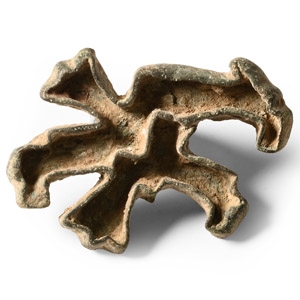
Zoomorphic seal with V-shaped handle to the reverse; accompanied by an old scholarly note, typed and signed by W.G. Lambert, late Professor of Assyriology, University of Birmingham, 1970-1993, which states: 'Stam Seal of Bronze 45.5x38x19 mm. This has the shape of the items depicted, with flat face and flat back with handle of inverted V-shape mounted on it. The design is compartmented but not open-work and is divided into two compartments, one with three projections, the other with two. This comes from west central Asia and dates to c. 2300-2000 B.C. The ends of the projections have slight denting, but otherwise the object is in very good condition. Interpretation of the design is difficult, but each section appears to have one head of an eagle and one set of an eagle's tail feathers, as if two eagles are crossed, but there is still a difficulty with the third head. The design is extremely rare.' 20 grams, 45 mm
Ex Signo collection, the property of a West London businessman, formed in the late 1980s-early 1990s; collection number R-495, academically researched and catalogued by the late Professor Lambert in the early 1990s. -
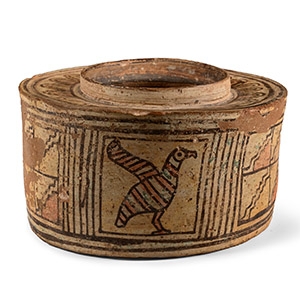
Indus Valley Terracotta Vessel with Birds and Geometric Designs
3rd millennium B.C.Estimate: £1,500 - 2,000 (‡+bp*)
Opening Bid: £750
With slightly sloping sidewall, flat shoulder and everted rim to the broad mouth; painted geometric bands and zoomorphic panels to side and shoulder; chipped, repaired. 406 grams, 12.8 cm wide
Acquired in the mid 1980s-1990s. Private collection, Switzerland, thence by descent. Private collection, since the late 1990s.
