
LOT 2591
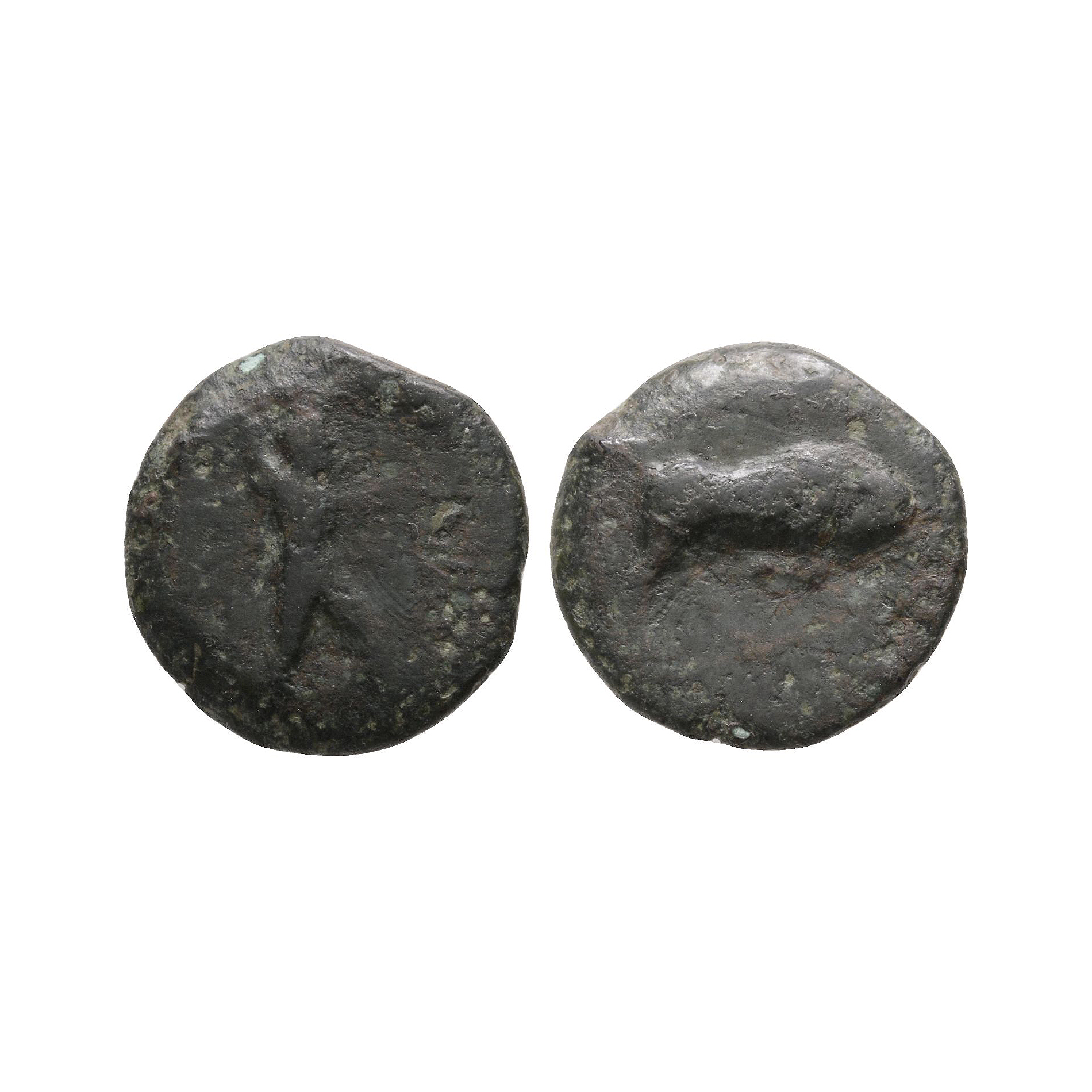
Ancient Greek Coins - Lucania - Poseidonia Paestum - Poseidon AE15 c.420-390 B.C.
Lucania, Poseidonia-Paestum. Obv: Poseidon walking right, wearing chlamys, striking with trident, left arm extended. Rev: bull butting right, head facing. Fair.(2.39 grams, 15 mm.). [No Reserve]
ProvenanceReceived by gift from Professor Alan Thompson.
Wicklow, Ireland, sold at auction between 1935-1939.
From the collection of the late Dr JDH Widdness, Dublin, Ireland.
Accompanied by a handwritten slip with notes on the coin and a card with initialled provenance.
BMC 69, HNItaly 1151, Grunauer I.
TimeLine Auctions follows a vetting process to ensure the authenticity and legality of all items, reinforcing our commitment to integrity and responsible trading. Each antiquity, antique, and coin lot undergoes thorough examination by a vetting committee of at least ten external specialists, professional trade association members, scientists, and archaeologists: Our Vetting Process
AUCTIONS:
TimeLine is a leading auction house specialising in antiquities, ancient art, collectables, natural history, coins, medals, and books. Our auctions offer museums, collectors, historians, and enthusiasts the opportunity to acquire unique and historically significant pieces.
LOT 2591
Ancient Greek Coins - Lucania - Poseidonia Paestum - Poseidon AE15
Sold for (Inc. bp): £26
-
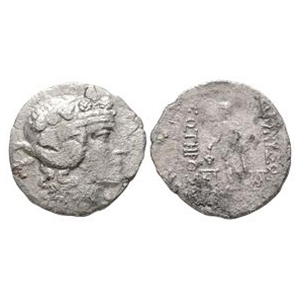
Greek Coins - Thasos - Herakles AR Tetradrachm After 148 B.C.
Sold for (Inc. bp): £52
Obv: head of young Dionysus right, wreathed with ivy. Rev: HRAKLEOYS SWTHROS QASIQN legend to left, right and beneath Herakles standing facing, naked, head left, holding club and lionskin, monogram to left and right. 10.58 grams, 31 mm.
Fine.
From an old UK collection. From the collection of a London antiquarian. -
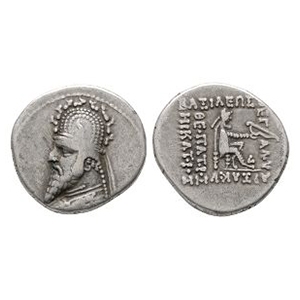
Ancient Greek Coins - Parthian Dynasty - Sinatrukes - AR Drachm 95-68 B.C.
Sold for (Inc. bp): £65
Obv: diademed and bust left, wearing tiara. Rev: archer (Arsakes I) seated right on throne, holding bow, BAΣIΛEΩΣ MEΓAΛoY APΣAKoY ΘEoΠATPoY NIKAToPoΣ. 4.07 grams, 18 mm
Good very fine.
Property of a London, UK, gentleman. -
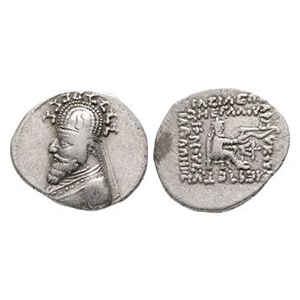
Ancient Greek Coins - Parthian Dynasty - Pharaates III - AR Drachm 70-57 B.C.
Sold for (Inc. bp): £39
Obv: long-bearded bust left wearing tiara (T39ii) decorated on side with horn and stags with prominent antlers around crest; circular border of pellets. Rev: beardless archer wearing bashlyk and cloak seated right on throne, holding bow in right hand; below bow, monogram [~], ΕΥΕΡΓΕΤΟΥ read from outside in six-line Greek inscription = ΒΑΣΙΛΕΩΣ ΜΕΓΑΛΟΥ ΑΡΣΑΚΟΥ ΕΥΕΡΓΕΤΟΥ ΕΠΙΦΑΝΟΥΣ ΦΙΛΕΛΛΗΝΟΣ. 4.00 grams, 20 mm.
Good very fine.
Property of a London, UK, gentleman.
