
Loading, please wait...
LOT 0913
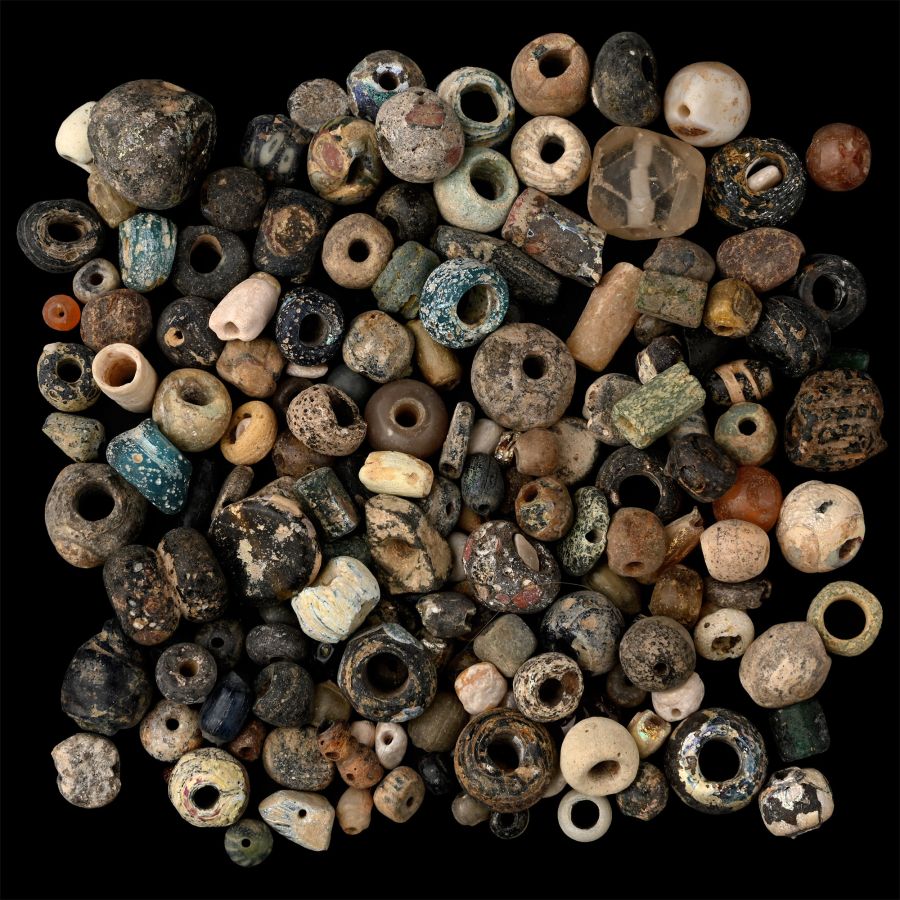
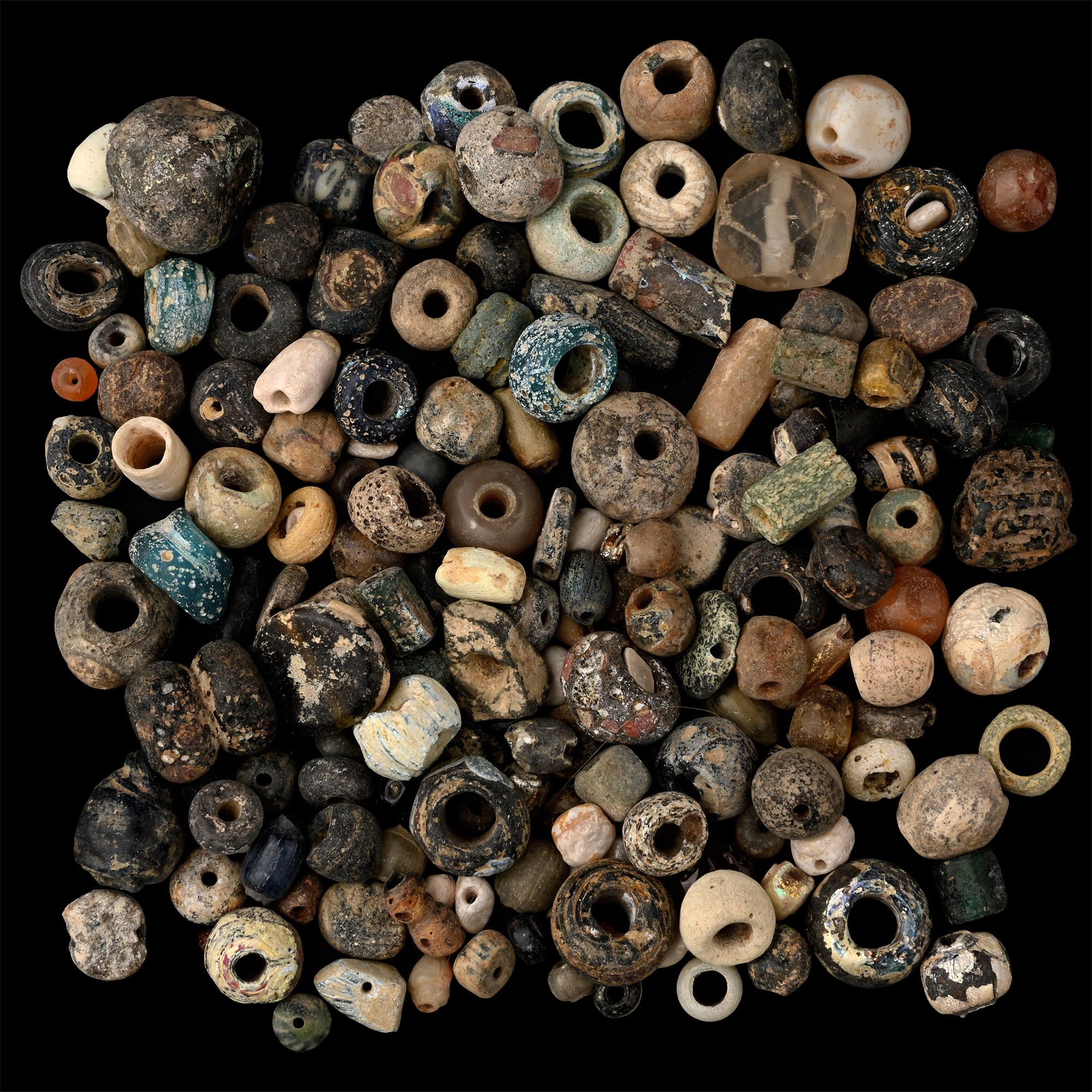
Ancient Glass and Other Bead Collection
EARLY 1ST MILLENNIUM A.D.
1/8 - 3/4 in. (109 grams total, 3-18 mm).
Including polyhedral, oblate, biconvex, melon and other types. [180+, No Reserve]
ProvenanceFrom an old deceased estate.
Property of an East London lady collector, acquired at auction before 1995.
TimeLine Auctions follows a vetting process to ensure the authenticity and legality of all items, reinforcing our commitment to integrity and responsible trading. Each antiquity, antique, and coin lot undergoes thorough examination by a vetting committee of at least ten external specialists, professional trade association members, scientists, and archaeologists: Our Vetting Process
AUCTIONS:
TimeLine is a leading auction house specialising in antiquities, ancient art, collectables, natural history, coins, medals, and books. Our auctions offer museums, collectors, historians, and enthusiasts the opportunity to acquire unique and historically significant pieces.
-
.jpg)
Roman Marble Figure of a Phrygian Deity on Horseback
Circa 2nd century A.D.Sold for (Inc. bp): £14,040
The rider, Mithras-Sabatios, wearing a distinctive knee-length belted tunic and Persian trousers, with a riding cloak secured at each shoulder and the end folded over as a cowl; the left hand gathering the reins and the right extending a patera in offering; the horse surmounting a capital, with its remains preserved beneath the belly; mounted on a custom-made stand. 4.3 kg, 25.5 cm
Private collection, Bavaria, since the 1980s. Anonymous Sale; Gorny & Mosch, 29 June 2011, no.234. Acquired by the present owner at the above sale. Accompanied by a copy of the relevant Gorny & Mosch catalogue pages. Accompanied by an academic report by Dr Raffaele D’Amato. This lot has been checked against the Interpol Database of stolen works of art and is accompanied by search certificate number no.12965-245245.
The composition closely recalls a small bronze of Mithras on horseback in the J. Paul Getty Museum (Getty Villa), acc. no. 71.AB.160. The rider's Eastern (Persian) costume suggests his identification with Mithras, the focus of a mystery religion which spread among the Roman legions from the 1st century BC onwards. The horse appears to be passing over a column, indicating that the piece likely formed part of a larger furniture mount or architectural fitting. If so, this would be an exceptionally rare representation, as equestrian images of Mithras are markedly less common than the familiar tauroctony. -
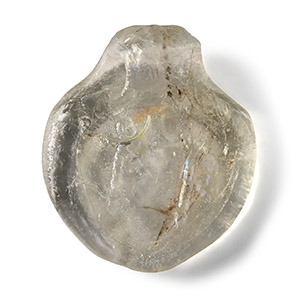
Roman Glass Pendant
1st-4th century A.D.Sold for (Inc. bp): £117
Discoid with integral loop, impressed monogram design. 2.93 grams, 24 mm
From the private collection of the late Mr S.M., 1969-1999. -
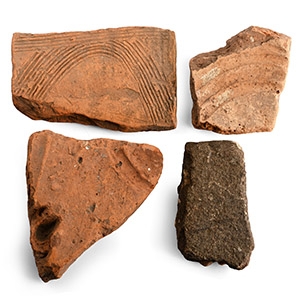
Roman Tile and Concrete Group
1st-4th century A.D.Sold for (Inc. bp): £20
Including terracotta tile fragments with striations and other detailing; opus caementicium accretion. 1.98 kg, 11.5-16.5 cm
From the collection of a Buckinghamshire, UK, collector established from the earlier 1960s.
