
Loading, please wait...
LOT 1345
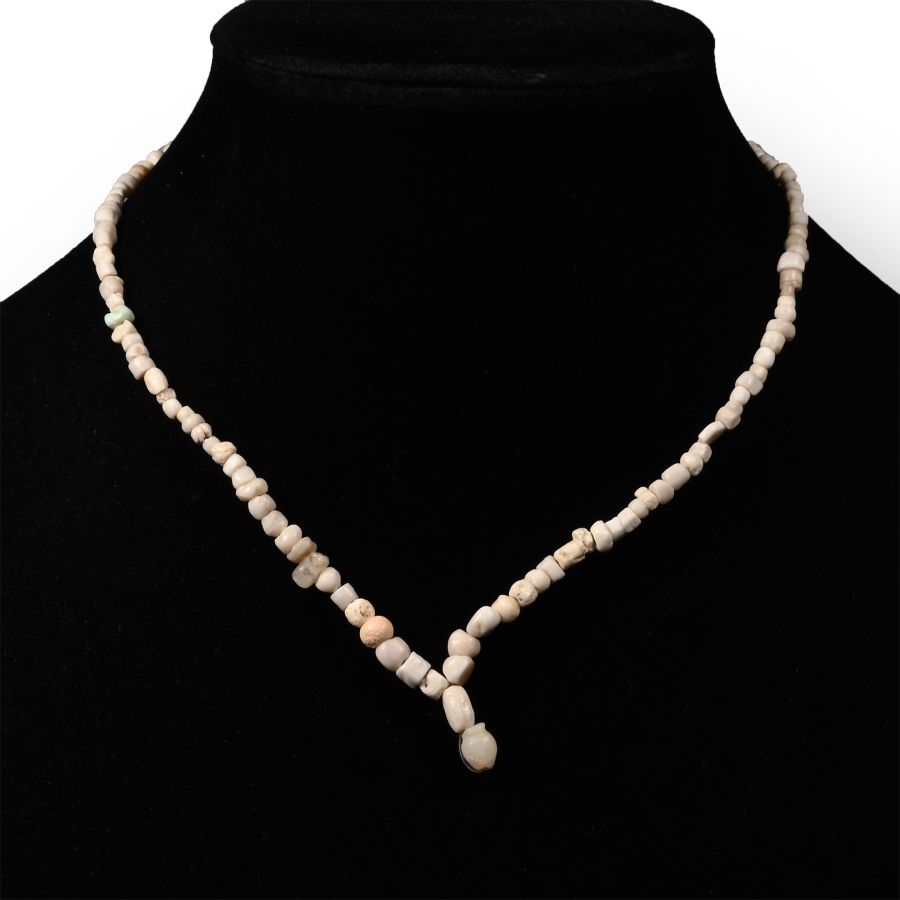
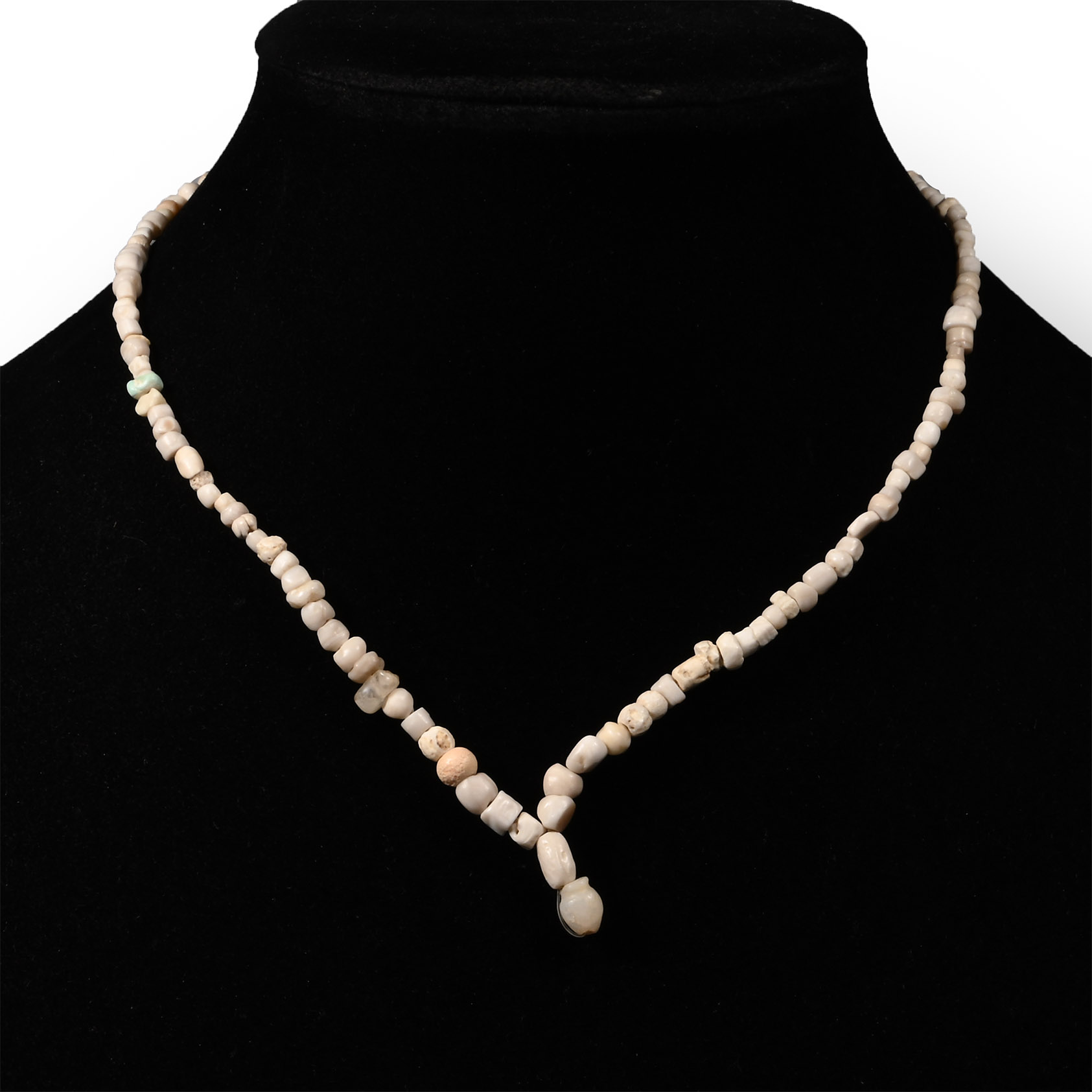
Ancient Bead Necklace String
1ST MILLENNIUM B.C. AND LATER
16 1/2 in. (7.94 grams, 42 cm).
Restrung group of graduated oblate and other beads in stone, ceramic and shell. [No Reserve]
ProvenanceUK gallery, early 2000s.
This lot has been cleared against the Art Loss Register database, and is accompanied by an illustrated lot declaration signed by the Head of the Antiquities Department, Dr Raffaele D'Amato.
Cf. Hussein, M.M., Altaweel, M., Gibson, McGuire, Nimrud The Queen’s Tombs, Baghdad-Chicago, 2016, pl.163, for similar necklaces.
FootnotesSimilar beads were found in the excavations of the royal tombs of Nimrud. Thousands of beads were discovered in the sarcophagi (for example those of Nimrud’s Queens) probably originally composed as wide collars with multiple strands.
CONDITIONTimeLine Auctions follows a vetting process to ensure the authenticity and legality of all items, reinforcing our commitment to integrity and responsible trading. Each antiquity, antique, and coin lot undergoes thorough examination by a vetting committee of at least ten external specialists, professional trade association members, scientists, and archaeologists: Our Vetting Process
AUCTIONS:
TimeLine is a leading auction house specialising in antiquities, ancient art, collectables, natural history, coins, medals, and books. Our auctions offer museums, collectors, historians, and enthusiasts the opportunity to acquire unique and historically significant pieces.
-
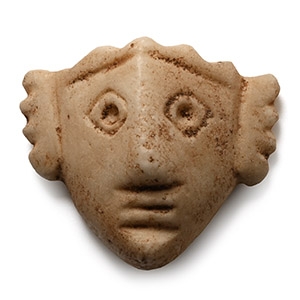
Sumerian Stone Head Bead
3rd millennium B.C.Sold for (Inc. bp): £520
Amuletic mask, carinated in plan and plano-convex in section with facial detailing, ring-and-dot eyes. 7.7 grams, 28 mm
Acquired in the mid 1980s-1990s. Private collection, Switzerland, thence by descent. Private collection, since the late 1990s. This lot has been cleared against the Art Loss Register database, and is accompanied by an illustrated lot declaration signed by the Head of the Antiquities Department, Dr Raffaele D'Amato. -
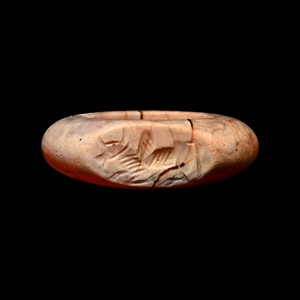
Sasanian Red Agate Ring
3rd-4th century A.D.Sold for (Inc. bp): £338
With scaphoid plaque, intaglio kneeling zebu motif. 4.37 grams, 25.53 mm overall, 14.30 mm internal diameter (approximate size British G, USA 3 1/4, Europe 4.92, Japan 4)
Mr S.A. collection, Switzerland, acquired in the 1980s. Thence by descent, private collection, since 1998. This lot has been cleared against the Art Loss Register database, and is accompanied by an illustrated lot declaration signed by the Head of the Antiquities Department, Dr Raffaele D'Amato. -
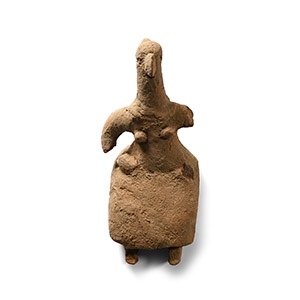
Chalcolithic Seated Terracotta Figure
3rd millennium B.C.Estimate: £300 - 400 (+bp*)
Opening Bid: £150
Modelled in the round seated figure with looped arms and applied collar, pinched nose. 128 grams, 13 cm high
Ex important collection of a late gentleman, 1980s. This lot has been cleared against the Art Loss Register database, and is accompanied by an illustrated lot declaration signed by the Head of the Antiquities Department, Dr Raffaele D'Amato.
