
Loading, please wait...


LOT 1068
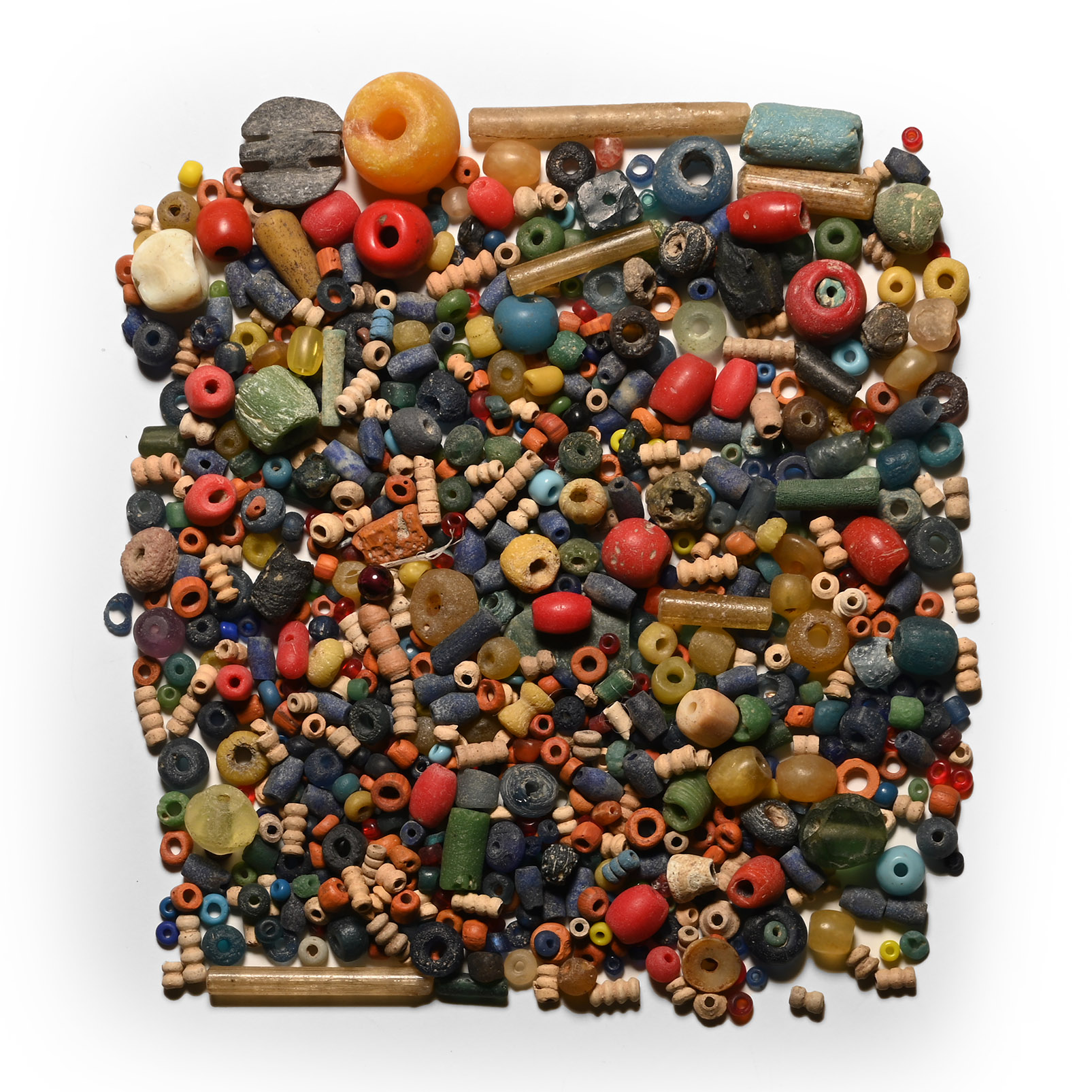
Ancient Bead Group
1ST MILLENNIUM B.C. AND LATER
1/8 - 1 1/4 in. (61 grams total, 2-32 mm).
Comprising beads in various materials including ceramic, lapis lazuli, glass, and stone. [No Reserve]
ProvenanceEx property of a late Japanese collector, 1970-2000s.
CONDITIONTimeLine Auctions follows a vetting process to ensure the authenticity and legality of all items, reinforcing our commitment to integrity and responsible trading. Each antiquity, antique, and coin lot undergoes thorough examination by a vetting committee of at least ten external specialists, professional trade association members, scientists, and archaeologists: Our Vetting Process
AUCTIONS:
TimeLine is a leading auction house specialising in antiquities, ancient art, collectables, natural history, coins, medals, and books. Our auctions offer museums, collectors, historians, and enthusiasts the opportunity to acquire unique and historically significant pieces.
-
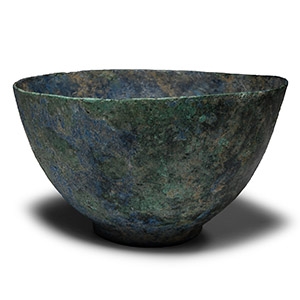
Luristan Bronze Cup
13th-7th century B.C.Sold for (Inc. bp): £247
Hemispherical in profile with broad discoid foot; raised from a single bronze sheet. 184 grams, 12 cm diameter
Ex London, UK, gallery, 1971-early 2000s. Property of a London gentleman. -
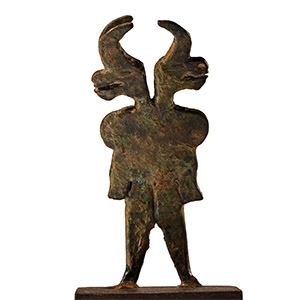
Western Asiatic Bronze Double Bull-Headed God Statuette
1st millennium B.C.Sold for (Inc. bp): £468
Flat in section standing figure with legs spread and arms held at the sides, two addorsed bull-heads above with curved horns; mounteed on a custom-made display stand. 110 grams total, 13.3 cm including stand
From a collection acquired on the UK art market from various auction houses and collections mostly before 2000. From an important Cambridgeshire estate; thence by descent. -
.jpg)
Western Asiatic Mixed Bead Necklace
1st millennium B.C. and laterSold for (Inc. bp): £39
Graduated group of mainly annular and oblate beads in various materials, centrepiece a tabular stone with concentric circle motif to each face. 24.9 grams, 43.5 cm
Acquired 1980-2015. Ex Abelita family collection.
